



Japanese Satsuma Dishes
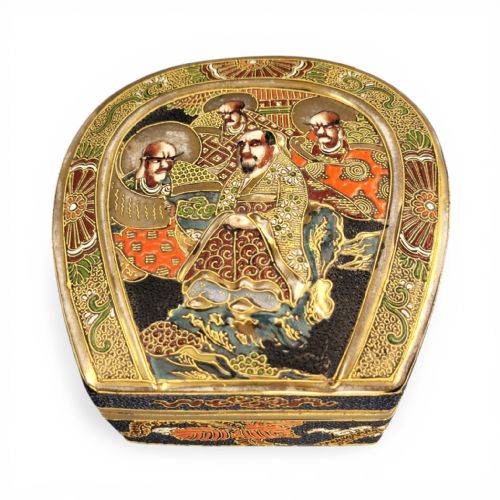
Japanese satsuma dishes bring intricate earthenware, enamel, and gold leaf into rooms, offering the detailed imagery of the Meiji period.
Japanese Satsuma Dishes
Japanese satsuma dishes comprise decorative plates, shallow dishes, bowls, and chargers originating largely from the nineteenth century and the Meiji period.
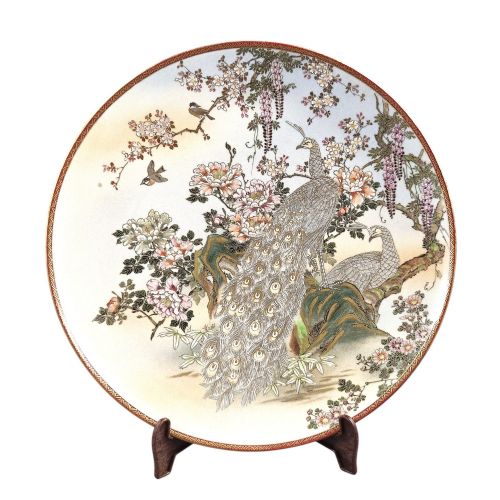
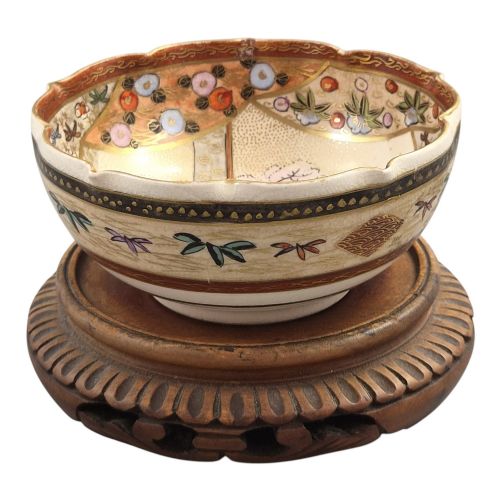
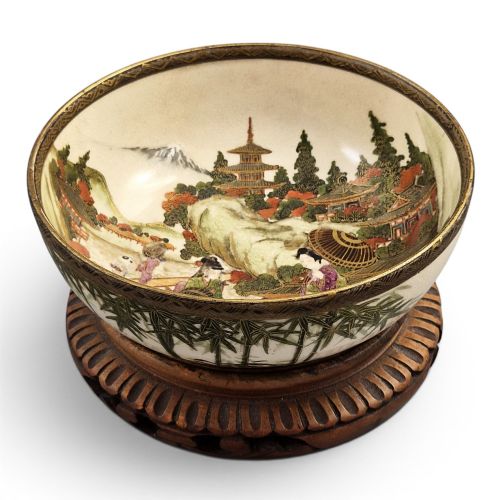
Buyers meet forms ranging from small hanami bowls to large moriage chargers painted with peacocks, wisteria, peonies, and multi-figure scenes.
Pieces frequently date across the late nineteenth century into the Edwardian era, bearing signatures from notable makers and Kyoto workshops.
How japanese satsuma dishes were made
Potters shaped earthenware to form the foundation of these vessels, applying fine glazes before detailed painting.
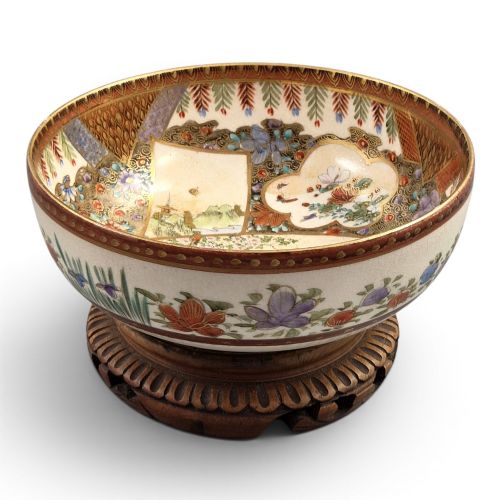
Artisans built up designs using enamel and gold leaf, incorporating raised moriage decoration and intricate gilt work across bowls and plates.
Peacocks strut across chargers while tiny children play under camellia trees, proving Victorian artisans possessed infinite patience.
What varies in quality
Quality rests upon the precision of the enamel painting and the density of the gold gilt work across the earthenware surface.
The reputation of the workshop or signed maker, such as Koshida, Kinkozan, or Yabu Meizan, distinguishes standard decorative output from finer studio pieces.
Koshida·Kozan·Toshozan·Kinkozan·Shuzan·Yasuda·Nikko·Hododa
The Japanese Satsuma Dishes Glossary
- Earthenware
- Porous pottery fired at lower temperatures, forming the ceramic base characteristic of these items.
- Moriage
- A decorative technique where slip is piped onto the pottery to create raised designs beneath enamel and gold leaf.
- Millefleur
- A dense surface pattern composed of thousands of tiny painted flowers, sometimes described as thousand flowers.
- Gilt
- A thin layer of gold applied to accentuate borders, motifs, and backgrounds on the ceramic body.
- Charger
- A large decorative plate intended for display rather than dining use.
Japanese Satsuma Dishes: Frequently Asked Questions
How do I identify a Meiji period piece?
Meiji period items often display fine crackle glazes combined with dense enamel and gold leaf detailing. Signatures and crests on the underside frequently point to specific studios.
Studying the complexity of the painted figures and floral motifs helps separate nineteenth-century examples from later reproductions.
Where were these dishes produced?
Production centred on regions like Kyoto, where notable workshops created finely painted earthenware for export and domestic collections. Makers such as Kinkozan operated in these key areas.
Kyoto pieces often showcase refined pictorial scenes featuring women, children, and birds amidst botanical settings.
How should I display a charger?
Large chargers and shallow plates suit sturdy wall brackets or dedicated display stands designed to support heavier earthenware securely. Placing them away from direct sunlight protects the delicate enamel and gold gilt.
Ensuring adequate support prevents strain on the ceramic body over time.
What does thousand flowers mean?
Thousand flowers, or millefleur, describes a meticulous pattern covering the entire surface with tiny, detailed floral blossoms. This style demands immense patience and steady brushwork from the artist.
Dishes featuring this motif display incredible depth through interlocking colours and gold outlines.