
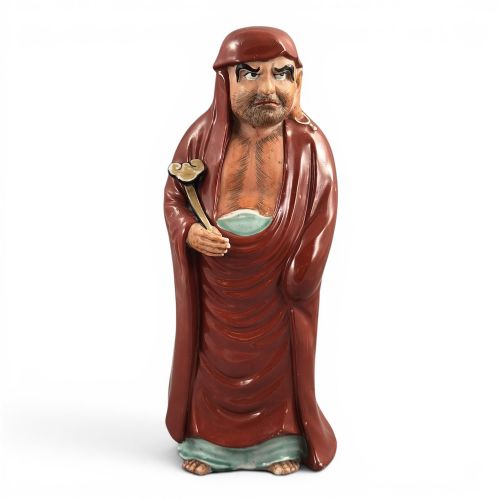


Japanese Pottery Ornament
These Japanese pottery ornaments are sculptural figures, vases and vessels shaped during the Edo and Meiji periods, prized for bringing traditional forms into a room.
Japanese Pottery Ornament
A japanese pottery ornament encompasses decorative figurines, figures and sculptures, and functional items like vases, decorative bowls and roof ornaments. These items arrive from notable periods including the Edo period, Meiji period and the Edwardian era, capturing traditional subjects and deities in clay.
The selections available here range from Satsuma okimono figures depicting figures such as Hotei, Daikoku and Daruma to Kutani porcelain figures and Sumida Gawa pottery brush washers. Makers including Makuzu Kozan II and Kōko are represented alongside Satsuma and Kutani wares.
Buyers will encounter forms such as shachihoko roof ornaments, mandarin ducks and bijin figurines. The construction spans earthenware, glazed earthenware and porcelain, reflecting the diverse kiln traditions of Japan.
How they were made
Potters shaped earthenware and porcelain bodies by hand or on the wheel before applying glazes and enamels. Many pieces incorporate intricate surface decoration including moriage, cold paint and gold leaf.
Kiln techniques allowed for complex multi-fired glazes, whilst gilding and detailed hand-painting defined the output of Imperial Satsuma and Kutani workshops. Masters worked within established regional traditions to produce refined figurines and vessels.
Daruma monks sit patiently in clay, reminding everyone that persistence eventually brings enlightenment.
What varies in quality
The refinement of the modelling and the precision of the hand-painted enamel work set superior examples apart. Mastery of the brush, the stability of the glaze and the intricacy of the gold leaf application distinguish the finest okimono and vases.
Artistic attribution also influences standing, as signed pieces by known makers like Makuzu Kozan II or Kōko demonstrate distinct technical control. The preservation of delicate elements such as cold paint and moriage relief remains central to the integrity of each piece.
Makuzu Kozan II·Satsuma·Kutani
The Japanese Pottery Ornament Glossary
- Okimono
- A Japanese ornamental statue or figurine designed for display on a shelf or in a tokonoma alcove. These sculptures often depict deities, animals or figures from folklore.
- Satsuma
- A type of Japanese pottery originating from Satsuma Province, traditionally characterised by an ivory-coloured, crackle-glazed earthenware decorated with enamels and gilding. Imperial Satsuma wares represent the finer end of this tradition.
- Kutani
- Japanese porcelain and pottery recognised for bold overglaze enamels and rich colour palettes. Kutani pieces frequently feature intricate pictorial scenes or raised moriage details.
- Moriage
- A decorative technique in Japanese ceramics where slip is piped onto the surface to create raised patterns before glazing and firing. This method adds a tangible texture to figurines and vessels.
- Shachihoko
- A traditional Japanese roof ornament shaped as a mythical creature with the head of a tiger and the body of a fish. Pairs of these ceramic figures were placed on ridgepoles to protect buildings from fire.
Japanese Pottery Ornament: Frequently Asked Questions
What is a Japanese okimono?
An okimono is a decorative carving or ceramic figure intended for display in a home rather than for ritual use. They depict historical figures, deities and animals.
These pieces were produced in large numbers during the Meiji period for both domestic and export markets, showing immense detail.
How do I care for antique ceramic ornaments?
Antique ceramics and earthenware require gentle dusting with a soft, dry brush to protect delicate surfaces such as cold paint and gold leaf. Avoid using water or liquid cleaners.
Keep pieces away from direct sunlight and areas subject to sudden temperature changes to preserve the glazes and prevent cracking.
What is Satsuma ware?
Satsuma ware is a distinct style of Japanese pottery featuring a fine, cream-coloured earthenware body covered in a network of minute crackles. It is heavily decorated with enamels and gilding.
Imperial Satsuma pieces often portray traditional figures, immortals and floral motifs with exceptional precision.
Where were shachihoko placed?
Shachihoko were traditional roof ornaments positioned at the ends of the ridgepole on Japanese buildings. They were believed to act as protective talismans against fires.
As ceramic sculptures, surviving pairs display weather-resistant glazes and powerful mythological forms.