


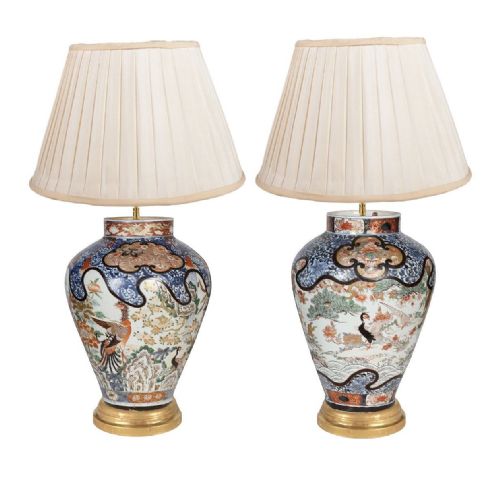


Japanese Porcelain Table Lamps
Japanese porcelain table lamps bring historic ceramic art into domestic lighting, combining hand-painted decoration with sturdy metal mounts.
Japanese Porcelain Table Lamps
Japanese porcelain table lamps comprise historic ceramic vessels transformed into functional lighting fixtures. These pieces typically originate from periods spanning the seventeenth century through the early twentieth century, incorporating traditional bodies such as Satsuma, Imari, Kutani, and Arita porcelain.
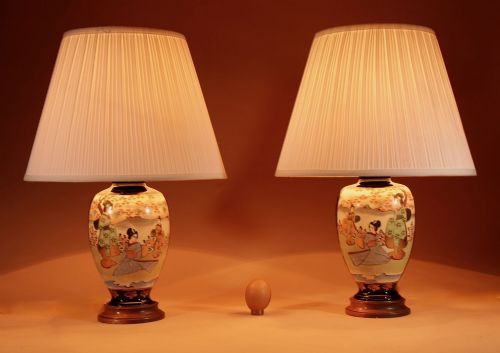
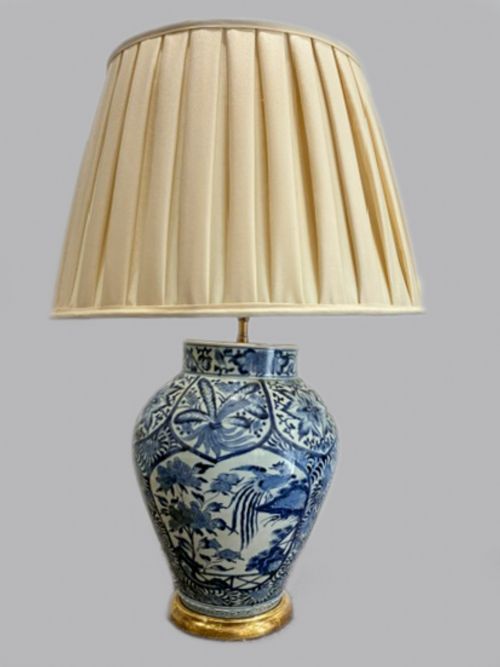
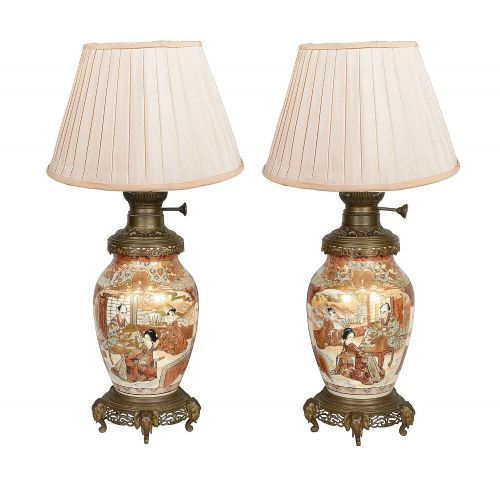
Buyers on this page most commonly encounter converted vases dating from the nineteenth century alongside earlier examples. Many listings feature pairs decorated in characteristic blue and white or polychrome palettes, frequently paired with fabric or silk shades.
The body of each lamp generally stems from an antique vessel rather than a purpose-built ceramic blank. Makers adapted these forms by adding electrical wiring and mounting hardware, preserving the painted exterior while serving modern household needs.
How they were made
These lamps utilise traditional ceramic manufacturing techniques, shaping porcelain and earthenware bodies on the wheel or in moulds before firing. Artisans then applied intricate hand-painted designs using cobalt blue, enamel colours, and gilt detailing.
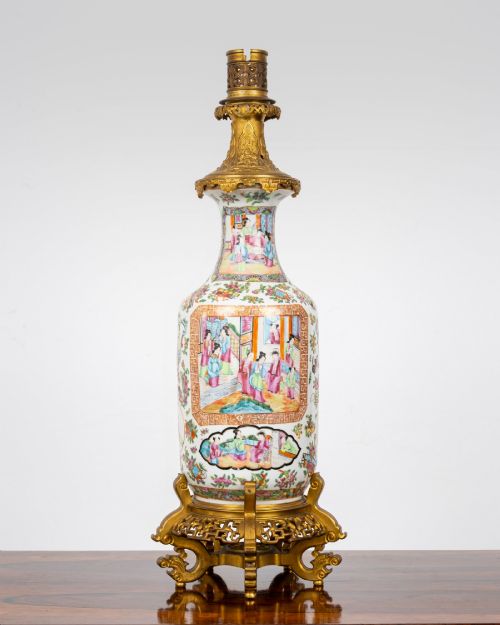
Metalwork played a crucial structural role during the conversion process into table lamps. Brass, gilt bronze, and ormolu mounts were fitted to the top and bottom of the ceramic vessels to secure the electrical components and provide a stable base.
Current listings feature pieces spanning the seventeenth century to the early twentieth century, utilising brass, porcelain, fabric, wood, and silk.
What varies in quality
Quality in these lighting pieces depends heavily on the artistic merit and preservation of the original ceramic vessel. Finely detailed hand-painting with rich enamels and crisp gilding distinguishes superior artistic output from simpler decorative production.
The integration of the metal mounts relative to the porcelain body dictates the overall harmony of the piece. High-grade examples feature custom-fitted brass or ormolu mounts that complement the contours of the antique vase without obscuring the primary glaze decoration.
The Japanese Porcelain Table Lamps Glossary
- Satsuma
- A type of Japanese earthenware featuring an ivory-coloured, crackled glaze. It is traditionally decorated with elaborate polychrome enamels and raised gold.
- Imari
- A style of Japanese porcelain named after the port of export. It typically employs a distinctive palette of underglaze blue, iron red, and gilt.
- Kutani
- A style of Japanese coloured porcelain known for bold pictorial designs. It frequently utilises strong greens, reds, yellows, and purples.
- Ormolu
- A metallic technique involving the application of finely ground, high-carat gold to a bronze base. It provides a rich, decorative finish for lamp mounts.
Japanese Porcelain Table Lamps: Frequently Asked Questions
Are these original antique vases?
The ceramic bodies of these lamps are historic vases, jars, and spill vessels created in Japan during previous centuries. Many retain their original hand-painted glazes from the Edo or Meiji periods.
Conversion into lighting involved drilling the porcelain or securing it with brass and ormolu mounts to accommodate modern electrical fittings. This practice preserves the decorative exterior of the vessel while adapting it for contemporary interiors.
How do I identify Imari porcelain?
Imari porcelain is easily recognised by its traditional colour palette, which relies primarily on deep underglaze cobalt blue and vibrant iron red. Artisans usually enhanced these hues with rich gilding.
This style originated in the Hizen province and gained immense popularity in the West. Pieces often feature intricate floral and geometric panel designs across the ceramic surface.
What is Satsuma ware?
Satsuma ware is a distinct category of Japanese ceramics characterised by a warm, ivory-coloured body covered in a fine network of crackled glaze. The surfaces are typically embellished with dense polychrome and gilt figural scenes.
Unlike hard-paste porcelain, traditional Satsuma is an earthenware body. Lamps utilising these vessels offer a softer, more textured appearance compared to high-fired blue and white porcelain.
How do I style a pair of lamps?
Pairs of Japanese porcelain lamps work effectively on large sideboards, mantels, or matching bedside tables. Their height and colourful decoration draw the eye, making them natural focal points in a room.
Choosing fabric or silk shades that pick up secondary tones from the glaze helps tie the lamp into existing interior colour schemes. The intricate patterns pair well with both traditional wood furniture and neutral modern settings.