




Japanese Meiji Metal Relief
Japanese meiji metal relief brings together bronze, patinated bronze, and mixed metal vessels shaped by nineteenth-century artisans.
Japanese Meiji Metal Relief
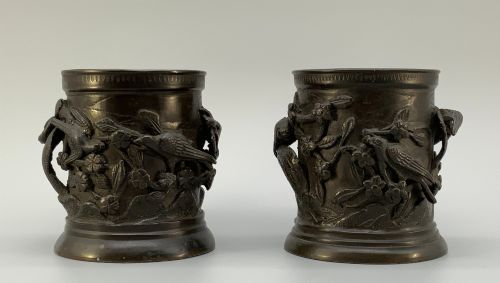
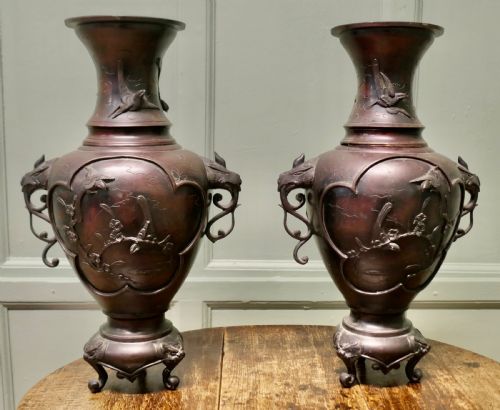
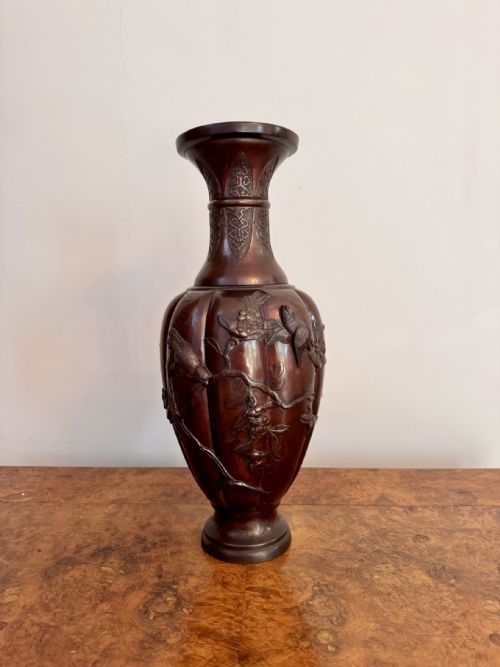
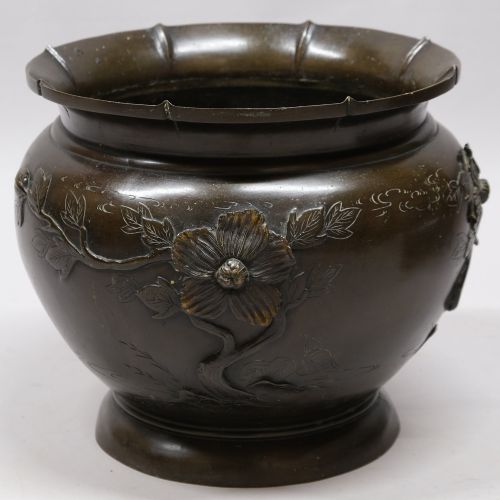
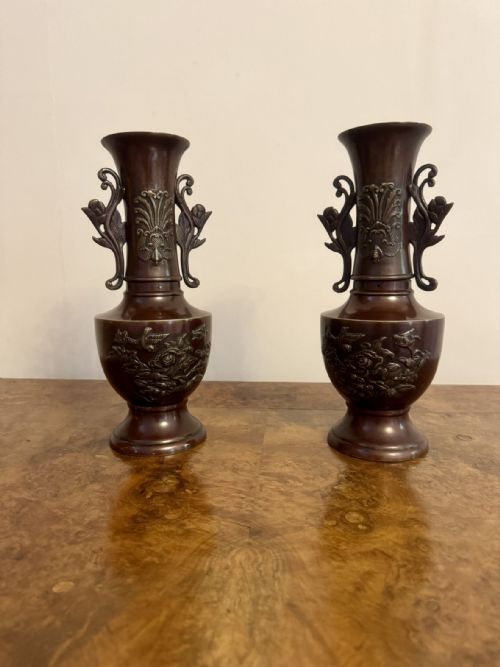
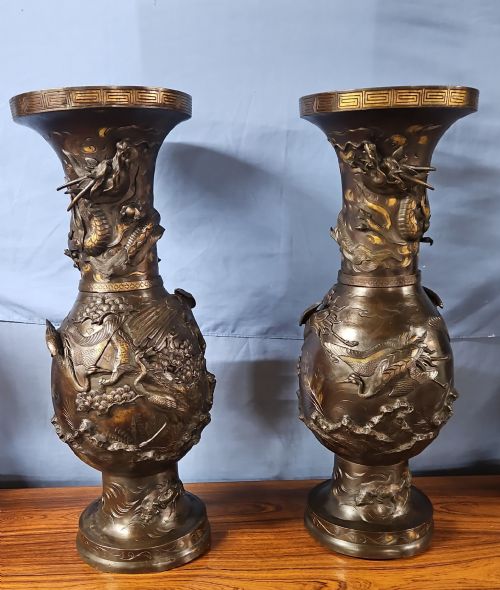
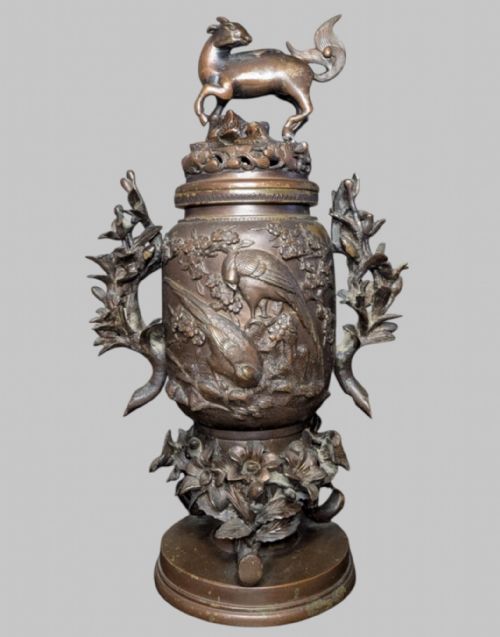
Japanese meiji metal relief primarily encompasses vases, jardiniere bowls, and incense burners created during the nineteenth century and the early twentieth century. Buyers seeking this category encounter sturdy bronze and mixed metal vessels displaying raised naturalistic detail such as birds, blossom, and floral motifs.
Vases dominate the selection, appearing frequently in matched pairs spanning various heights from compact stem vessels to large baluster urns. Alongside these stand heavy decorative planters and specialised vessels like the tetsubin kettle originating from Kyoto.
The objects bridge the Edo period transition into the Meiji era, aligning stylistically with nineteenth-century production and occasionally bearing artist signatures. Collectors often find pieces labelled through Victorian trade associations alongside authentic Japanese workshops.
Quality variations
The standard of ciselure and surface definition distinguishes finer examples from ordinary production, with crisper metal relief showing distinct feather and petal textures. Weight also signals substance, particularly in large jardiniere bowls and heavy pairs of vases.
Artisanal signatures and deliberate mixed metal or gold inlay contrast against simpler patinated bronze surfaces. Fine examples balance proportion with intricate raised decoration rather than relying solely on scale.
Listings feature bronze, patinated bronze, copper, mixed metal, gold, silver, gold inlay, and brass across nineteenth-century and early twentieth-century forms.
Kibundo
The Japanese Meiji Metal Relief Glossary
- Patinated bronze
- Metal treated chemically to produce a specific surface colouration. This layer protects the underlying alloy while enhancing decorative contrast.
- Mixed metal
- The combination of different metallic elements such as bronze, copper, gold, and silver within a single design. It creates diverse tonal variations across the raised relief.
- Jardiniere
- A large ornamental pot or planter designed to hold growing plants. These heavy bronze bowls often feature extensive floral relief around the exterior.
- Koro
- A traditional Japanese incense burner typically supported on legs and fitted with a pierced cover. Many examples include sculptural finials such as goats.
- Tetsubin
- A traditional Japanese cast iron or metal kettle used for boiling water. Fine examples originate from Kyoto workshops and demonstrate precise surface texturing.
Japanese Meiji Metal Relief: Frequently Asked Questions
What defines Japanese meiji metal relief?
These pieces comprise nineteenth-century bronze and mixed metal vessels adorned with raised decorative motifs. Artisans depicted natural subjects including birds, blossoms, and floral arrangements across vases and bowls.
The category spans diverse forms shaped during the Meiji period, reflecting traditional Japanese metalworking techniques combined with international aesthetic influences of the era.
How were these metal vessels used?
Vases served as interior display ornaments for floral arrangements within domestic spaces. Larger jardiniere bowls functioned as planters for greenery in reception rooms.
Incense burners fulfilled ceremonial or aromatic roles in homes, utilising pierced lids to diffuse fragrance. Kettles provided utility for heating water in traditional settings.
How do I care for bronze relief?
Dust the surfaces gently with a soft, dry cloth to prevent accumulation within the raised metal relief. Avoid liquid cleaners or chemical polishes that can strip the historic patination.
Keep the vessels away from direct moisture and handling oils to preserve the stability of mixed metal and gold inlays over time.
How are Meiji periods identified?
Dating relies on stylistic markers, manufacturing techniques, and documentation linking items to the nineteenth century. Nineteenth-century production often exhibits distinct patination and hand-finished relief work characteristic of the era.
Signatures on late pieces provide additional attribution to specific makers or workshops active around the transition into the twentieth century.