
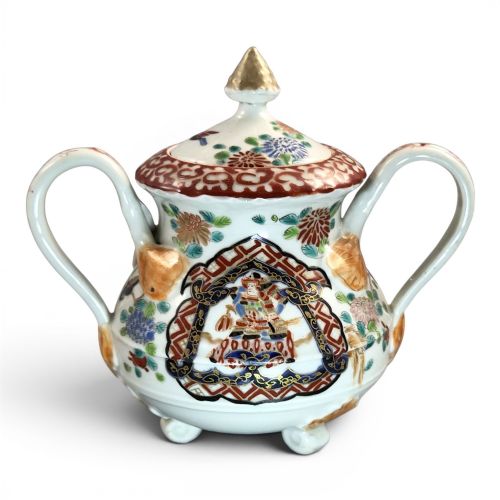


Japanese Imari Jar Lid
A Japanese imari jar lid brings together porcelain, hand-painted palettes and Edo or Meiji era craftsmanship in a single ceramic form.
Japanese Imari Jar Lid
When someone searches for a japanese imari jar lid, they find covered vessels, ginger jars and lidded vases spanning the 17th to the early 20th century.
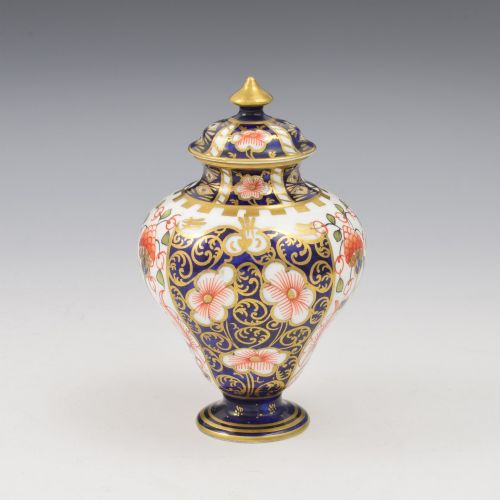
The pieces appearing most often on this page originate from Japanese kilns, notably Arita, alongside European interpretations from makers working in the Imari style during the Victorian and Edwardian periods.
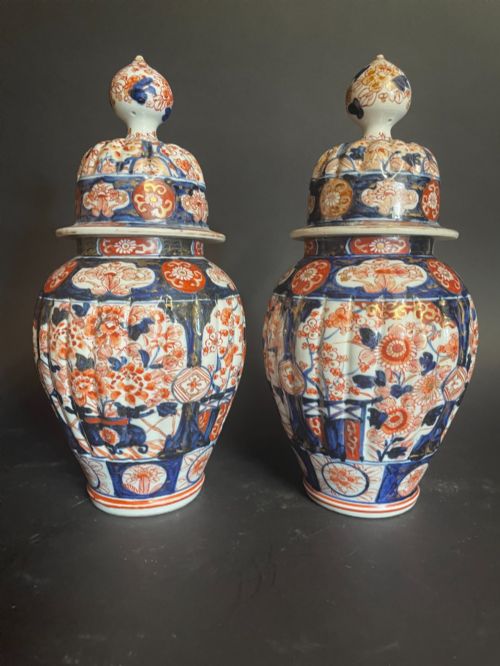
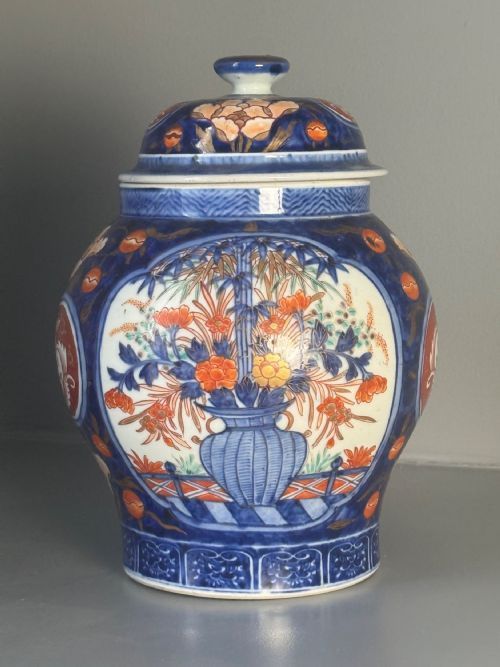
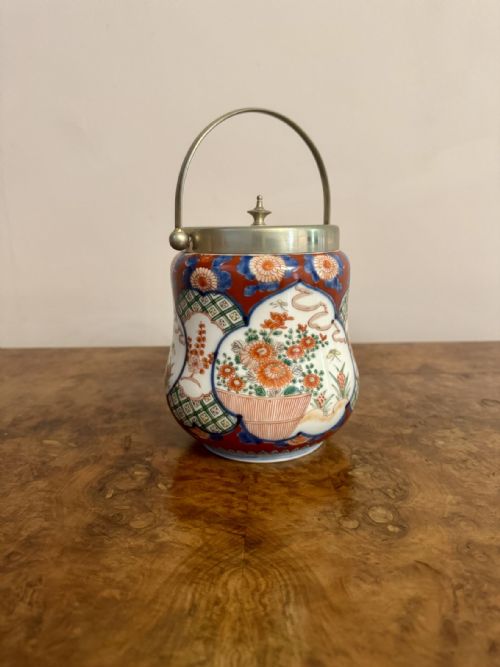
Forms range from small biscuit barrels and sugar bowls to large baluster vases and koro, each retaining its matching ceramic cover.
How they were made
Potters shaped porcelain bodies on the wheel or in moulds before applying underglaze blue pigments and overglaze enamel colours.
Glaze, gold leaf, gilding and enamel details were fused to the ceramic surface during subsequent firings in the kiln.
Samurai warriors painted on porcelain occasionally glare across the room with surprising intensity from beneath a domed lid.
What varies in quality
Execution of the painted decoration separates standard production pieces from finer examples, with hand-painted samurai figures and intricate foliage showing greater artist control.
Porcelain weight, potting precision and the crispness of the blue and orange enamel palette determine the standing of each jar and cover.
Royal Crown Derby·Fukagawa·Samson
The Japanese Imari Jar Lid Glossary
- Imari
- A style of Japanese porcelain originating from Arita, traditionally decorated in underglaze blue, iron red and gold.
- Meiji Period
- The era in Japanese history spanning from 1868 to 1912, noted for significant export porcelain production.
- Ginger Jar
- A broad-shouldered ceramic container with a domed lid, originally used for storage.
- Koro
- A traditional Japanese incense burner fitted with a pierced cover.
Japanese Imari Jar Lid: Frequently Asked Questions
What is a Japanese imari jar lid used for?
These lids close ceramic ginger jars, vases and storage vessels produced for domestic use and export.
They protect the contents of the vessel while completing the decorative scheme of the painted porcelain body.
How do I date a Japanese imari jar lid?
Dating relies on porcelain body characteristics, painting style and factory marks underneath the base.
Pieces from the Edo period differ significantly in weight and palette from Meiji era or later European revival items.
Are all imari lids made in Japan?
While the majority originate from Japanese kilns in Arita, European potteries also produced imari style wares.
French and English makers created compatible jars and covers imitating traditional Japanese designs during the 18th and 19th centuries.
How should I display lidded imari jars?
Lidded jars suit placement on sturdy surfaces where their detailed enamel patterns remain visible from multiple angles.
Keeping the lid paired with its original body maintains the intended visual balance of the ceramic piece.