


Japanese Foo Dog
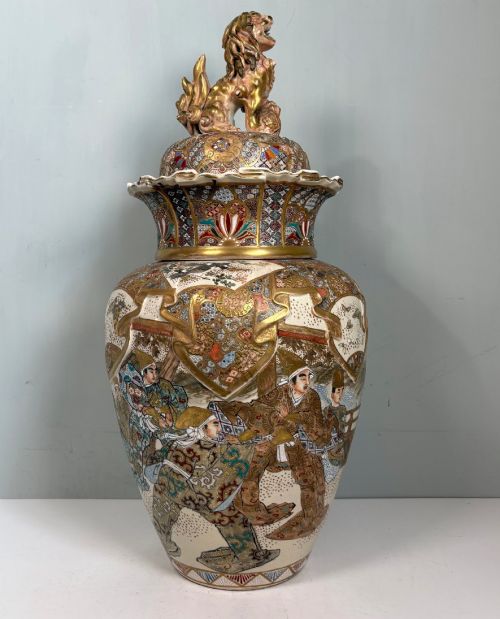
When you want a Japanese foo dog, you are looking for guardian lion figures cast in bronze, modelled in porcelain, or shaped in earthenware.
Japanese Foo Dog
A Japanese foo dog, known traditionally as a shishi or karashishi, is a guardian lion figure found across various forms such as incense burners, vases, sculptures, and decorative figurines. These pieces originate predominantly from the 19th century and the Meiji period, reflecting traditional Japanese craftsmanship and iconography.
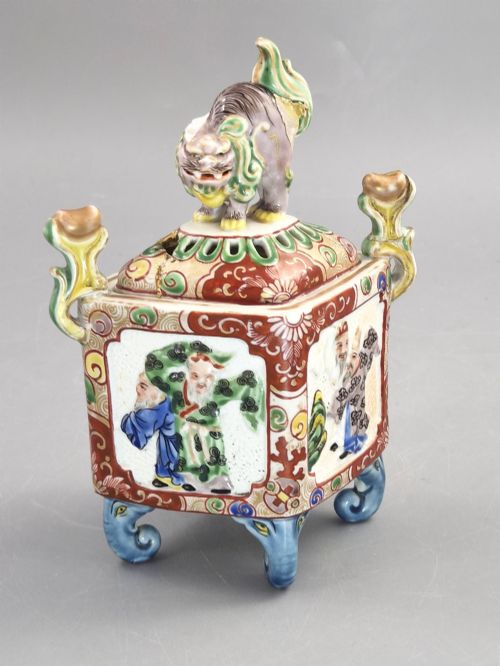
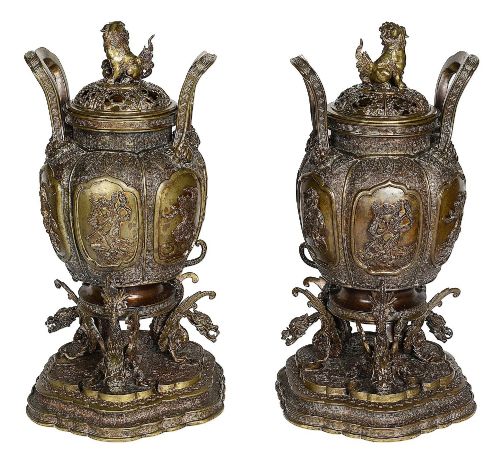
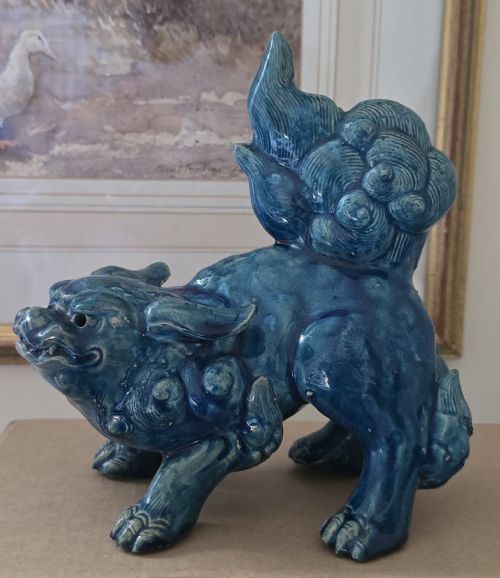
The versions you are most likely to encounter here include porcelain koro incense burners, turquoise-glazed shishi figures, and bronze lidded urns. Makers and modellers utilised traditional styles such as Japanese Imari and Kutani, producing both standalone animal sculptures and decorative vessels surmounted by guardian lion finials.
Materials and Construction
Materials span porcelain, earthenware, and glazed ceramic, alongside cast bronze and gilt bronze enhanced with enamel and gold leaf. Potters shaped clay by hand or on the wheel before applying glazes, ranging from turquoise tones to traditional Imari palettes.
Metalworkers cast bronze figures using traditional techniques, frequently finishing surfaces with gilt or patination. Incense burners and lidded urns often combine vessel bodies with modelled finials and feet, requiring precise assembly of separate cast or ceramic components.
Materials documented across the inventory include bronze, enamel, gold leaf, porcelain, earthenware, and glazed ceramic.
Distinctions in Quality
The integration of the guardian figure with its vessel also dictates standard, as seen in koro incense burners where lid finials and applied feet align harmoniously with the main body. The depth and richness of gilding or bronze patination further separate standard production pieces from finer sculptural works.
Unno Shomin
The Japanese Foo Dog Glossary
- Shishi
- A traditional guardian lion or Buddhist lion dog depicted in Japanese art. These mythical creatures serve as protectors and appear frequently in ceramic and bronze sculpture.
- Karashishi
- An alternate term for the guardian lion figure. The name translates literally to Chinese lion, reflecting the historical roots of the iconography.
- Koro
- A traditional incense burner featuring a perforated lid. These vessels often incorporate shishi figures as finials on the cover.
- Imari
- A style of Japanese porcelain decorated in underglaze blue and overglaze red, gold, and other colours. This aesthetic appears on numerous lidded vases and jars.
- Meiji Period
- The historical Japanese era lasting from 1868 to 1912. Many guardian lion sculptures and decorative vases date from this period of intense artistic output.
- Okimono
- A Japanese display item or decorative figurine designed for placement in a tokonoma alcove or on a shelf. These freestanding sculptures include detailed metal and ceramic models.
Japanese Foo Dog: Frequently Asked Questions
How were foo dog incense burners used?
Incense burners, or koro, were utilised to burn aromatic incense during traditional ceremonies or for scenting living spaces. The perforated lids allowed fragrant smoke to disperse while keeping the burning material enclosed.
The shishi figure placed upon the lid served both as a handle and as a protective guardian symbol for the vessel.
How do I identify a Meiji period piece?
Meiji period pieces date between 1868 and 1912, encompassing dates recorded in listings such as 1890 and 1900. These items often display characteristic Meiji styles in porcelain, bronze, and Kutani or Imari decoration.
Physical characteristics include specific glaze colours, such as turquoise, and detailed modelling of the guardian lion's mane and expression.
Where should I place a ceramic shishi?
A ceramic shishi or lidded vase suits placement on stable surfaces such as sideboards, mantelpieces, or display cabinets where the details of the glaze and modelling remain visible. Because these items include delicate porcelain, earthenware, and gilt elements, they require placement away from busy traffic areas.
Pairing matching vases or placing a standalone sculpture allows the traditional forms to anchor a room's decorative scheme.