






Japanese Ceramic Charger Plate
When you search for a japanese ceramic charger plate, you find substantial display pieces spanning the Edo, Meiji and Taisho periods.
Japanese Ceramic Charger Plate
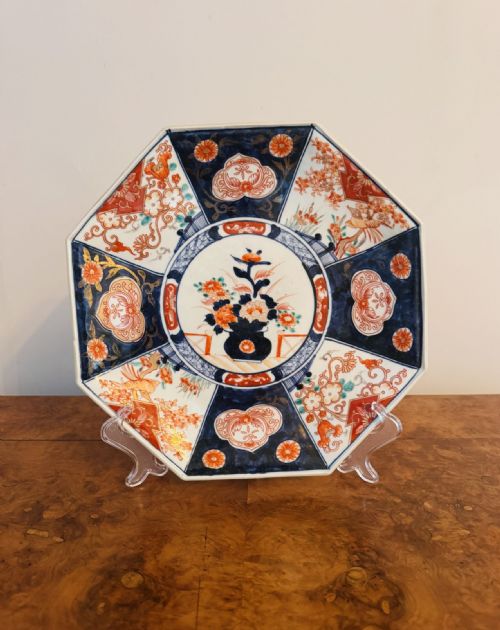
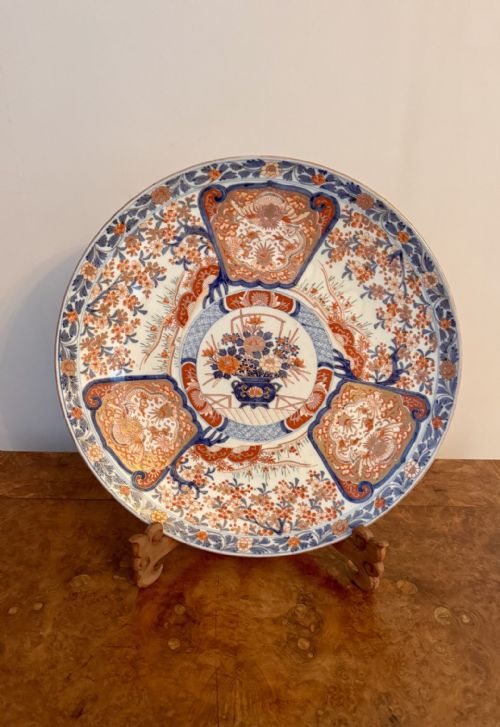
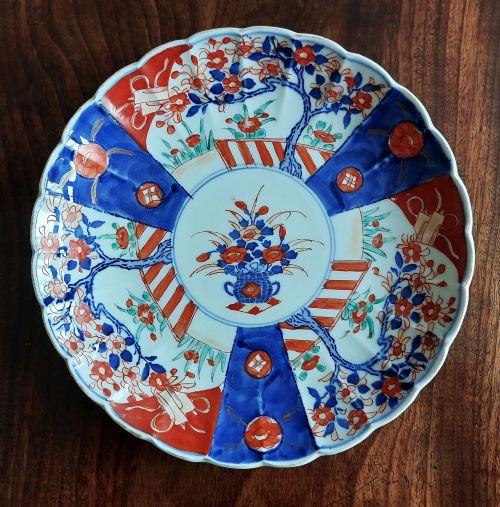
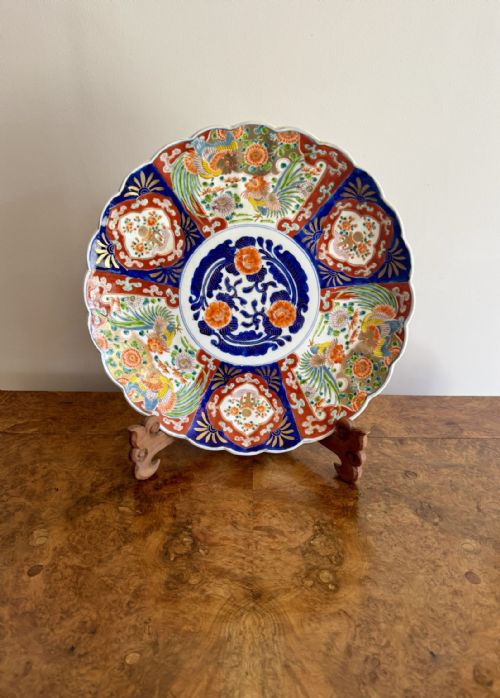
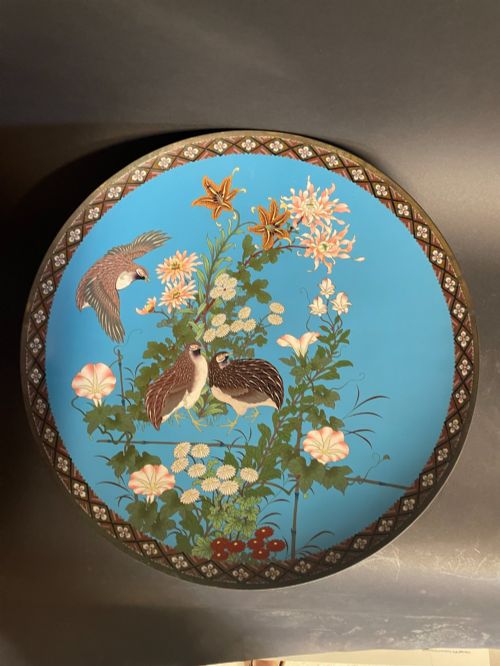
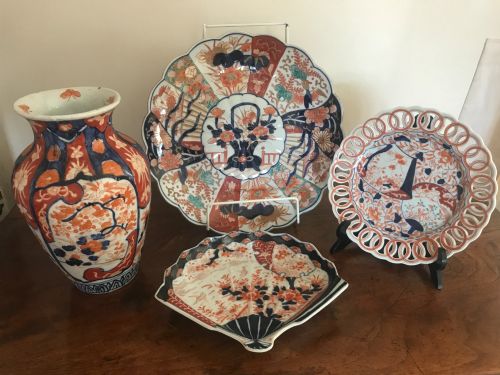
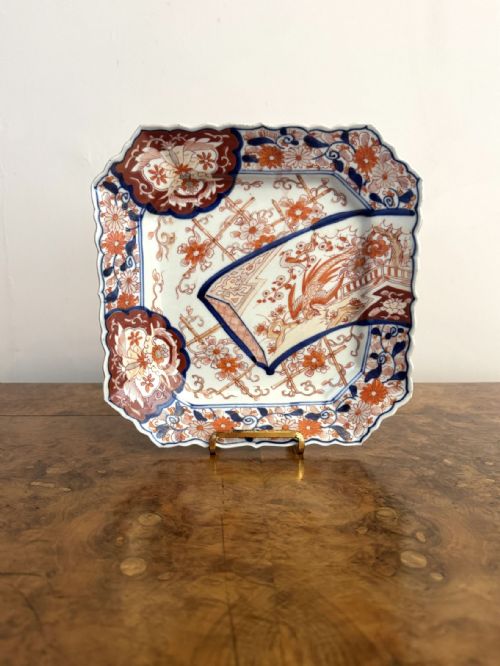
A japanese ceramic charger plate is a large decorative dish intended for display on walls or surfaces rather than table service. These pieces originate primarily from the nineteenth century, including the Meiji period and the transition into the twentieth century. The selection leans heavily towards robust Japanese Imari wares featuring traditional palettes of cobalt underglaze blue and iron red.
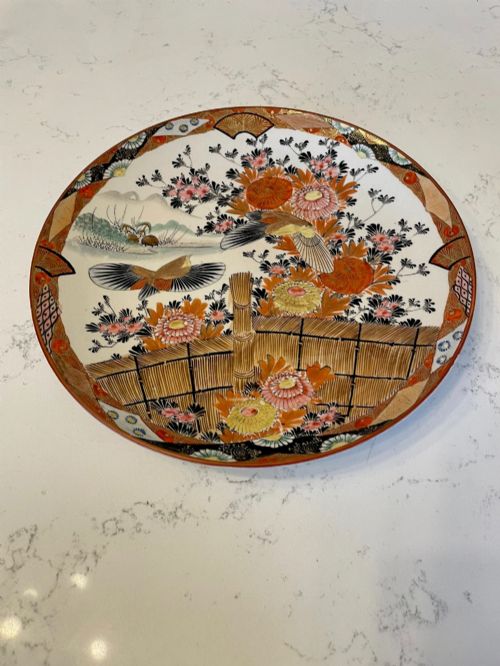
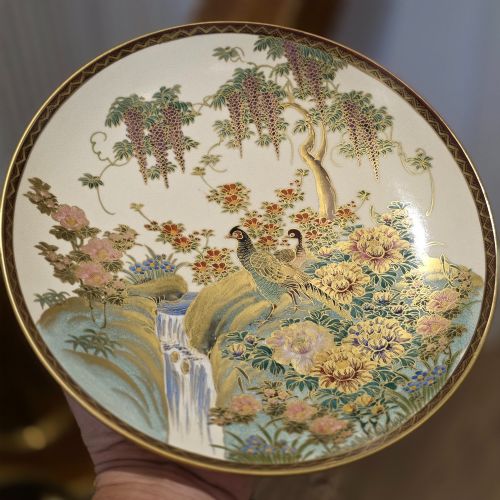
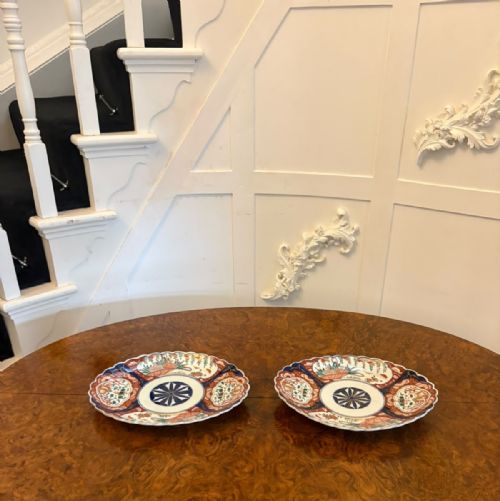
Forms extend beyond standard rounds to include square, hexagonal, oval and scalloped edge variations. Alongside Imari, buyers encounter Satsuma wares decorated with moriage detailing, Kutani porcelain and blue and white Arita pieces. Pairs and larger sets appear alongside single large chargers.
Materials and construction
Potters built these pieces using ceramic bodies of porcelain or earthenware, shaped by hand or wheel before firing. Cobalt underglaze provided deep blue tones applied directly to the clay body prior to the primary glaze application.
Enamel, gold leaf, gilding and glaze added surface richness after the initial high-temperature firing. Artisans employed hand painting for intricate floral, bird and landscape motifs using refined brushwork.
The inventory spans porcelain and earthenware materials decorated with cobalt underglaze, enamel and gold leaf across multiple historic periods.
Distinctions in quality
Quality rests in the precision of the hand-painted brushwork and the vibrancy of the cobalt underglaze and enamel colours. Superior examples display crisp definition in complex floral and avian motifs without blurring or pooling in the glaze.
The weight and balance of the porcelain body, alongside the crispness of moulded shapes like scalloped or hexagonal rims, separate standard production from finer workshop output.
Koshida
The Japanese Ceramic Charger Plate Glossary
- Charger
- A large decorative plate or dish traditionally sized for prominent display rather than dining use. These items anchor wall displays or sideboard arrangements.
- Imari
- A style of Japanese porcelain featuring a distinct palette of cobalt blue, iron red and gold on a white ground. The tradition stems from kilns operating in the Hizen province.
- Moriage
- A decorative ceramic technique utilising raised slip dots or lines to create a tactile, three-dimensional surface relief. This method appears frequently on Satsuma wares.
- Meiji Period
- The era in Japanese history spanning from 1868 to 1912, marked by significant artistic production for export markets. Pieces from this time often combine traditional motifs with refined decorative techniques.
- Underglaze
- Pigment applied to a ceramic piece before it receives its final glaze and high-temperature firing. Cobalt is the most common mineral used for this application.
Japanese Ceramic Charger Plate: Frequently Asked Questions
How were charger plates displayed?
These large plates were typically positioned on sideboards or hung on walls using specialised wire display mounts. Their substantial diameters made them focal points in Victorian and Meiji period interiors.
Today, they serve a similar decorative purpose, adding pattern and historical depth to modern rooms when mounted securely.
What is the difference between Imari and Kutani?
Imari wares are instantly recognised by their cobalt blue and iron red palette, frequently enhanced with gold leaf. They utilise porcelain bodies fired in the Arita region.
Kutani pieces often showcase a broader, more painterly palette dominated by greens and golds over white porcelain bodies. Each style represents a distinct regional ceramic tradition.
Can these plates be used for food?
Antique decorative chargers are intended solely for display and aesthetic appreciation. Their historic glazes and delicate surfaces are not suited for modern culinary use.
Cleaning should be limited to gentle dusting rather than immersion in water to protect the delicate enamel and gilding.
How do I date a Meiji period piece?
Dating relies on stylistic markers, potting techniques and recorded workshop periods spanning the late nineteenth and early twentieth centuries. Meiji period items often reflect the opening of Japanese trade markets to Western collectors.
Comparing glaze characteristics and motif complexity helps place pieces within specific decades of production.