
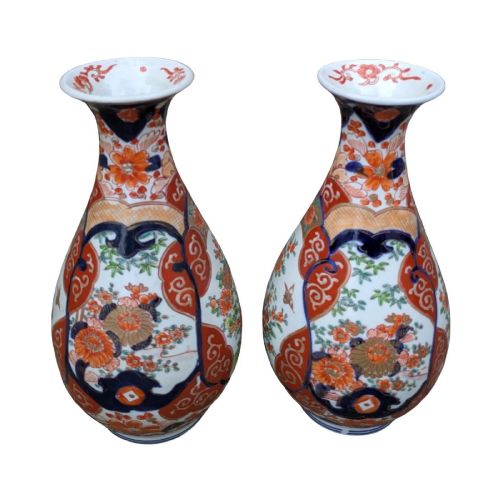


Japanese Ceramic Baluster Vase
A Japanese ceramic baluster vase brings deep historical palette and sweeping curves to a room.
Japanese Ceramic Baluster Vase
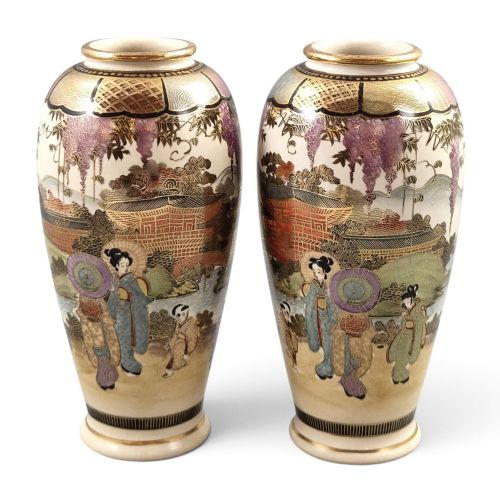
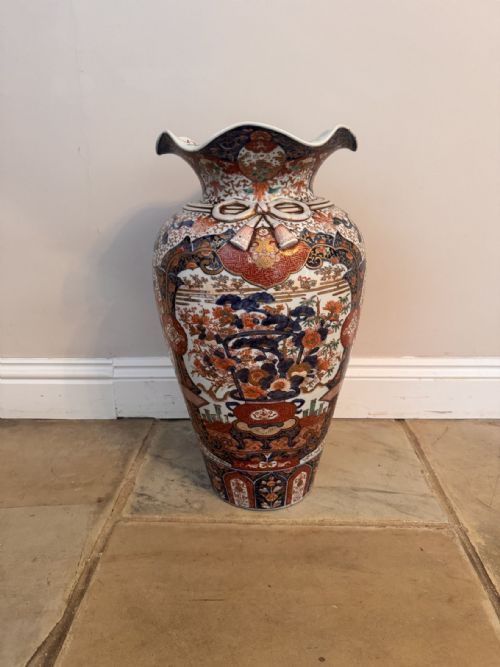
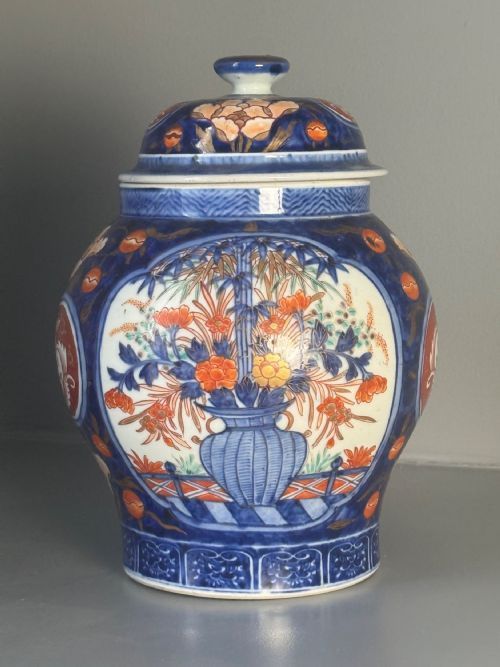
A Japanese ceramic baluster vase typically presents a rounded body that tapers toward the base and flares at the neck, taking inspiration from centuries of traditional East Asian forms. These vessels appear frequently in forms decorated with rich cobalt blues, iron red, and gilt highlights characteristic of Imari wares, alongside finely crackled earthenware Satsuma creations.
The selections span distinct periods, drawing heavily from the Meiji era and the wider nineteenth century, with occasional earlier Edo examples and later twentieth-century interpretations. Collectors encounter everything from modest cabinet specimens to monumental floor-standing pieces and lidded garniture jars.
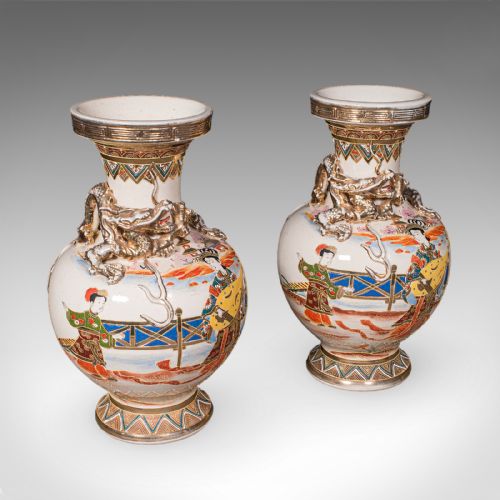
Makers and regional potteries such as Satsuma, Arita, and Kutani dominate the available output, appearing both as single decorative objects and matched pairs. Their surfaces often depict intricate figural scenes, dense floral patterns, or applied sculptural elements.
How they were made
Potters shaped these vessels from local clay bodies, utilising porcelain or earthenware depending on the intended decorative style. Artisans then applied underglaze cobalt or rich overglaze enamels by hand, often incorporating gold leaf or heavy gilding to accent the intricate motifs.
Many Satsuma pieces required low-fired earthenware bodies covered in a characteristic ivory-coloured crackle glaze before artists added detailed polychrome painting. Lidded versions and large floor vases often combined thrown sections with moulded elements like handles or applied figures.
Current listings feature pieces spanning the seventeenth century through the Edwardian period, utilising porcelain and earthenware.
What varies in quality
The distinction between ordinary production and superior work rests on the precision of the hand-painted detail and the depth of the palette. Finer examples display meticulous brushwork in the facial expressions of figures and the crisp execution of complex brocade borders.
The weight and balance of the ceramic body also signal standard, alongside the preservation of original gilding and enamel vibrancy over time. Well-preserved covers on lidded vases add substantially to the integrity of the piece.
Shozan·Makuzu Kozan·Kōko·Kinkozan
The Japanese Ceramic Baluster Vase Glossary
- Baluster
- A vase form characterised by a swollen lower body and a narrow neck, resembling an architectural baluster. This silhouette provides a stable base and a dramatic profile for complex surface decoration.
- Imari
- A style of Japanese export porcelain featuring a distinctive palette of underglaze blue, iron red, and gilt highlights. The designs typically combine floral and geometric brocade patterns.
- Satsuma
- A type of Japanese earthenware featuring an ivory-coloured, crackled glaze painted with polychrome enamels and gilding. These pieces frequently depict historical figures, landscapes, or crowded court scenes.
- Garniture
- A set of vases or jars designed to be displayed together on a mantelpiece or cabinet. These sets usually comprise matching jars with covers and open beakers.
- Meiji Period
- The era in Japanese history lasting from 1868 to 1912, marked by industrialisation and a surge in decorative arts created for Western export markets. Works from this time often exhibit extraordinary technical complexity.
- Arita
- A Japanese town and surrounding region famous as the birthplace of Japanese porcelain production. Kilns here produced the fine blue and white wares and Imari palettes destined for international trade.
Japanese Ceramic Baluster Vase: Frequently Asked Questions
What is a baluster vase?
A baluster vase is a vessel featuring a curved, bulbous lower body that tapers towards the base and flares gently at the rim. The shape borrows its name from traditional architectural supports.
This silhouette became a standard canvas for Japanese ceramic artists, offering ample curved surface area for dense pictorial and geometric decoration.
How do I identify Imari ware?
Imari ware is immediately recognisable by its distinct colour palette, which relies primarily on cobalt blue under the glaze combined with iron red and gold leaf over the glaze. The patterns often incorporate dense floral motifs and brocade panels.
Most examples date from the Meiji period or earlier centuries, reflecting the high demand for Japanese export porcelain in European interiors.
What is Satsuma pottery?
Satsuma pottery consists of earthenware bodies covered in a pale, finely crackled glaze that acts as a ground for intricate hand-painted enamel designs. Artisans frequently added heavy gilding to highlight figural scenes and natural subjects.
Unlike porcelain, these pieces possess a softer, porous body and were produced extensively during the nineteenth century for international buyers.
How were large floor vases displayed?
Large floor vases and monumental pieces were typically positioned in entrance halls, grand reception rooms, or empty architectural corners to anchor the space. Their considerable height allowed them to serve as independent focal points.
Owners often paired identical or complementary vessels to create symmetry on either side of a doorway or fireplace.