



Japanese Cast Bronze Pair
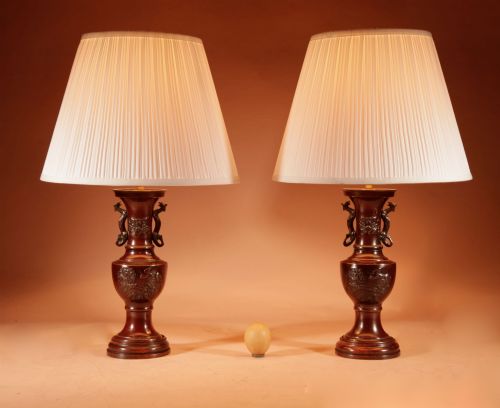
These japanese cast bronze pair selections bring sculptural weight and dark patination into a room, forged during the Meiji period and the nineteenth century.
Japanese Cast Bronze Pair
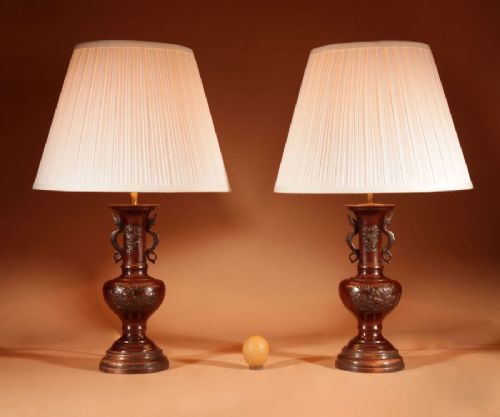
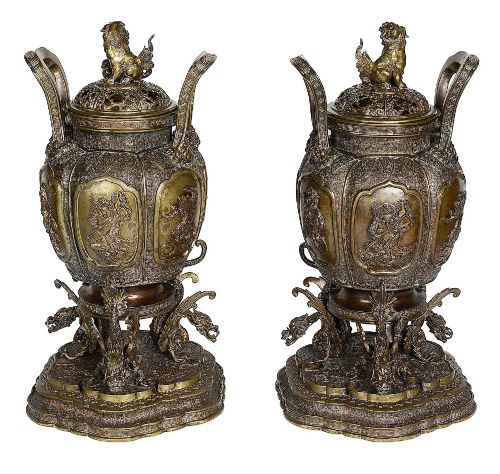
When you examine a japanese cast bronze pair, you encounter matched sets of heavy vessels, garden ornaments, and lighting created in the Far East and brought to Victorian Britain. The listings here present numerous examples in the form of tall vases, lidded urns, jardinières, and table lamps.
The majority originate from the Meiji period and the nineteenth century, spanning decades of intricate metalwork. Buyers frequently find substantial garden statuary and large planters alongside cabinet vases and ceremonial vessels.
Most items reflect traditional Asian craftsmanship adapted for Western interiors, appearing as decorative mantel ornaments or converted lamp bases. The selection ranges from compact table pieces to lifesize garden okimono.
How they were made
Artisans utilised traditional lost-wax casting and complex metal alloys to shape each japanese cast bronze pair. Molten metal poured into detailed moulds captured fine surface reliefs, feathers, and floral motifs before cooling.
Makers applied chemical patination, verdigris finishes, and occasional gilding to achieve deep, variegated surface colours. Skilled metalworkers then chased and engraved fine details by hand onto the cooled bronze surfaces.
Japanese Cast Bronze Pair Retail Price Guide 2026
Typical asking prices for japanese cast bronze pair among the pieces listed under this phrase on Sellingantiques today, from the lower quarter to the upper quarter. They describe what is for sale here now, not the wider market.
Geese feature among the heavy garden metalwork, standing ready to startle unsuspecting visitors near the herbaceous border.
What varies in quality
The distinction between ordinary production and superior work rests on the crispness of the cast and the depth of the hand-chased detail. Finer pieces display sharply defined feathers, foliage, and relief panels that remain crisp across both matching items.
Surface patination also separates standard examples from exceptional ones, with better items showing rich, stable tones rather than flat or flaky finishes. The weight of the metal and the symmetry of the matching pair further indicate the maker's original ambition.
The Japanese Cast Bronze Pair Glossary
- Meiji Period
- The era in Japanese history spanning from 1868 to 1912, noted for a surge in decorative metalwork exported to the West. Most nineteenth-century bronze items belong to this distinct era.
- Okimono
- A Japanese ornamental statue or object for display, often taking the form of animals or figures in bronze. These substantial pieces frequently stand outdoors or in large halls.
- Usubata
- A traditional Japanese bronze vessel with a wide mouth, designed primarily for flower arrangement. These items often feature heavy handles and decorative patination.
- Jardiniere
- A large ornamental pot or stand for holding plants and flowers, frequently rendered in heavy cast bronze. Victorian interiors often utilised these vessels for indoor palms.
Japanese Cast Bronze Pair: Frequently Asked Questions
How do I clean antique bronze?
Dust the surface gently with a soft dry cloth to remove accumulated grit without harming the original patina. Avoid chemical polishes or water, which can strip away the historic dark finish.
Allow the metal to age naturally in a stable environment away from direct moisture and heat. Professional conservation is rarely necessary unless active corrosion appears.
Are these pieces actually from the Meiji period?
Many items originate from the late nineteenth and early twentieth centuries, aligning with the Meiji era and Victorian importing trends. Stylistic motifs such as naturalistic birds and floral relief work typically point to this timeframe.
Examine the casting quality and the natural wear of the alloy for signs of genuine age. Signatures on the base can also provide clues regarding the workshop origin.
Can I convert these vases into lamps?
Numerous historical examples arrive already converted into table lamps with fitted wiring and fabric shades. Original bronze vessels can also be adapted by specialists who drill or mount them without damaging the main body.
Consider whether the weight and proportion of the pair suit a tabletop before proceeding with wiring. Reversible mounting methods help preserve the underlying integrity of the antique.
Why do some bronze pairs show green verdigris?
Verdigris results from the interaction of copper alloys with air and moisture over many decades. Makers sometimes applied artificial patination to simulate ancient burial effects.
Stable verdigris adds character and depth to nineteenth-century garden statuary and planters. It indicates natural oxidation rather than a structural flaw.