




Japanese Bronze Incense Burner
A japanese bronze incense burner brings together metalworking skill and traditional forms, offering both decorative presence and functional design.
Japanese Bronze Incense Burner
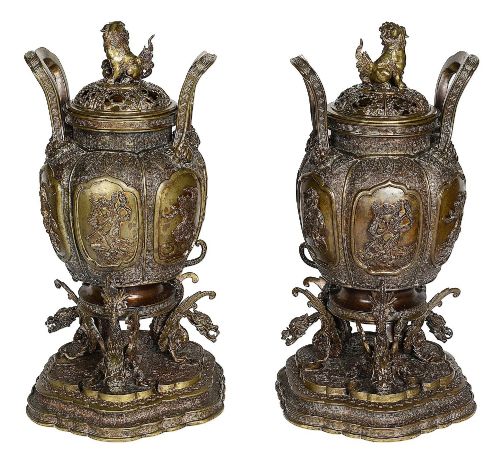
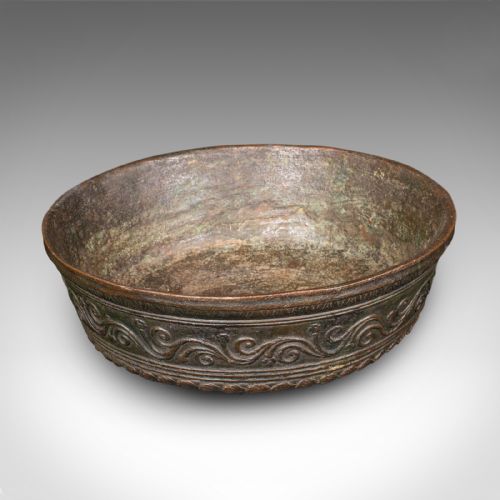
A japanese bronze incense burner typically takes the form of a lidded vessel, often referred to as a koro, designed for burning aromatic materials. These pieces range from compact animal figures, such as quails or temple lions, to larger architectural urns and bowls.
Most examples encountered date from the Meiji period and the Edo period, reflecting centuries of metal casting traditions. Buyers also find items influenced by European Japonisme alongside traditional Japanese aesthetics.
Materials and Technique
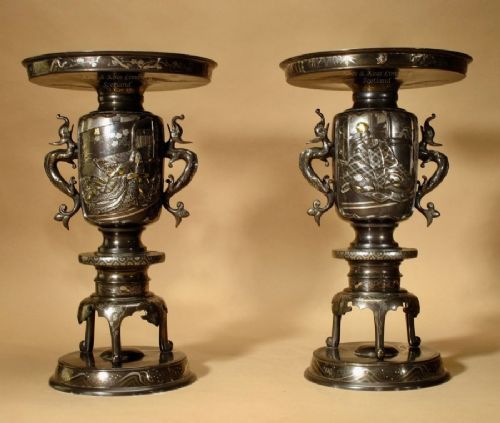
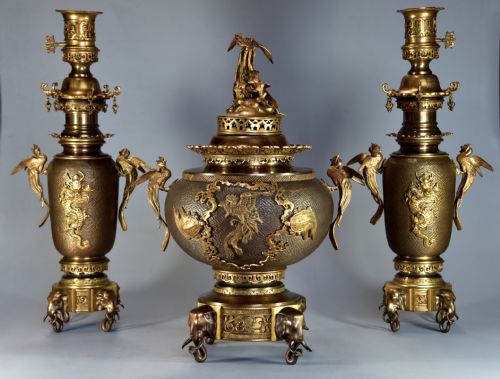
Craftsmen utilised bronze as the primary medium, frequently applying patination to achieve deep brown or dark tones on the metal surface. Many vessels incorporate gold inlay, silver inlay, or enamel to highlight intricate decorative motifs.
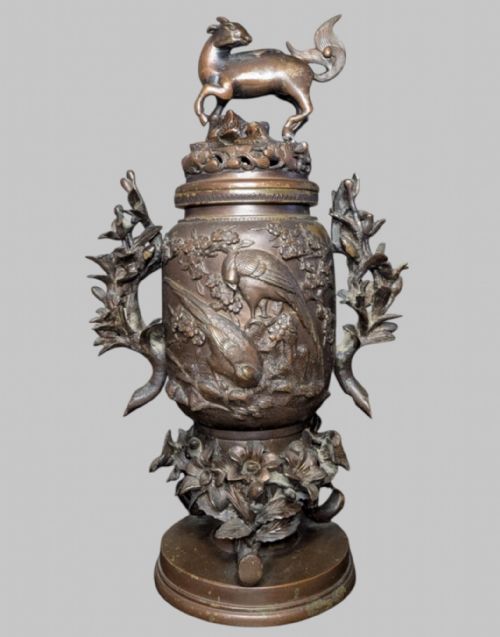
Casting methods allowed for detailed rendering of animal forms, foliage, and mythical creatures, often finished with parcel-gilt or contrasting metal highlights. The integration of cords and fitted lids demonstrates meticulous attention to functional assembly.
Listings feature bronze, enamel, and gold inlay across items spanning the Edo period, Meiji period, and Victorian era.
Craftsmanship and Detail
Quality rests in the crispness of the casting and the precision of the metal inlay work, where finer pieces display sharp relief and secure metal placement. The naturalism of sculptural elements, from bird feathers to mythical beasts, distinguishes superior examples from simpler production.
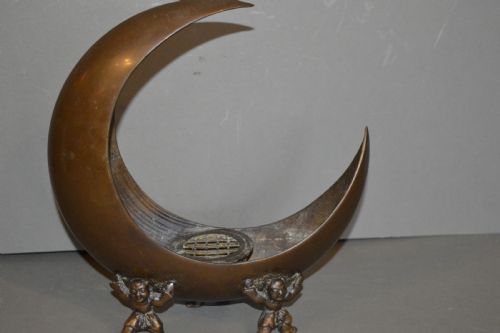
The subtlety of the patination and the harmony between the vessel body and its cover contribute significantly to the overall merit of an item. Greater artistic ambition shows in unconventional shapes, such as crescent moons or eggplants, executed with exact balance.
Tsumura Kamejo·Masahiko Katori·Daimei Noritoku·Kizan
The Japanese Bronze Incense Burner Glossary
- Koro
- A traditional Japanese incense burner, usually featuring a pierced cover to allow fragrance to escape. These vessels rest on small feet and appear in various animal and architectural shapes.
- Meiji Period
- The era in Japanese history spanning from 1868 to 1912, characterised by opening trade and exceptional decorative metalwork. Pieces from this time often exhibit highly detailed casting and mixed metal inlays.
- Edo Period
- The period lasting from 1603 to 1867, preceding the Meiji era and associated with archaic bowl designs and classical forms. Surviving bronzes from this timeframe display restrained patination and traditional casting techniques.
- Shishi
- A mythical temple lion used frequently as a decorative finial or sculptural base on incense burners. These guardian figures symbolize protection and power in East Asian art.
- Japonisme
- A 19th-century European artistic movement inspired by Japanese aesthetics and craftsmanship. French makers in this style combined local design sensibilities with imported bronze forms.
Japanese Bronze Incense Burner: Frequently Asked Questions
What is a koro?
A koro is the traditional Japanese term for an incense burner, typically fitted with a removable lid and resting on three or four feet. These vessels were designed to hold burning incense during ceremonial or domestic use.
They appear in diverse shapes, ranging from simple bowls to complex sculptural figures of animals and mythical beasts.
How do I date a bronze incense burner?
Dating relies on stylistic markers, casting techniques, and recorded signatures associated with specific historical periods like the Edo or Meiji eras. Edo pieces often show archaic influences, while Meiji items frequently feature elaborate mixed-metal inlays.
Examining the depth of the patination and the wear on the base also helps establish the age of the bronze.
What materials are used with the bronze?
Makers frequently enhanced bronze surfaces using gold inlay, silver inlay, and cloisonne enamel to create contrasting patterns and colours. Some examples also incorporate parcel-gilt highlights or patinated finishes to accentuate sculptural details.
These mixed-metal techniques became particularly prominent during the late nineteenth century.
Were these burners actually used for incense?
Many of these pieces served a practical function in burning aromatic woods and resins, while others were primarily created as decorative objects for display. The pierced covers on koros allowed smoke to diffuse into the room.
Signs of internal ash or carbon residue often indicate past use.