





Jacobean Revival Side Chairs
Jacobean revival side chairs bring sturdy 17th-century vernacular form into Victorian and Edwardian interiors through solid oak and carved detail.
Jacobean Revival Side Chairs
Jacobean revival side chairs emerge from the nineteenth and early twentieth centuries, drawing heavily on seventeenth-century motifs. Buyers seeking this aesthetic encounter dining chairs, hall chairs, and occasional seating originating from periods including the Victorian and Edwardian eras.
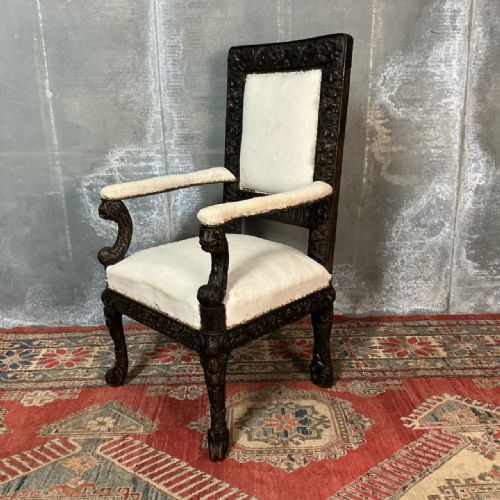
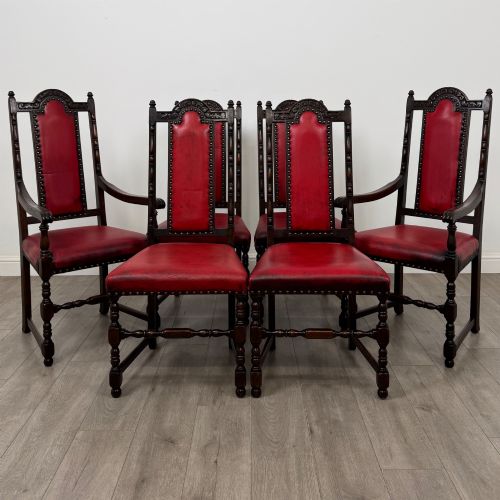
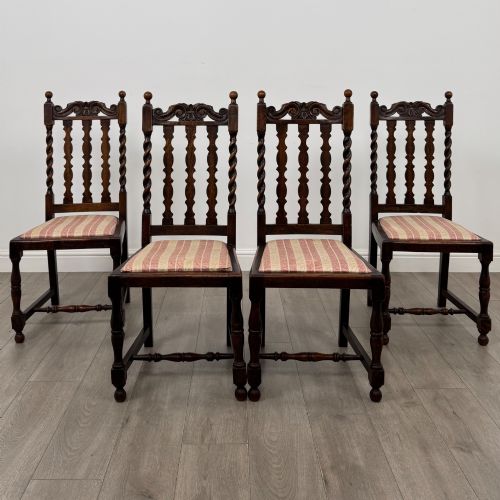
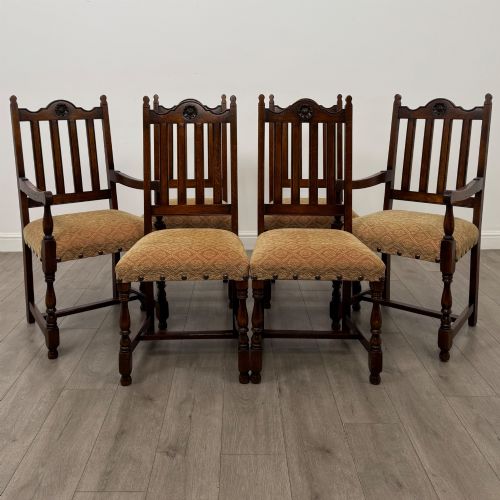
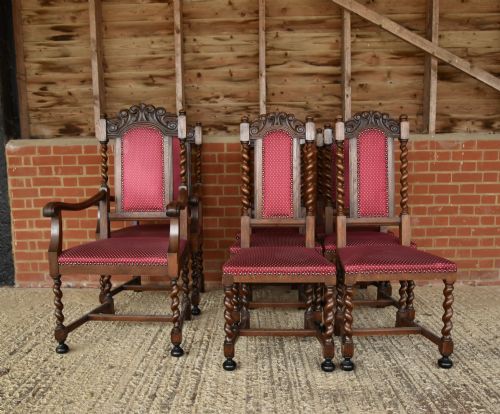
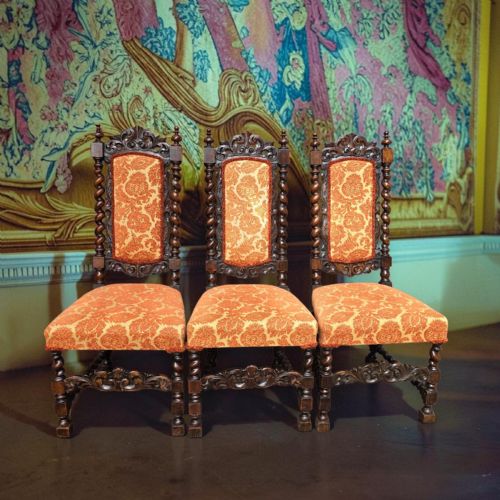
The versions most commonly met on this page are carved oak dining and hall chairs. These pieces frequently incorporate twist legs, high backs, and panelled construction that echo seventeenth-century models.
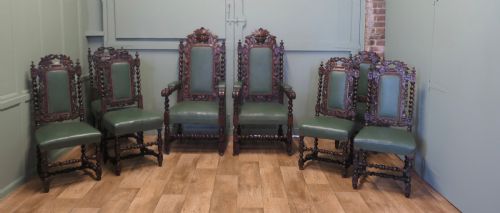
Makers of these revival pieces replicated earlier forms for contemporary homes, resulting in sets ranging from pairs to groups of eight. Walnut and ash occasionally appear alongside the predominant oak framework.
Gradations in Quality
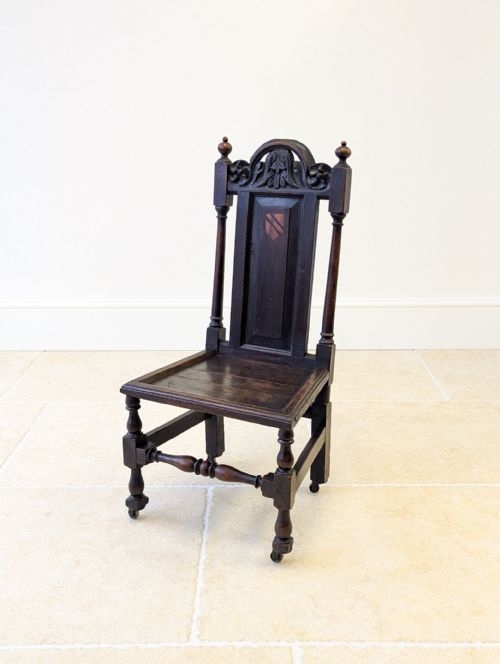
Depth and crispness of the carved detail separate standard production from finer examples. Deeply undercut foliage and heraldic motifs on crest rails indicate skilled labour rather than shallow mechanical stamping.
Coherence within sets alters the standing of a group, where matching grain, uniform colour, and unaltered frames maintain historical integrity. Timber selection also dictates grade, with dense quarter-sawn oak representing superior material choice.
Jacobean Revival Side Chairs Retail Price Guide 2026
Typical asking prices for jacobean revival side chairs among the pieces listed under this phrase on Sellingantiques today, from the lower quarter to the upper quarter. They describe what is for sale here now, not the wider market.
Listings demonstrate a strong preference for oak construction, paired with diverse seat materials including cane, leather, and woven fabric.
The Jacobean Revival Side Chairs Glossary
- Barley Twist
- A turned column resembling a rope wound tightly in a spiral. This decorative turning style frequently occurs on chair legs and stretchers during the revival periods.
- Crest Rail
- The horizontal top member of a chair back. It often receives the heaviest carving on revival seating.
- Derbyshire Chair
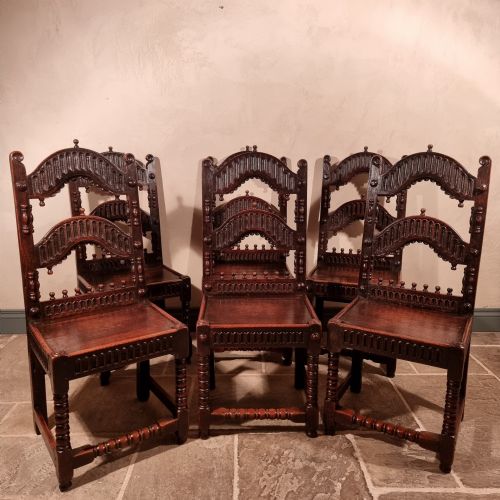
- A type of 17th-century oak chair with open arcaded backs and turned posts. Revival versions emulate this regional English form.
- High-Back
- A chair style featuring an elongated vertical back panel. This design emphasises height and display in formal rooms.
- Side Chair
- An upright chair without arms designed for dining or occasional use. These pieces sit easily against walls when not drawn to a table.
Jacobean Revival Side Chairs: Frequently Asked Questions
How do I date these chairs?
Dating relies on timber patina, tool marks, and construction methods rather than carved style alone. Nineteenth and early twentieth-century revival pieces often display machine-sawn timber elements hidden beneath hand-finished surfaces.
Hardware, upholstery webbing, and secondary woods like ash or beech help distinguish Victorian production from genuine seventeenth-century originals.
Are these chairs comfortable for daily dining?
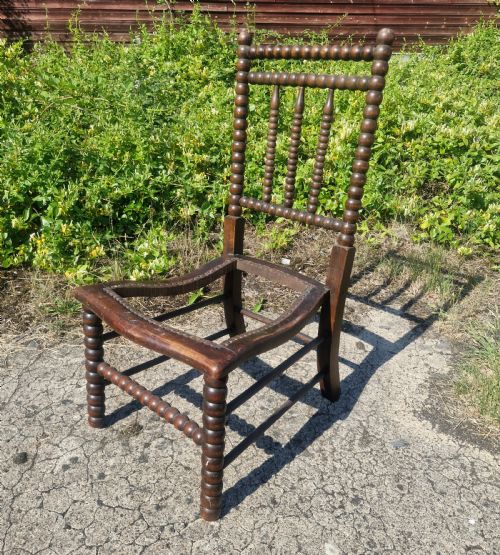
Most jacobean revival side chairs feature upright, rigid wooden backs designed for formal posture rather than lounging. Upholstered or cane seats offer moderate cushioning, but timber seats require added pads for extended sitting.
Buyers often select larger sets for dining tables where the upright stance promotes proper posture during meals.
How should I care for oak and cane?
Solid oak requires occasional treatment with suitable wax to nourish the grain and prevent the timber from drying out. Avoid placing cane seats near direct heat sources which cause the natural fibres to become brittle and snap.
Gentle dusting with a dry cloth protects both the carved wooden surfaces and delicate woven inserts.
What is the difference between hall and dining chairs?
Hall chairs typically feature solid wooden seats and striking, decorative carved back panels meant for visual impact in entryways rather than prolonged sitting. Dining chairs form matching sets intended for prolonged use around a table.
Hall chairs frequently appear as single pieces or pairs, whereas dining chairs survive in larger cohesive sets.