



Jacobean Revival Chest Drawers
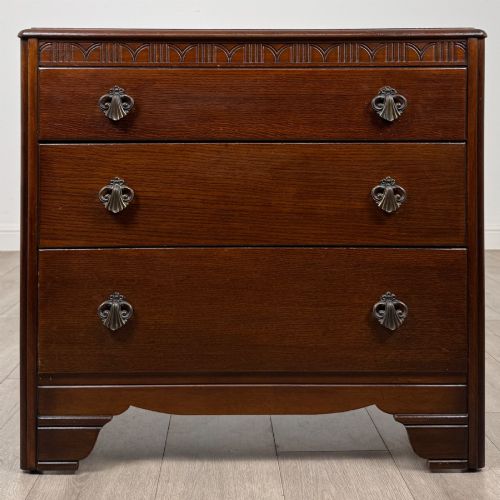
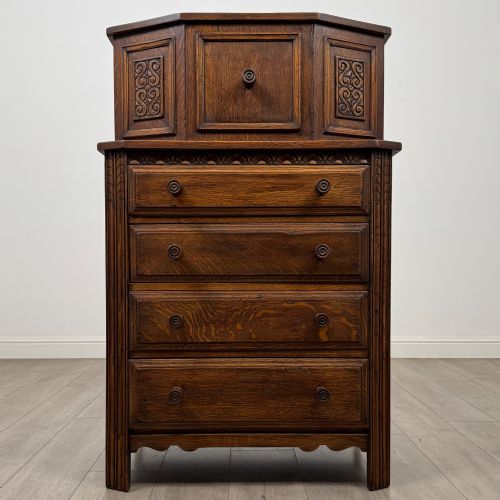
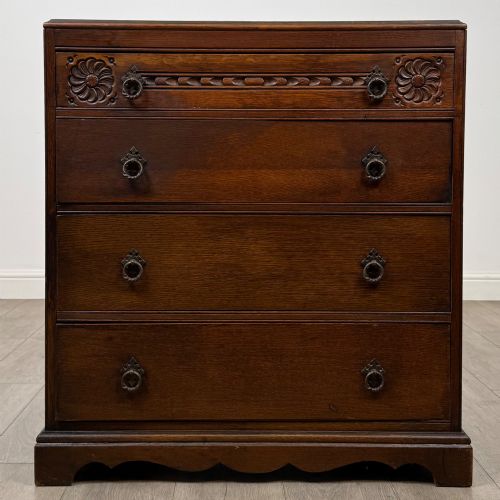
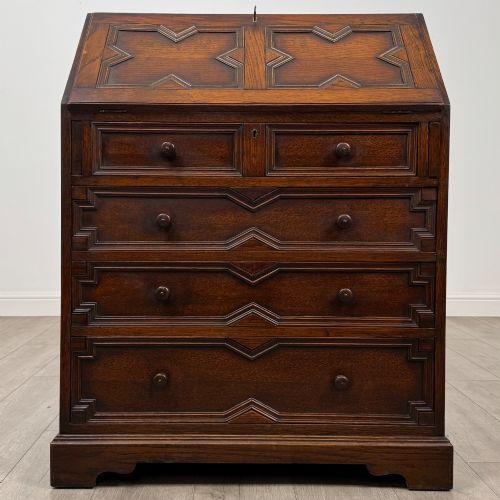
These jacobean revival chest drawers bring heavy timber presence and carved geometric panels straight into a modern interior.
Jacobean Revival Chest Drawers
A buyer seeking jacobean revival chest drawers examines pieces originating from the Edwardian period through to the nineteen thirties. These items adopt seventeenth-century decorative vocabulary, particularly panelled drawer fronts, applied mouldings, and sturdy proportions.
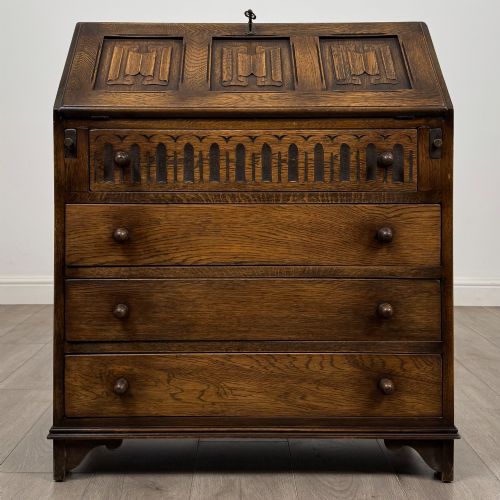
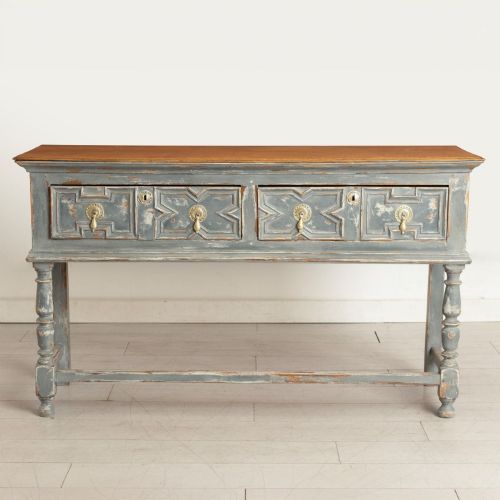
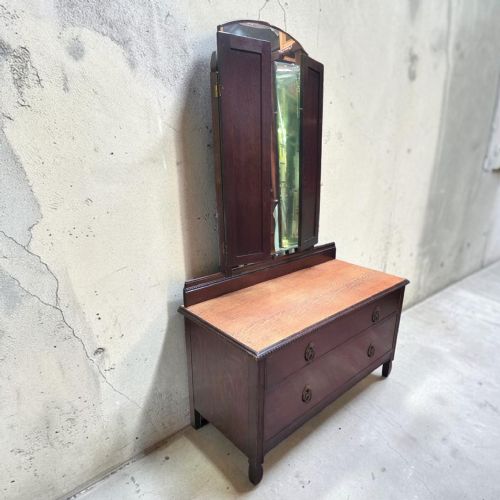
The most frequent form encountered on this page is the oak chest of drawers, often accompanied by related items such as dressing chests, writing bureaux, and side tables sharing the same revival aesthetic. These pieces utilise substantial timber to project an air of historical permanence.
Origins largely span the early twentieth century, reflecting a sustained domestic appetite for heavier, period-inspired furniture during the Edwardian era and interwar years. Makers drew directly upon Tudor and Stuart precedents to satisfy contemporary demand for traditional craftsmanship.
Assessing quality and finish
Quality differentiates itself through the depth and crispness of the timber carving, particularly on linenfold panels and applied mouldings. Superior examples display precise joinery and well-selected grain patterns across the primary oak surfaces.
The integrity of the structural frame and the smooth operation of heavy drawers mark the division between standard production and finer workshops. Original brass or metal hardware and well-preserved surface finishes contribute further to a piece's standing.
Some dressing chests preserve triple mirrors that allow the user to inspect their Edwardian hat from three angles simultaneously.
The Jacobean Revival Chest Drawers Glossary
- Linenfold
- A style of relief carving used to decorate wooden panels, resembling folded parchment or linen. It appears frequently on cupboard doors and drawer fronts within this group.
- Barley Twist
- A type of turned wooden column resembling the spiral growth of barley. This decorative detail supports tables, dressing chests, and cabinet bases.
- Dresser Base
- A low sideboard or cabinet featuring drawers and cupboards beneath a flat top. These items originate from vernacular domestic architecture.
- Bureau
- A desk with a sloping hinged lid that opens to reveal a writing surface and small compartment drawers. They often incorporate the characteristic carved panelling of the revival style.
Jacobean Revival Chest Drawers: Frequently Asked Questions
What rooms suit this furniture?
The substantial proportions and dark oak tones of these chests suit studies, hallways, and bedrooms requiring strong historical anchor points. They pair effectively with both neutral walls and rich traditional colour schemes.
Allowance must be made for their physical depth and weight when planning placement within smaller contemporary spaces.
Are these pieces solid oak?
Most items utilise solid oak for their primary structural elements, drawer fronts, and tops. Secondary woods may appear in internal framing or drawer linings.
Inspect the grain continuity around corners and panel edges to verify the extent of solid timber construction versus veneered surfaces.
How do I maintain the finish?
Regular dusting with a dry lint-free cloth preserves the waxed or polished surface of the oak. Avoid placing pieces in direct sunlight or near heat sources to prevent timber splitting.
Occasional application of traditional beeswax nourishes the wood and maintains a natural sheen without building up heavy chemical residues.