


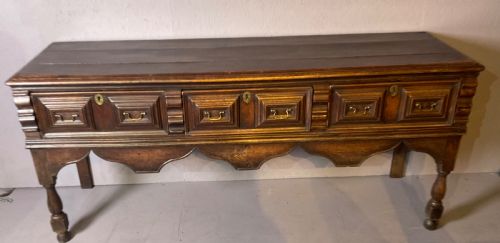


Jacobean Period Dresser
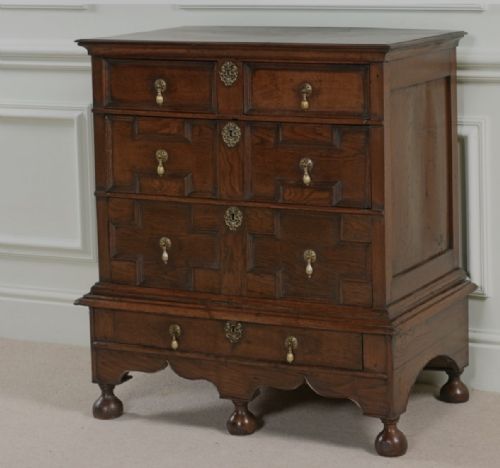
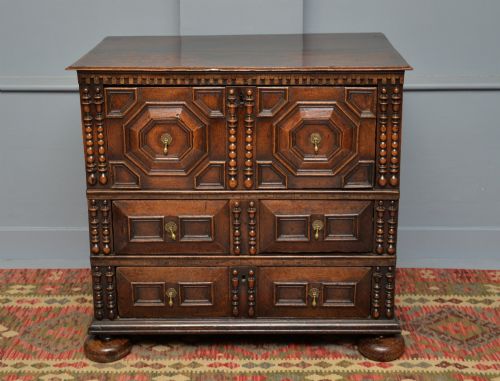
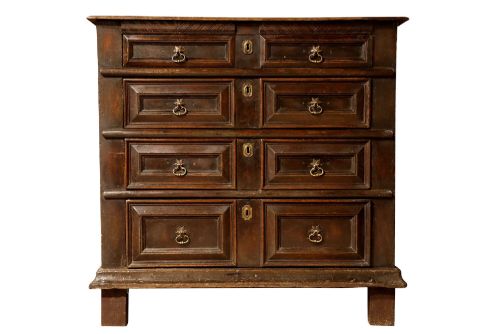
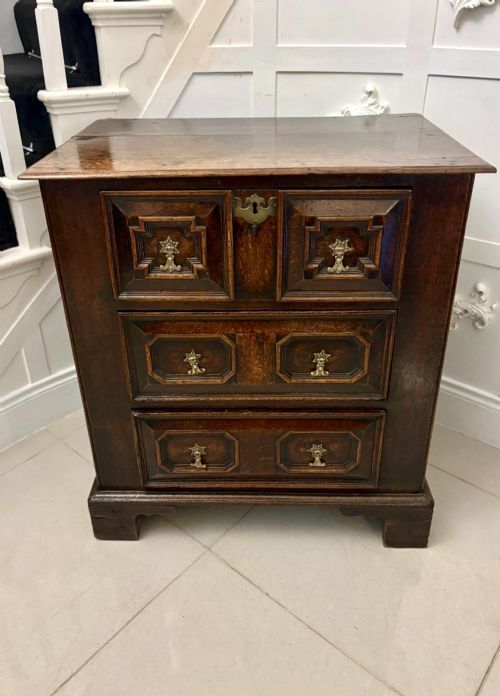
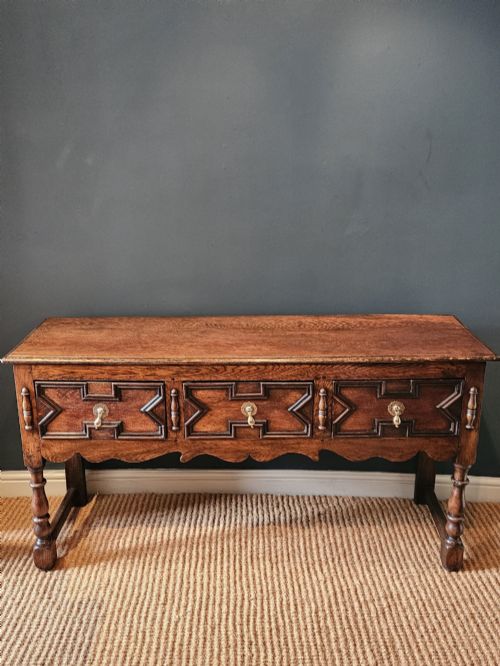
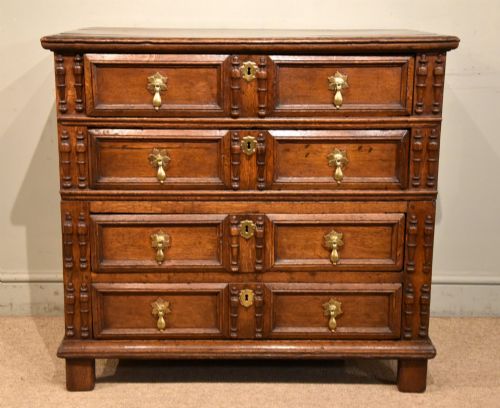
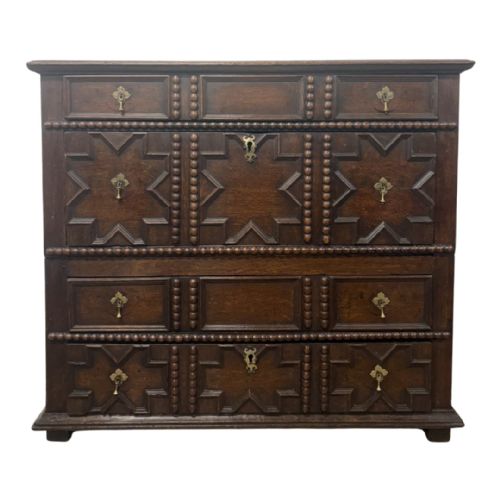
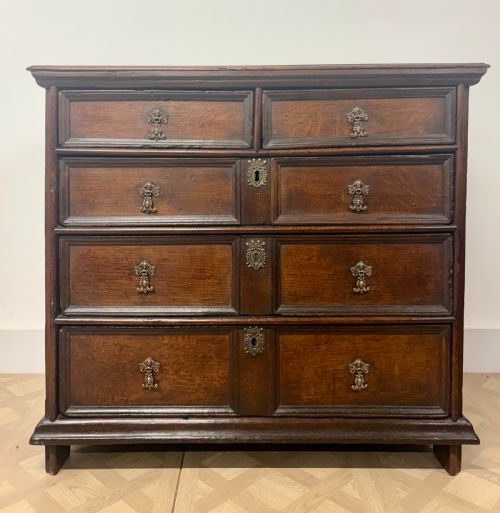
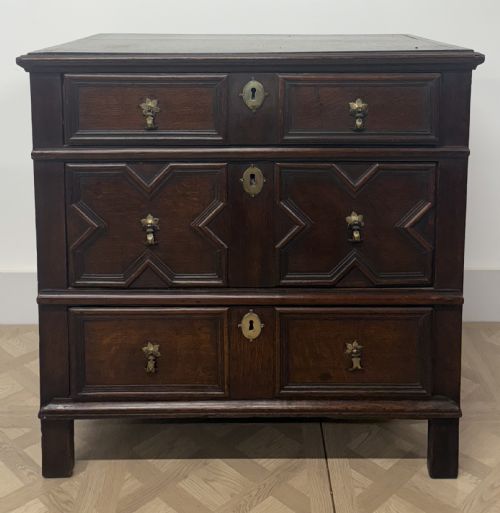
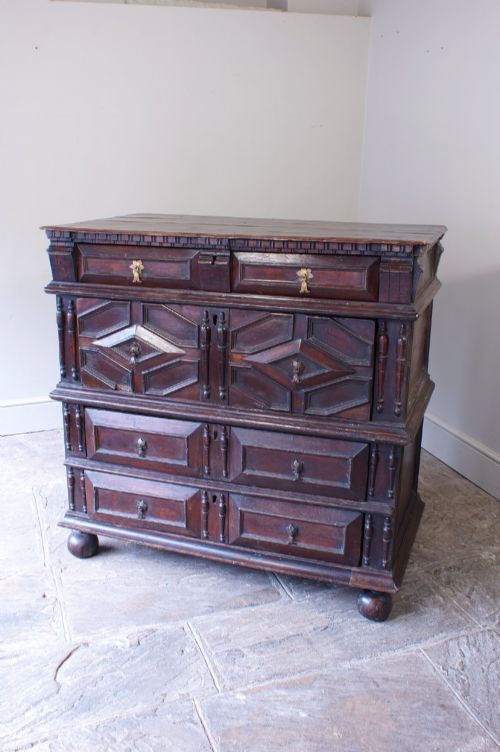
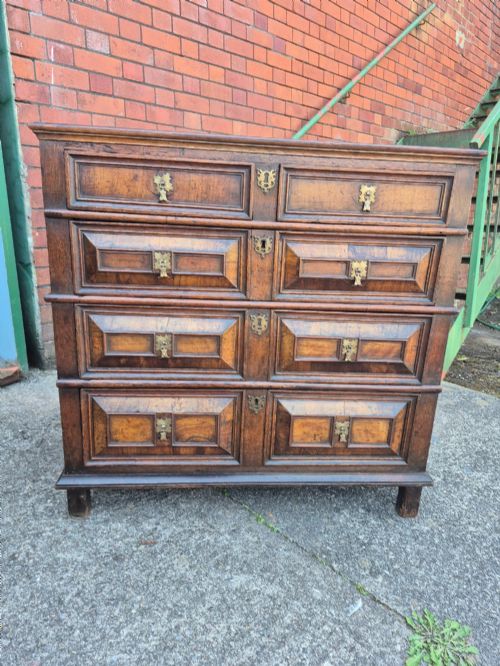
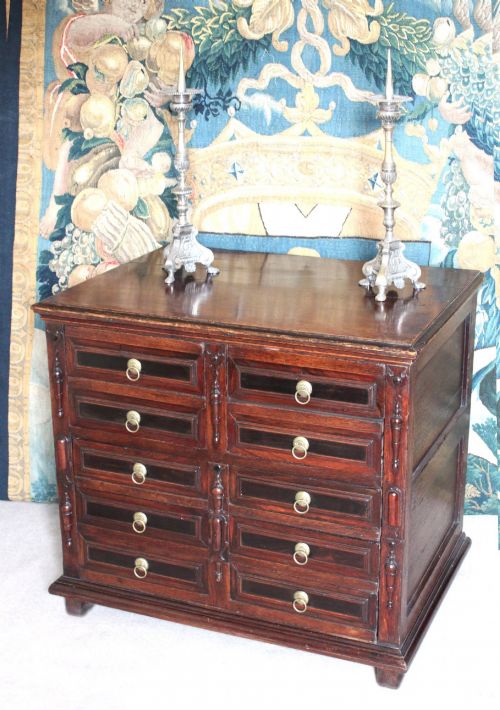
These pieces give you the heavy timber and geometric panels of a jacobean period dresser, built to anchor an interior with honest early joinery.
Jacobean Period Dresser
A jacobean period dresser brings heavy seventeenth-century proportions into a room, serving as a practical surface for display or storage. Buyers searching this phrase meet sturdy oak furniture designed to last centuries rather than decades.
The selection here draws primarily on seventeenth-century forms, including geometric chests of drawers, low servers, court cupboards, and dresser bases. Charles II and Georgian examples appear alongside pieces dated to the sixteen-eighties.
Most entries showcase the dark timber tones and linear drawer mouldings typical of English vernacular woodworking from the Stuart and Carolean eras. Walnut and brass accents turn up on select items to lift the sombre wood grain.
How they were made
Makers relied on solid oak as the primary structural timber, chosen for its strength and abundance in seventeenth-century England. Boards were often cleft or sawn and planed by hand, resulting in thick sections that took decades to season fully.
Surface decoration depended on carpentry techniques like geometric applied mouldings, paneling, and pegged frame-and-panel construction. Iron hinges and brass drop handles or backplates provided functional hardware that secured the heavy doors and drawers.
Secondary timbers such as walnut appear on drawer fronts for contrast, while occasional mother-of-pearl inlay adds detail to specialised surfaces. Joiners utilised traditional mortise and tenon joints locked with wooden dowels instead of modern metal fasteners.
Jacobean Period Dresser Retail Price Guide 2026
Typical asking prices for jacobean period dresser among the pieces listed under this phrase on Sellingantiques today, from the lower quarter to the upper quarter. They describe what is for sale here now, not the wider market.
Listings feature seventeenth-century oak furniture alongside later Georgian adaptations and nineteenth-century interpretations of earlier styles.
What varies in quality
The precision of the geometric mouldings and the crispness of the timber carving separate standard examples from superior survivals. A well-executed piece maintains tight joints and balanced proportions across the drawer fronts and cupboard doors.
The presence of original hardware, such as brass drop handles and backplates, elevates the historical integrity of a chest or dresser. Alterations to the timber base or replaced boards shift a piece away from its original seventeenth-century configuration.
The Jacobean Period Dresser Glossary
- Geometric moulding
- Raised wooden strips applied to drawer fronts in repeating rectilinear patterns. This technique creates texture and shadow across flat surfaces.
- Court cupboard
- A heavy enclosed piece of furniture with tiers for display and storage. These substantial items date back to the sixteenth and seventeenth centuries.
- Dresser base
- The lower section of a kitchen or dining storage unit, built with drawers above cupboards. They provide a solid working surface rather than shelving.
- Carolean
- The period spanning the reign of Charles II, known for lively carving and rich surface textures on oak furniture. It sits between the Commonwealth and the Glorious Revolution.
- Mortise and tenon
- A fundamental joint where a projecting peg fits squarely into a corresponding cavity. This method binds heavy oak frames securely without glue.
Jacobean Period Dresser: Frequently Asked Questions
How do I date a jacobean period dresser?
Examine the construction methods, tool marks on the timber backboards, and the style of the mouldings. Seventeenth-century pieces typically show hand-sawn surfaces and pegged joints rather than machine-cut screws.
Compare the hardware placements and timber types against known regional styles of the Stuart era. Secondary woods and handle designs often shift between the sixteen-eighties and later Georgian revivals.
Where should I place a low dresser?
These sturdy oak pieces work well in dining rooms or entrance halls where their long tops can hold lamps or ceramics. Keep them away from direct heat sources and strong sunlight to protect the aged timber.
Ensure the floor surface is level so the heavy frame does not twist over time. Allow adequate clearance around the doors and drawers for daily use.
How do I clean antique oak furniture?
Dust the timber regularly with a dry, soft cloth to prevent grit buildup in the carved recesses and geometric mouldings. Avoid modern silicone sprays that can penetrate the dry grain and alter the finish.
Apply a traditional beeswax sparingly if the wood appears dry or dull. Buff the surface gently after application to restore a soft, natural sheen.