


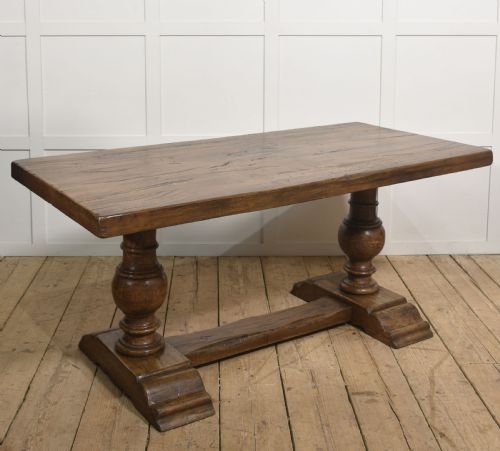


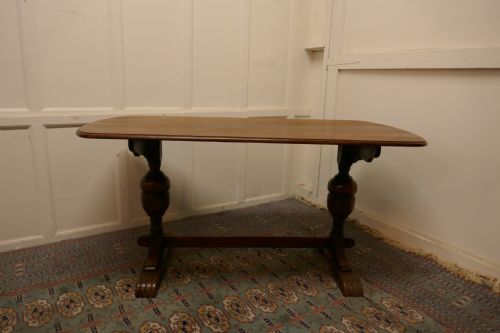


Jacobean Oak Pedestal Table
These jacobean oak pedestal table pieces bring heavy timber grain and carved revival detail into modern rooms, offering sturdy surfaces built to last generations.
Jacobean Oak Pedestal Table
A jacobean oak pedestal table brings heavy timber grain and traditional carving into domestic spaces, appearing across various formats in the current listings. Buyers seeking these items encounter robust dining tables, side tables, desks, and smaller plant stands rooted in revival aesthetics.
The pieces present on this page originate from the nineteenth century through the early decades of the twentieth century. Examples span Victorian, Edwardian, and later revival periods, displaying enduring historical influences.
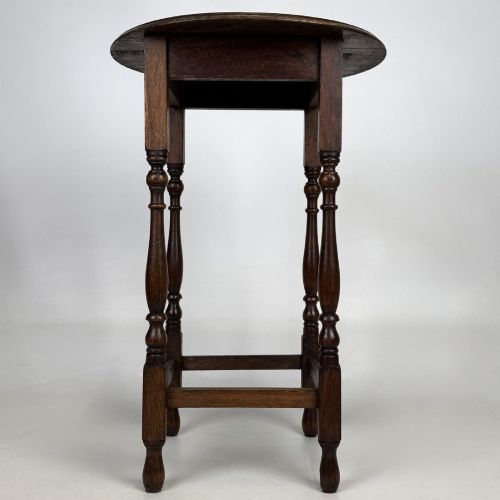
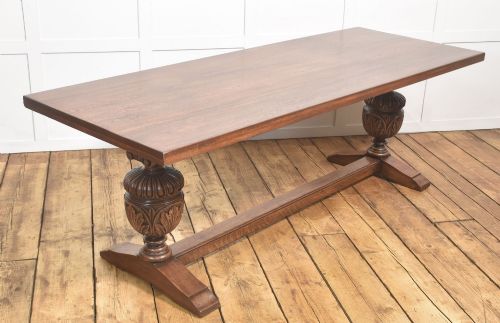
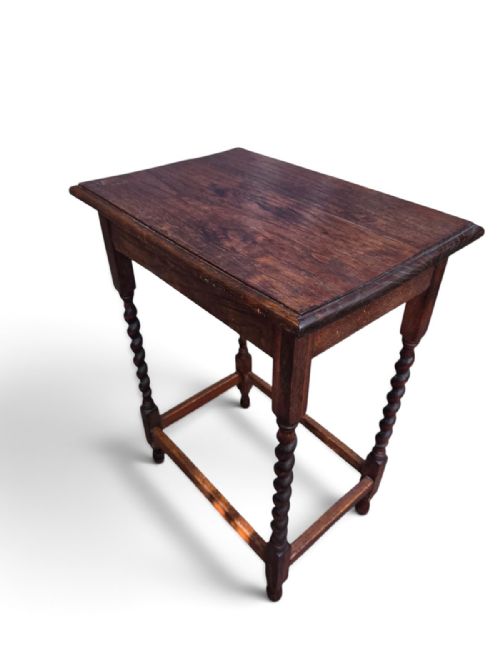
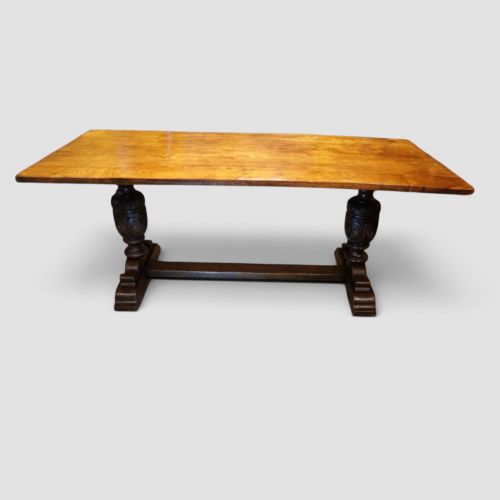
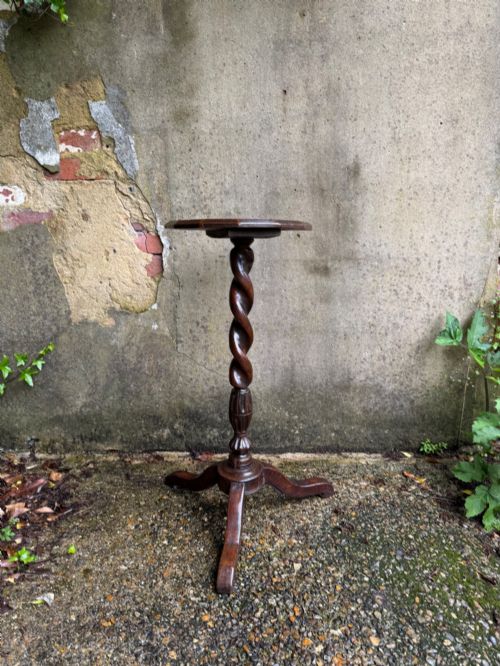
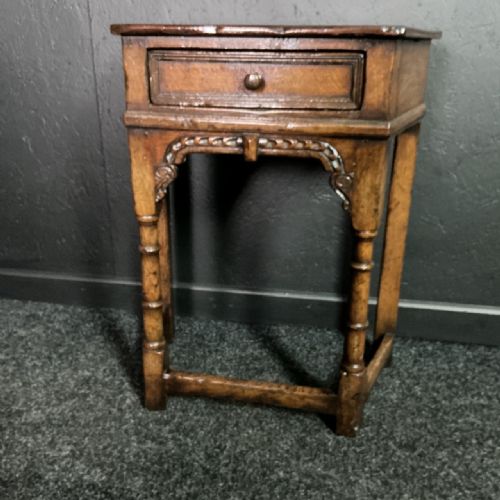
Forms range widely from large refectory dining surfaces to compact lamp tables and plant stands. Solid oak construction dominates the selection, frequently paired with characteristic turned supports such as barley twist legs.
Materials and Construction
Construction relies primarily upon solid oak timber, selected for its density, strength, and prominent grain pattern. Carpenters shaped these heavy woods using traditional joinery methods suited to long furniture lifespans.
Metal and brass components occasionally appear in hardware elements like handles and fittings on desks and tables. Turned woodwork, notably barley twist legs, demonstrates skilled lathe work across many listed examples.
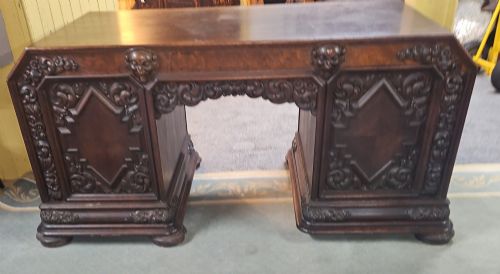
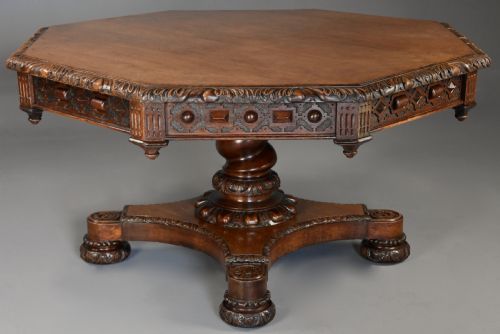
Carved decoration often enriches the structural framing, showing revival motifs inspired by earlier Elizabethan and Jacobean design. Surface finishes protect the raw timber while enhancing the natural warmth of the oak.
Jacobean Oak Pedestal Table Retail Price Guide 2026
Typical asking prices for jacobean oak pedestal table among the pieces listed under this phrase on Sellingantiques today, from the lower quarter to the upper quarter. They describe what is for sale here now, not the wider market.
Listings feature solid oak across dining tables, desks, and plant stands spanning the nineteenth century through 1930.
Assessing Quality and Craftsmanship
Quality separates pieces through the crispness of hand carving and the selection of timber planks. Superior examples display dense, well-figured oak with deep, deliberate chisel work rather than shallow mechanical stamping.
Structural integrity governs the longevity of tables and desks, determined by tight joints and heavy, stable underframing. Refectory tables and large library desks demonstrate superior execution when the timber remains flat and the legs bear weight without wobble.
The Jacobean Oak Pedestal Table Glossary
- Refectory table
- A long dining table historically used in communal dining halls and adopted during later revival periods for domestic use. These heavy oak surfaces provide substantial seating capacity.
- Barley twist
- A decorative turning technique resembling a spiral helix, commonly executed on wooden furniture legs and upright supports. This form became particularly popular during the Edwardian era.
- Jacobean revival
- An architectural and furniture style drawing inspiration from the early seventeenth-century reign of James I, characterised by dark oak, geometric moulding, and strapwork. Victorian and Edwardian makers frequently reproduced these motifs.
- Jardiniere
- An ornamental stand or pot designed to hold indoor plants and flowers, often constructed from solid oak with turned legs. These items served as decorative plant stands in period interiors.
Jacobean Oak Pedestal Table: Frequently Asked Questions
What periods do these oak tables come from?
The listings span from the nineteenth century through the 1930s, encompassing Victorian, Edwardian, and various twentieth-century revival eras. Most pieces date from the Edwardian period and the 1920s.
Makers during these later decades drew heavily on earlier Elizabethan and Jacobean design vocabularies. This creates a distinct visual overlap between nineteenth-century execution and early twentieth-century revival production.
How do I care for solid oak furniture?
Solid oak requires stable indoor humidity levels and protection from direct heat sources to prevent timber splitting. Regular dusting with a soft cloth maintains the surface finish.
Occasional application of appropriate wax polish nourishes the wood grain without building up heavy residue. Avoid harsh chemical cleaners that can strip historic finishes.
Are these pieces suitable for everyday dining?
Many listings include large refectory tables originally constructed for heavy daily use. Their solid oak frames and sturdy undercarriages provide exceptional stability for regular dining.
Using placemats and coasters protects the historic timber surface from moisture rings and heat damage during meals. The durable nature of oak ensures these tables withstand active family spaces.
What distinguishes Jacobean revival from original antique furniture?
Jacobean revival furniture dates primarily from the Victorian and Edwardian periods rather than the seventeenth century. These later pieces replicate earlier carving styles, turnings, and dark finishes using contemporary workshop methods.
Construction details, tool marks, and hardware typically betray nineteenth or twentieth-century origins despite the historical aesthetic. Understanding these timelines helps buyers appreciate the exact historical context of their furniture.