
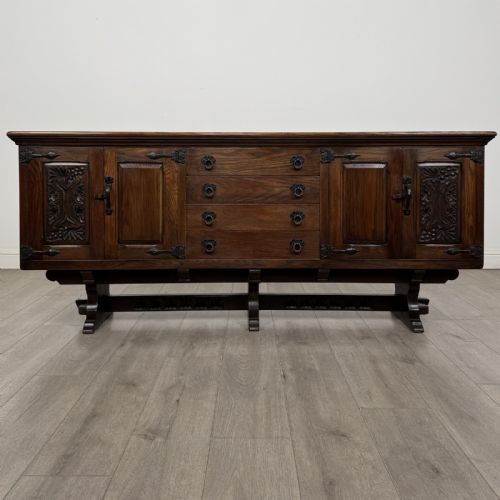
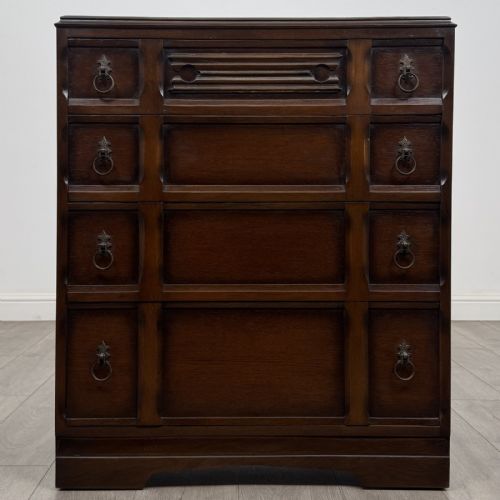
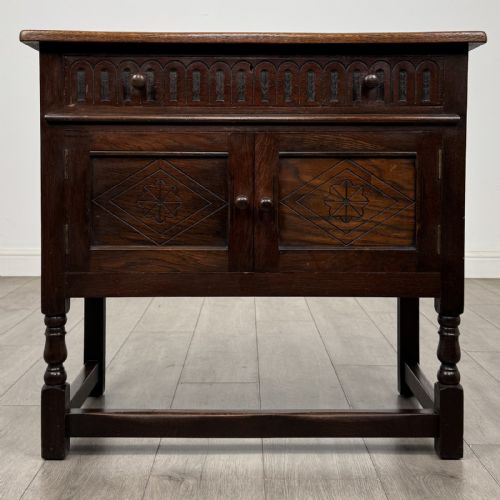
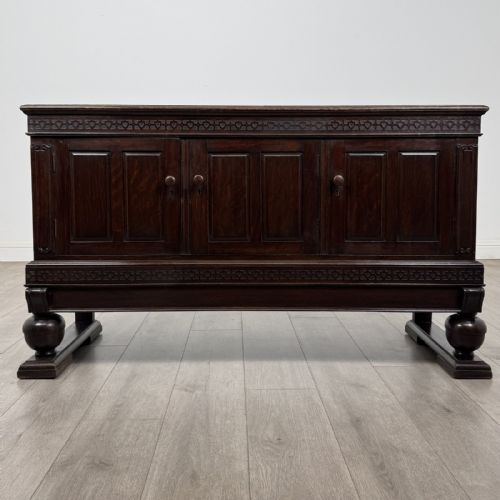
Jacobean Oak Panelling
These heavy, timber-framed pieces of jacobean oak panelling bring centuries of English domestic history and durable craftsmanship into a modern interior.
Jacobean Oak Panelling
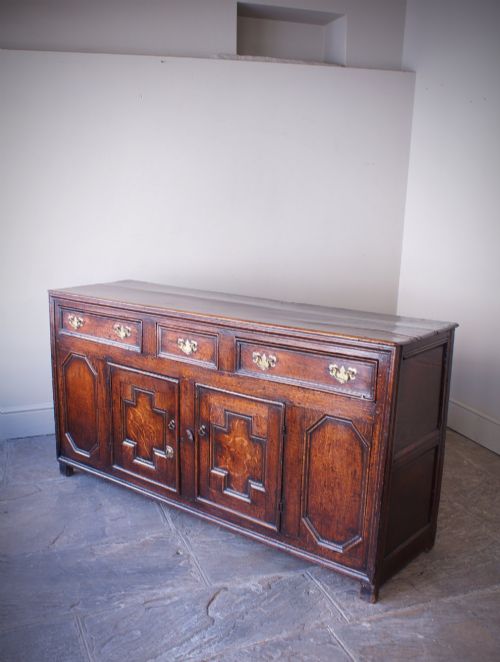
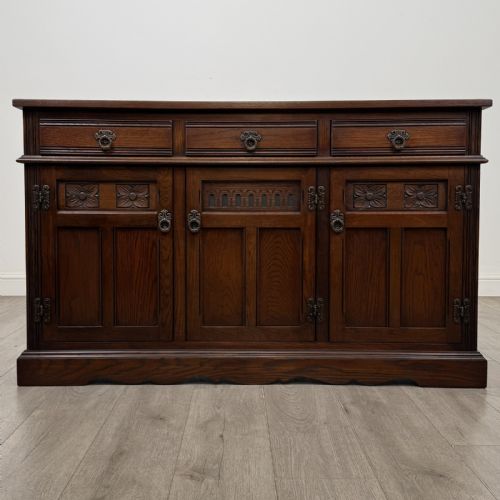
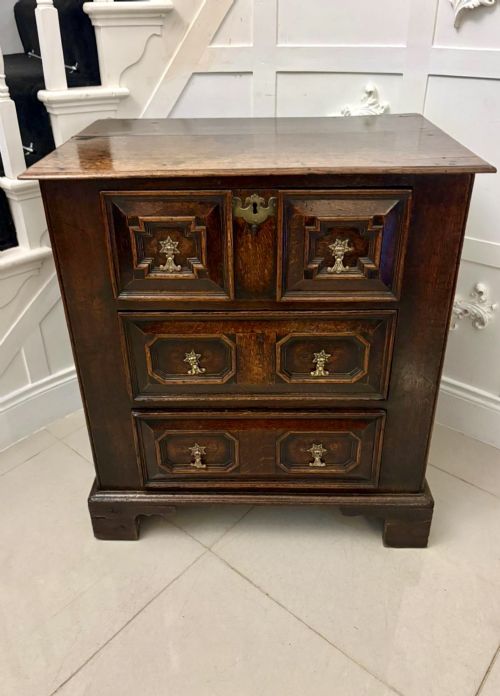
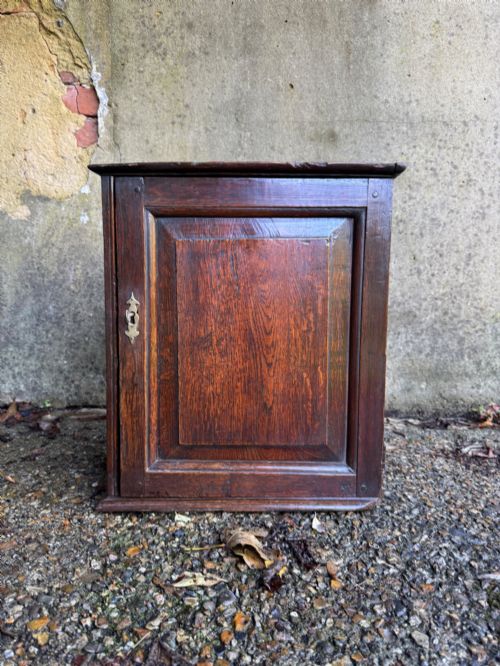
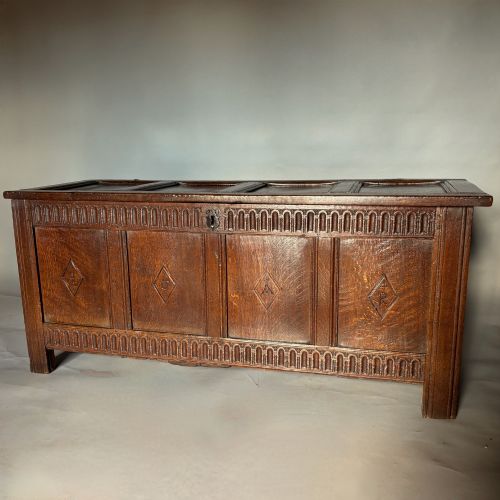
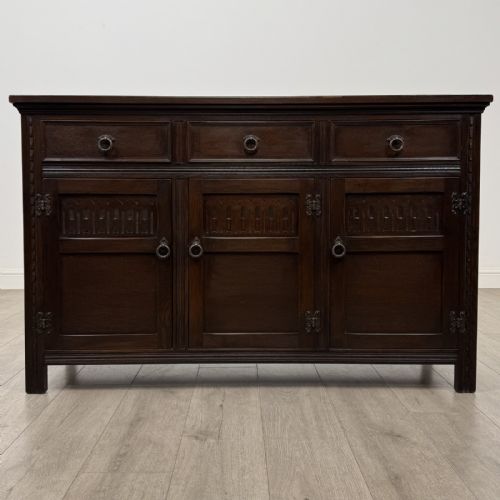
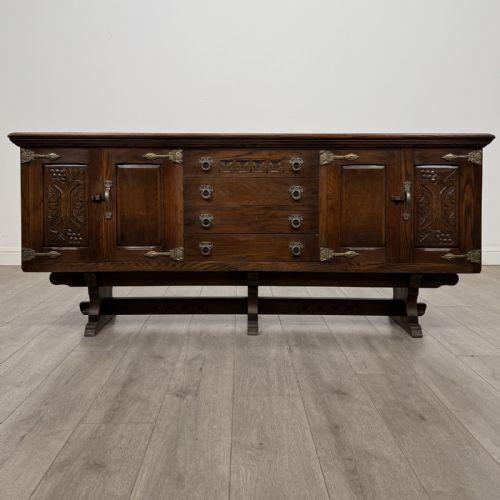
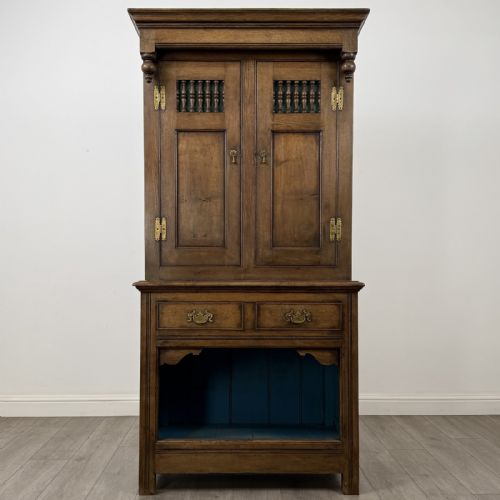
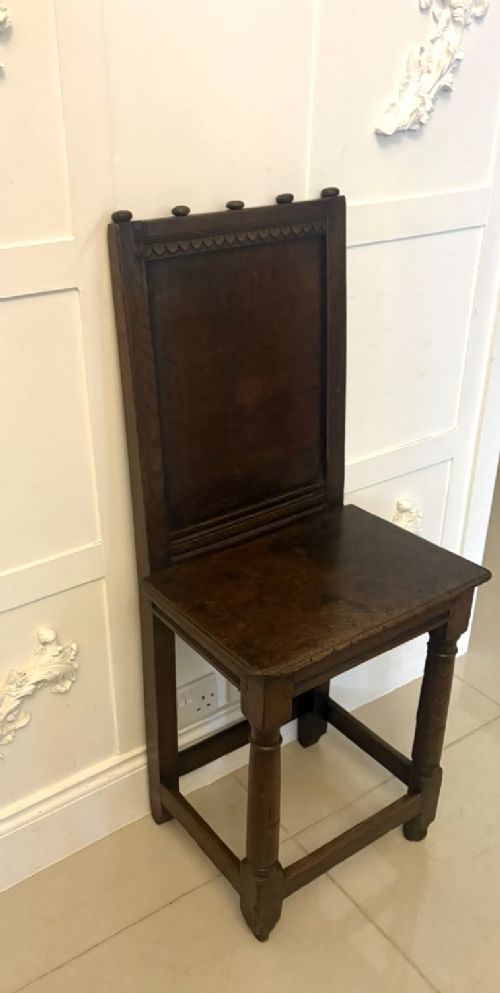
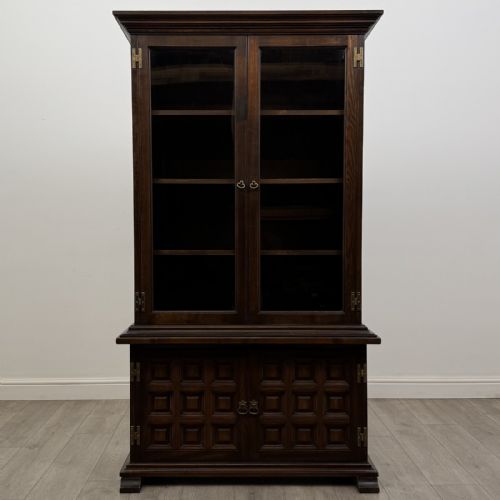
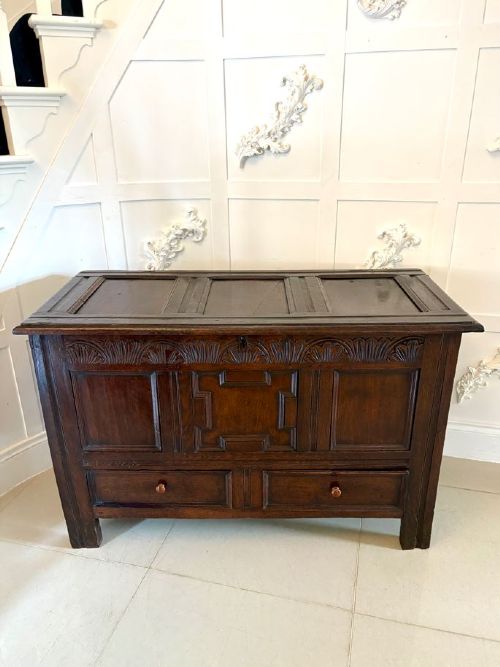
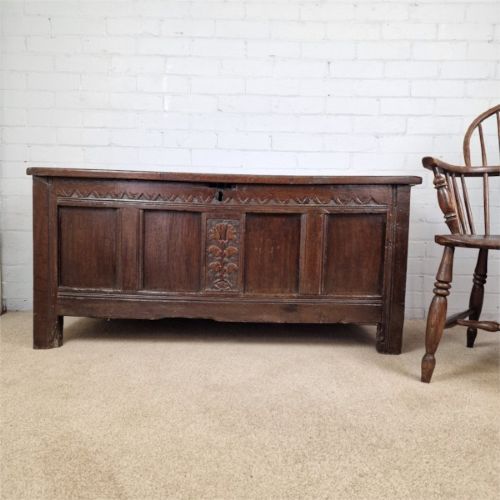
When searching for jacobean oak panelling, buyers encounter solid timber elements and architectural fittings originating predominantly from the seventeenth century, alongside later revival iterations from the Edwardian era and the early twentieth century. The selection spans structural architectural fragments, carved panels, and related storage forms such as coffers, mule chests, and wainscot armchairs built from the same dense wood.
How they were made
The construction relies fundamentally on solid oak, shaped using traditional joinery techniques such as mortise and tenon frames fitted with grooved panels. This framework allows the timber to expand and contract naturally with seasonal humidity changes without splitting the structure.
Surface ornamentation on these pieces typically involves hand-carving in high or low relief, occasional marquetry inlay, and pegged joints rather than modern metal fasteners. Secondary materials such as brass, iron, and wrought iron appear in hinges, locks, and handles, while occasional seating variants integrate cane or fabric.
Listings for jacobean oak panelling span multiple periods, recording pieces from the seventeenth, nineteenth, and twentieth centuries including Edwardian revival items.
What varies in quality
Quality in these timber pieces is defined by the crispness and depth of the hand-carved decoration and the integrity of the original joinery. Pieces that retain their primary surface patination and untouched structural timber stand apart from those altered or heavily restored over subsequent centuries.
The proportion and balance of the architectural mouldings also dictate the grade of an item, as does the presence of period-correct secondary elements like iron hardware. Finer examples display meticulous attention to timber selection, utilising quarter-sawn oak that reveals distinct medullary rays across the grain.
The Jacobean Oak Panelling Glossary
- Coffer
- A large wooden chest used historically for storage, typically constructed with heavy planking and framed panels.
- Wainscot armchair
- A sturdy wooden chair of seventeenth-century type featuring panelled backrests and solid arms, constructed using standard joinery rather than turned members.
- Linenfold
- A style of wood carving that imitates folded linen, commonly found on panels from the sixteenth and seventeenth centuries.
- Marquetry
- The art of applying pieces of veneer to a structure to form decorative patterns and pictorial designs.
- Medullary rays
- Radial cellular sheets in oak timber that produce a distinctive silver grain figure when quarter-sawn.
Jacobean Oak Panelling: Frequently Asked Questions
How do I install architectural wood panels?
Architectural panels are typically fixed to internal studwork or battens attached directly to masonry walls. Proper consideration must be given to ventilation behind the timber to prevent moisture accumulation.
Traditional installations rely on concealed fixing methods through the framing tongue or groove to maintain the visual continuity of the wood surface.
Are these items suitable for everyday furniture use?
Solid oak furniture and storage chests from these periods were built for heavy domestic service and remain exceptionally robust. Coffers function effectively as storage trunks or coffee tables in contemporary rooms.
Seating pieces like wainscot armchairs offer sturdy construction, though modern cushions are often added for comfort during extended sitting.
How do I date seventeenth-century woodwork?
Dating relies on observing construction methods, tool marks left by pit saws and hand chisels, and the evolution of decorative carving styles. Seventeenth-century work frequently employs pegged mortise and tenon joints without modern metal screws.
Comparing the stylistic motifs, such as guilloche patterns or strapwork, against established dated examples helps narrow the period.
What is the difference between original and revival pieces?
Original seventeenth-century pieces exhibit period tool technology, natural timber oxidation, and wear patterns accumulated over centuries of use. Revival items produced during the Edwardian period or the 1930s imitate these earlier aesthetic styles using machinery and manufacturing methods characteristic of their own time.
Both categories utilise oak, but the surface patination and internal construction details reveal the true period of manufacture.