
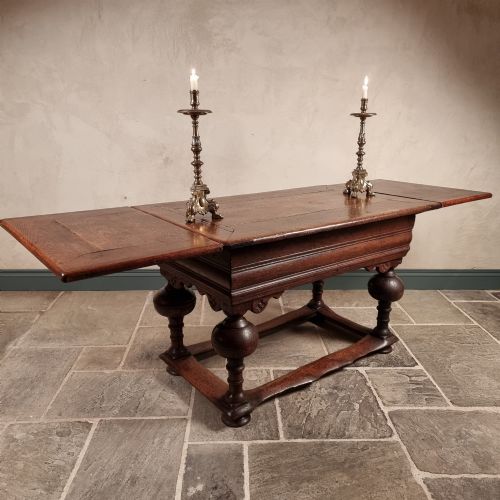
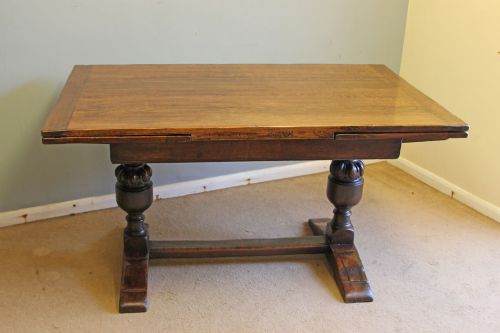
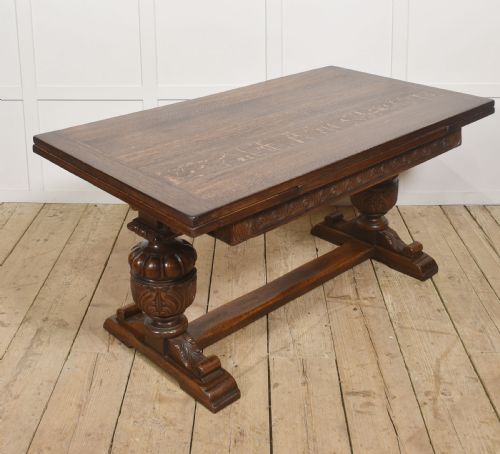


Jacobean Oak Draw Leaf Table
These jacobean oak draw leaf table examples offer clever extension mechanisms disguised as traditional refectory furniture.
Jacobean Oak Draw Leaf Table
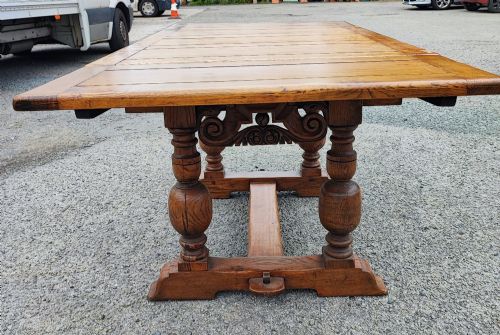
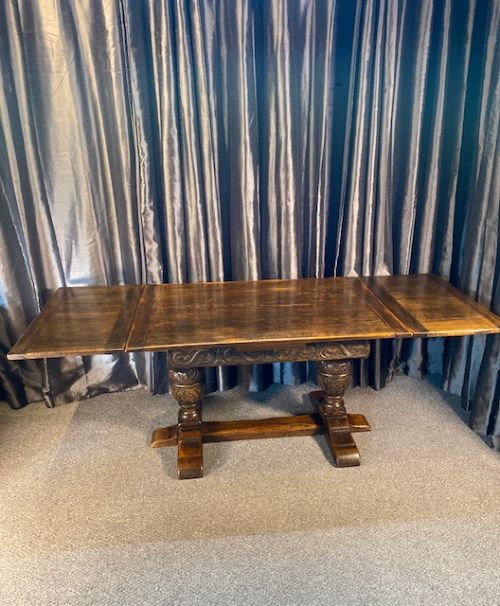
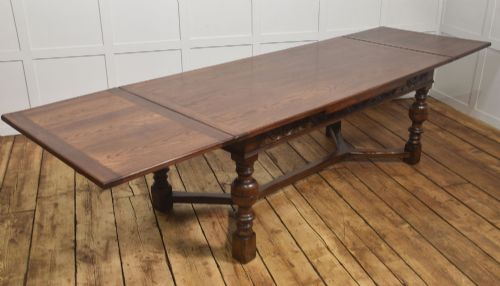
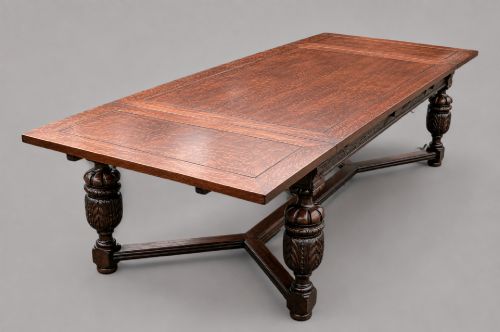
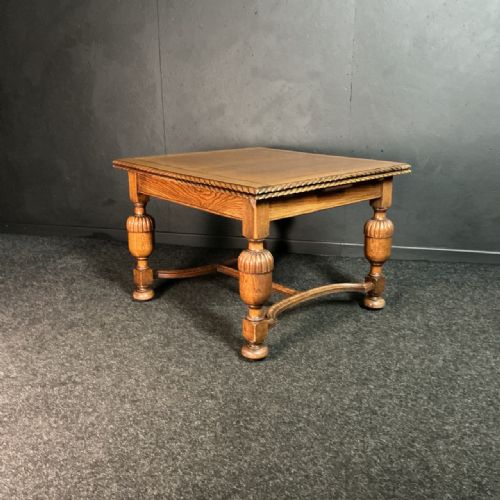
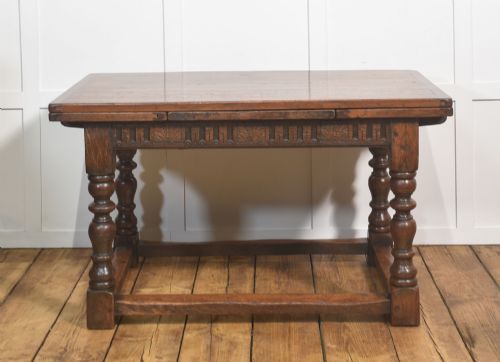
A jacobean oak draw leaf table combines sturdy refectory proportions with pull-out extension leaves housed beneath the main top. Buyers seeking a jacobean oak draw leaf table encounter various iterations spanning from the seventeenth century through to revival periods in the nineteenth and early twentieth centuries.
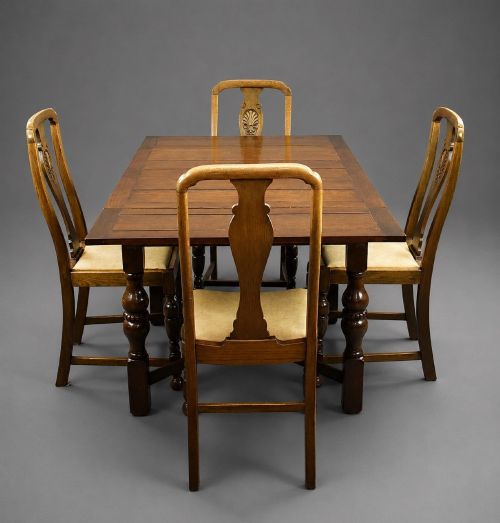
The form appears predominantly as dining tables, refectory tables, and occasionally complete dining sets featuring upholstery. Surviving examples demonstrate how dining spaces adapt through clever concealed leaves that pull outward from each end.
Pieces emerge from seventeenth-century origins alongside extensive revival craftsmanship from nineteen hundred, nineteen ten, nineteen twenty, and the nineteenth century. These later interpretations capture Elizabethan and Jacobean aesthetics using solid timber construction.
How they were made
Makers constructed these tables primarily from solid oak, utilising heavy timber planks for both tops and structural framing. The extension mechanism relies on internal sliding runners that support the pull-out leaves smoothly beneath the main surface.
Some tables hide their extension leaves so well that dinner guests remain entirely unaware extra seats are waiting underneath.
What varies in quality
The integrity of the draw leaf mechanism dictates the daily usability of the table, distinguishing smooth-running extension leaves from those that bind within the frame. Timber selection and thickness across the top boards also define the build standard.
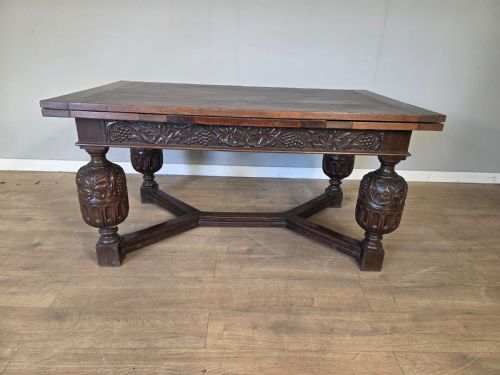
Execution of carved detailing reveals the hand of the maker, separating crisp, purposeful chisel work from softer, mass-produced revival decoration. The choice between seventeenth-century origin and later revival periods shifts the historical significance of the piece.
Maple and Co
The Jacobean Oak Draw Leaf Table Glossary
- Draw leaf table
- A table with pull-out leaves stored beneath the main top that extend the surface area. This clever mechanism allows the dining capacity to double without requiring separate stored leaves.
- Refectory table
- A long, narrow dining table traditionally used in monastic refectories and large country houses. They provide substantial seating capacity and feature sturdy underframes with connecting stretchers.
- Jacobean style
- A design aesthetic originating from the reign of James the First, characterised by heavy proportions and geometric carvings. Revival versions reproduce these distinctive sixteenth and seventeenth-century motifs.
- Carolean
- Pertaining to the reign of Charles the First and Charles the Second, often associated with rich carved decoration. Furniture from this era shares heavy oak construction with earlier Jacobean pieces.
Jacobean Oak Draw Leaf Table: Frequently Asked Questions
How do draw leaf tables work?
Hidden leaves slide out from underneath the main top boards, raising slightly into place as the mechanism is fully extended. This design keeps the leaves securely stored within the frame when not in use.
Operating the system requires pulling each end evenly so the runners glide smoothly without jamming against the structural aprons.
Are these tables suitable for daily dining?
Solid oak construction and robust refectory framing make these tables exceptionally durable for everyday family meals. The timber handles regular use while developing character over time.
Protecting the surface from moisture and heat preserves the polished finish during daily mealtimes.
How do I date an oak table?
Examination of tool marks, joinery methods, and timber shrinkage reveals the age and period of manufacture. Seventeenth-century pieces display hand-cut joints and distinct patina compared to later revival pieces.
Hardware, runner construction, and carving styles further clarify whether a piece originates from the seventeenth century or the nineteen hundreds.
How do I maintain solid oak furniture?
Regular dusting with a dry cloth keeps the surface clean, while occasional application of beeswax nourishes the timber. Avoiding direct sunlight prevents the oak from drying out or splitting.
Maintaining consistent room humidity protects the draw leaf mechanism from expanding or sticking within the frame.