

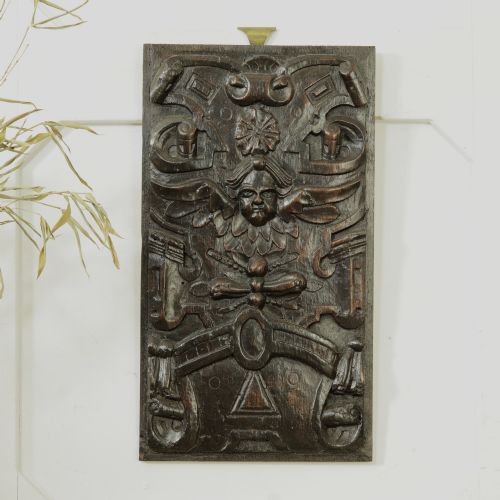
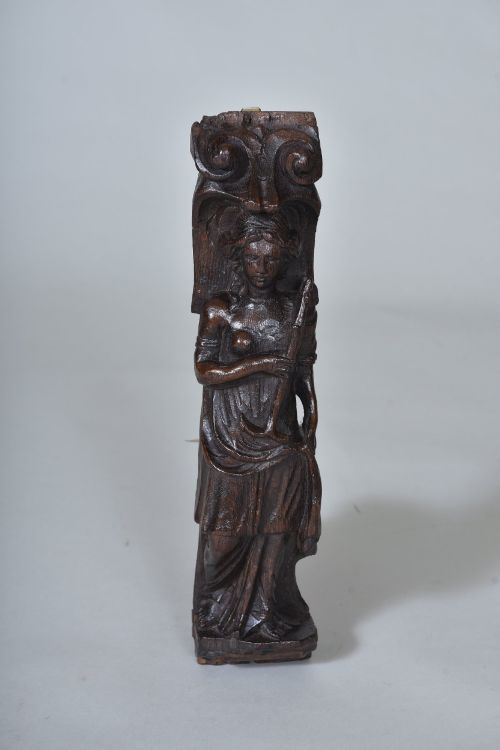
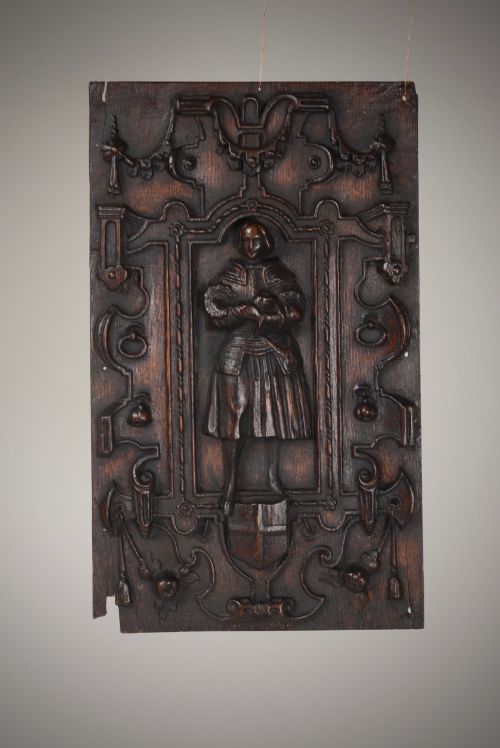
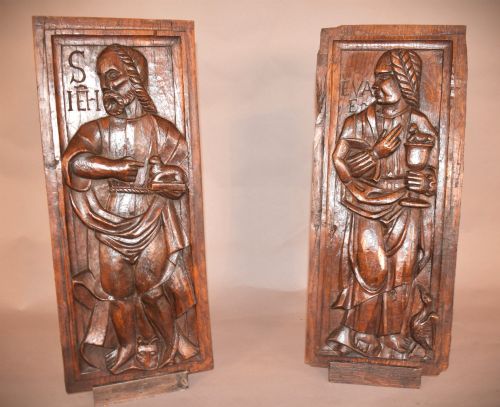
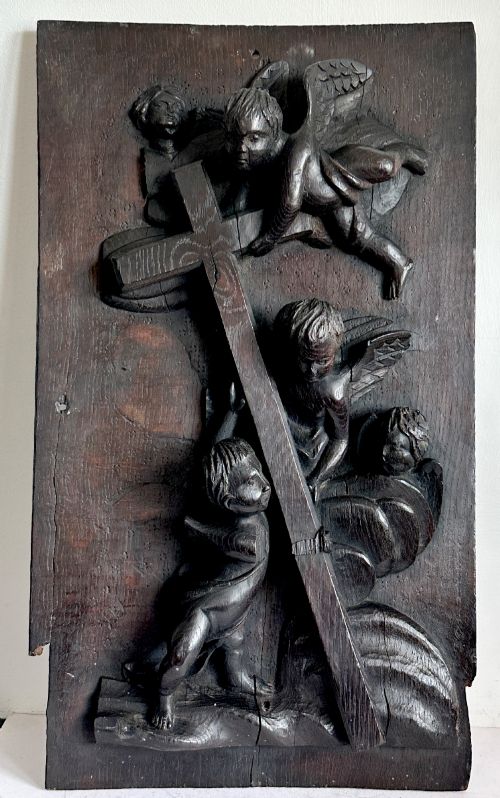


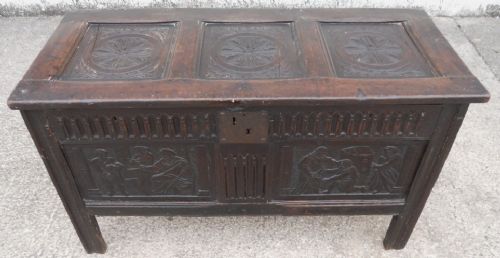
Jacobean Oak Carved Relief
These jacobean oak carved relief pieces bring centuries of heavy timber texture and deep chisel work straight onto your wall.
Jacobean Oak Carved Relief
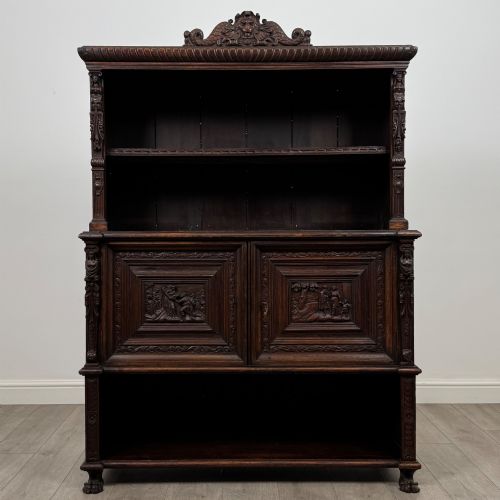
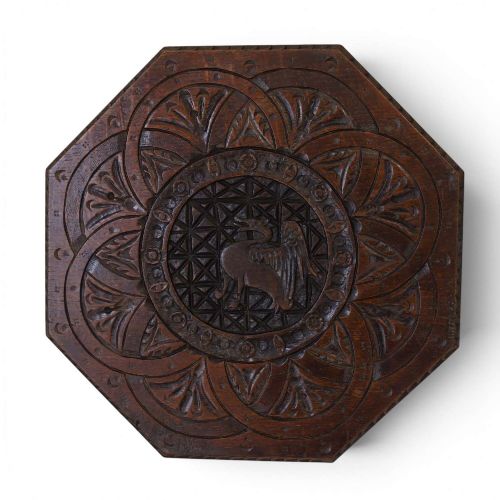
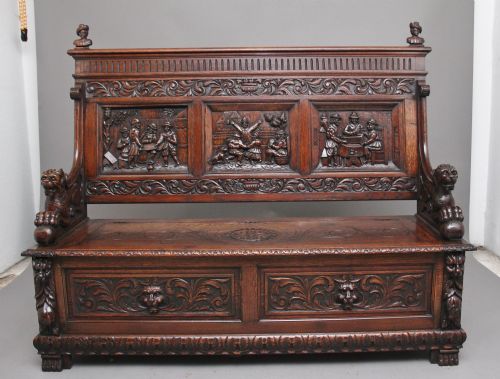
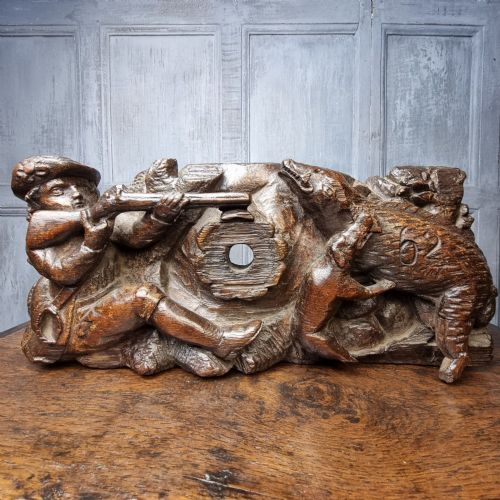
When you search for jacobean oak carved relief, you encounter substantial timber panels, architectural salvage, and wall carvings rooted primarily in the seventeenth century, alongside nineteenth century revivals. The forms range from simple wall plaques and friezes to elements salvaged from cupboards, settles, and chests.
The seventeenth century pieces showcase authentic period handwork, while the Victorian and later pieces demonstrate the enduring nineteenth century appetite for Renaissance and Gothic revival styles. You will frequently meet individual panels, pairs, and large staircase fragments bearing deep figural or geometric motifs.
Materials and construction
The primary material across the listings is solid oak, supplemented by occasional iron fixings and leather elements. Artisans worked this dense hardwood using hand chisels and gouges to achieve high and low relief surfaces.
Carvings were executed directly into thick timber boards, often forming panels designed for architectural integration within wall paneling, furniture fronts, or staircase elements.
Jacobean Oak Carved Relief Retail Price Guide 2026
Typical asking prices for jacobean oak carved relief among the pieces listed under this phrase on Sellingantiques today, from the lower quarter to the upper quarter. They describe what is for sale here now, not the wider market.
The listings combine authentic seventeenth-century artefacts with nineteenth-century Victorian revivals, uniting solid oak, iron, and leather across various wall reliefs and furniture.
Assessing quality in carved panels
Quality rests entirely in the sharpness and depth of the chisel work, distinguishing crisp figural details and armorial reliefs from softer, more generalized surface incisions. The handling of anatomy, drapery, and proportion reveals the competence of the original carver.
The integrity of the timber also dictates value, with well-preserved grain and stable construction outweighing heavy subsequent restoration or extensive modern intervention.
Edward Pearce
The Jacobean Oak Carved Relief Glossary
- Frieze
- A long, narrow band of sculpture decorating a wall, architectural feature, or furniture piece. These horizontal elements often display repetitive foliate or geometric motifs.
- Revival
- A stylistic movement where makers deliberately emulate historic aesthetics, such as the nineteenth century interest in seventeenth century forms. These pieces adapt older decorative vocabulary using contemporary methods.
- Armorial
- Relating to heraldry and coat of arms displays. Such carvings frequently incorporate heraldic shields or symbolic figures to denote family lineage.
- Salvage
- Architectural elements rescued from older structures for reuse as decorative wall art or furniture components. This practice preserves fragments of dismantled historic interiors.
Jacobean Oak Carved Relief: Frequently Asked Questions
How do I hang a heavy wooden panel?
These dense oak carvings require secure fixings anchored directly into wall studs or masonry using heavy-duty brackets suited to the weight of the timber.
Avoid relying on simple picture wire, as the substantial mass of seventeenth-century and nineteenth-century hardwood demands rigid mechanical support.
Are these panels from original furniture?
Many panels originate as architectural salvage or components removed centuries ago from larger pieces like cupboards, chests, and partner desks.
Over time, individual sections were separated and mounted as wall art or incorporated into later nineteenth-century revival furniture.
How can I tell seventeenth century from nineteenth century?
Seventeenth century examples display tool marks, timber shrinkage, and wear patterns consistent with genuine age and hand execution. Nineteenth-century revival pieces often reveal mechanical tool traces and wood preparation typical of Victorian workshops.