
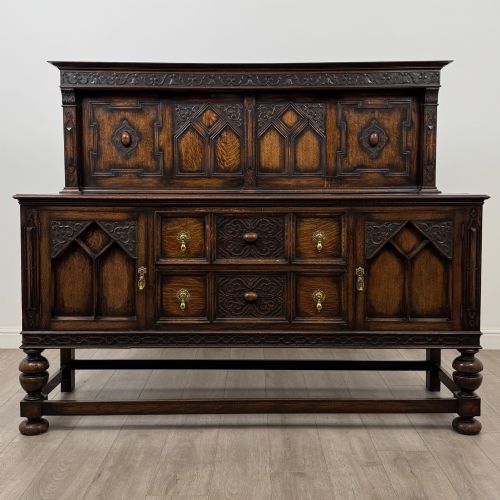
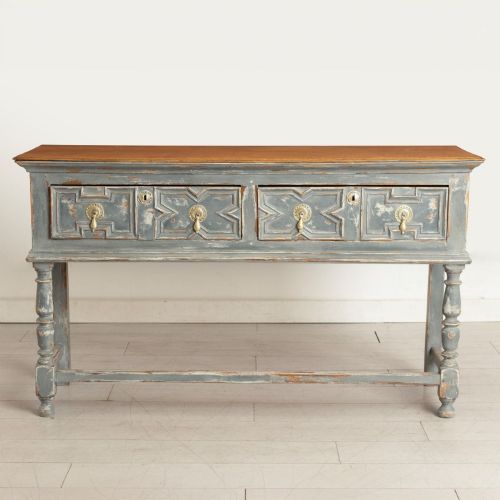
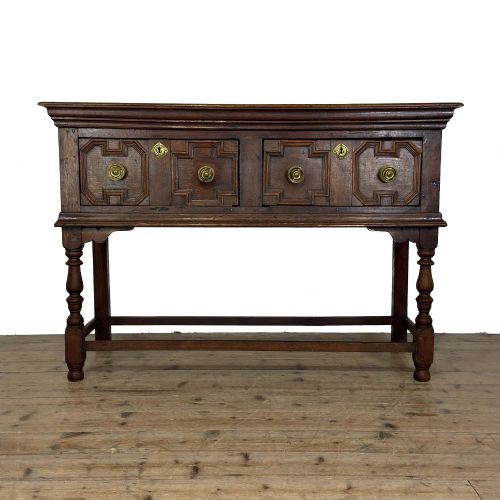
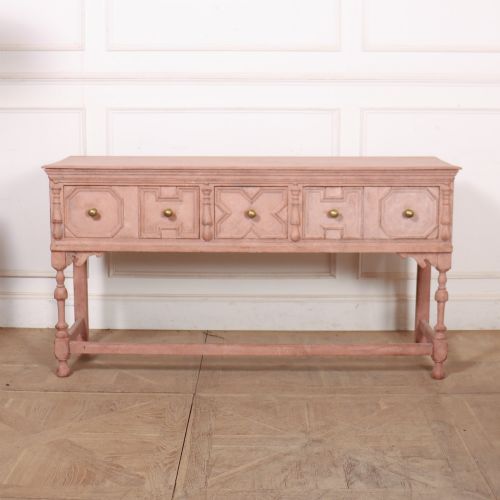

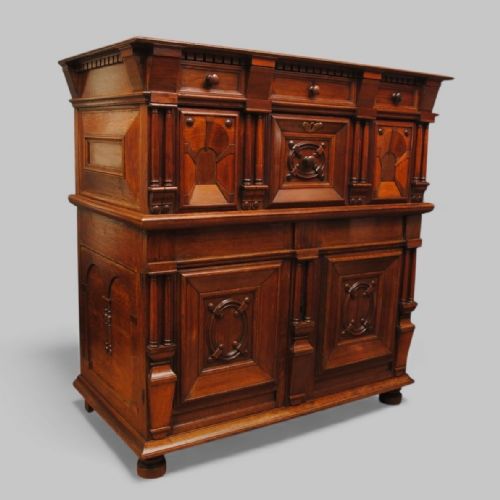
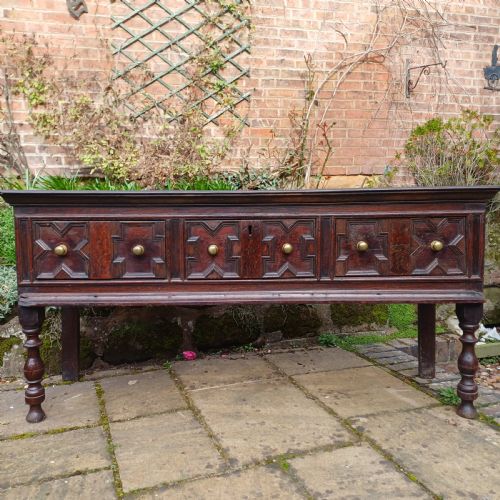
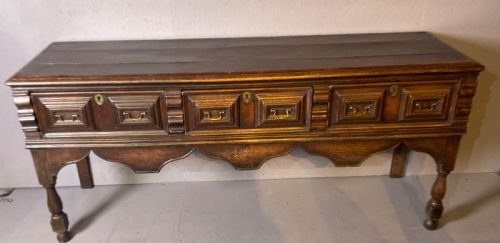


Jacobean Geometric Sideboard
These jacobean geometric sideboard pieces combine robust timber and architectural moulding, offering practical storage with strong period character.
Jacobean Geometric Sideboard
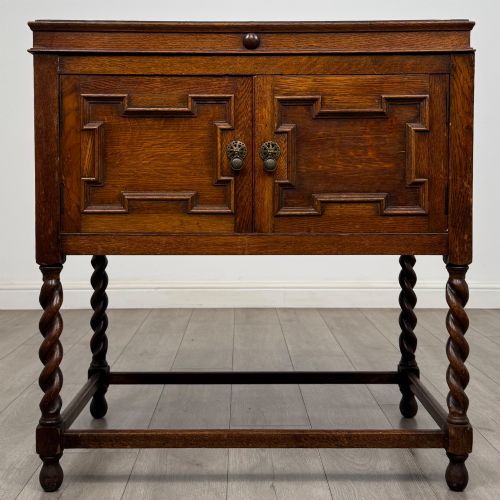
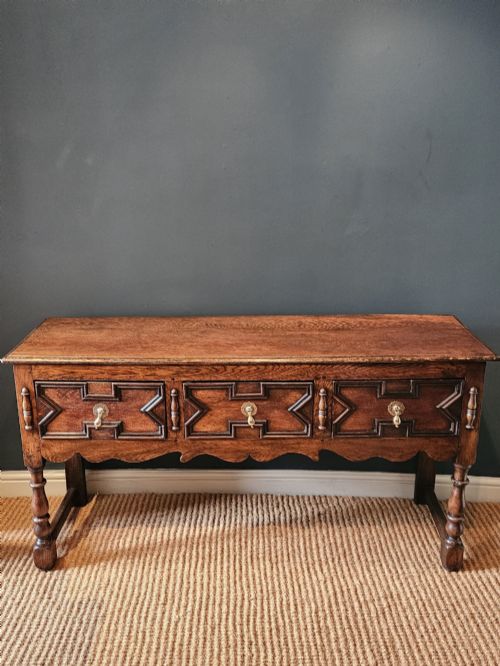
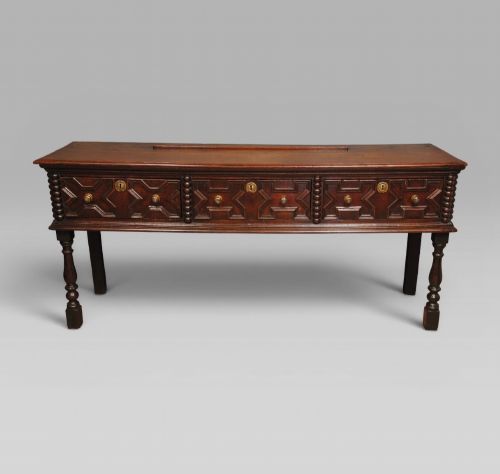
A jacobean geometric sideboard encompasses low dresser bases, serving dressers, and cupboards built primarily in oak, walnut, and fruitwood. These low furniture forms serve dining and living spaces with deep drawers and cupboards designed for storage.
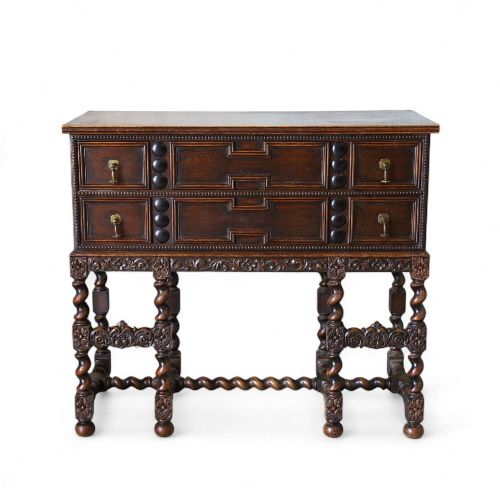
Most examples found in this selection span the seventeenth century alongside later revival periods including Edwardian, Georgian, and nineteenth-century interpretations. The surviving forms range from block front dresser bases to carved cupboards with leaded glass doors.
Buyers encounter authentic seventeenth-century origins alongside nineteenth-century and Edwardian revivals that echo the original geometric mouldings and heavy timber construction. Each piece brings functional surface space and compartmentalised storage grounded in traditional English cabinet-making.
What varies in quality
The sophistication of the geometric moulding work defines the visual success of the piece, with crisp relief profiles and precise mitres setting finer examples apart from simpler executions. The selection of primary timbers, such as figured walnut or richly grained oak, contributes significantly to the depth of the finished surface.
Integration of secondary woods like fruitwood and snakewood for decorative banding demonstrates elevated craftsmanship in period workshops. Structural integrity, the retention of original brass or iron hardware, and the harmony of proportions between base cabinets and upper tiers further distinguish superior examples.
Listings span multiple eras from the seventeenth century through Georgian periods to Edwardian and 1930s revival interpretations in oak and walnut.
The Jacobean Geometric Sideboard Glossary
- Dresser base
- A low freestanding cabinet featuring multiple drawers and occasionally lower cupboards, originally designed for food preparation and serving in large households.
- Geometric moulding
- Applied wooden strips arranged in rectilinear patterns on drawer fronts or doors to create three-dimensional architectural panels.
- Jacobean revival
- A nineteenth and early twentieth-century design movement that copied or reinterpreted the heavy forms and dark timber finishes of the early seventeenth century.
- Barley-twist
- A decorative turning technique resembling a twisted rope, commonly utilised on the support legs of later revival sideboards and tables.
- Court cupboard
- A heavy enclosed storage cabinet featuring recessed upper sections supported by short posts, originating in the sixteenth and seventeenth centuries.
Jacobean Geometric Sideboard: Frequently Asked Questions
How do I spot a revival piece?
Revival pieces typically date from the nineteenth or early twentieth centuries, exhibiting machine-sawn timber marks, lighter weight, and standardised internal construction methods.
Original seventeenth-century pieces show hand-cut joinery, pegged joints, adze marks on internal boards, and timber shrinkage consistent with age.
What woods were used?
The primary timber across these pieces is oak, supplemented by walnut, fruitwood, and painted oak surfaces.
Selected decorative elements incorporate snakewood alongside brass and iron hardware for hinges and drawer pulls.
How should I clean the wood?
Maintain the timber surfaces using a gentle wipe with a soft dry cloth to remove dust without stripping the natural wax build-up.
Avoid modern chemical polishes that can degrade aged finishes, opting instead for traditional beeswax applied sparingly.
Where were these pieces used?
These sideboards and dresser bases originated in English dining halls and kitchens for storing platters, cutlery, and provisions.
Today they function effectively in modern dining rooms, hallways, and living spaces as statement storage credenzas.