

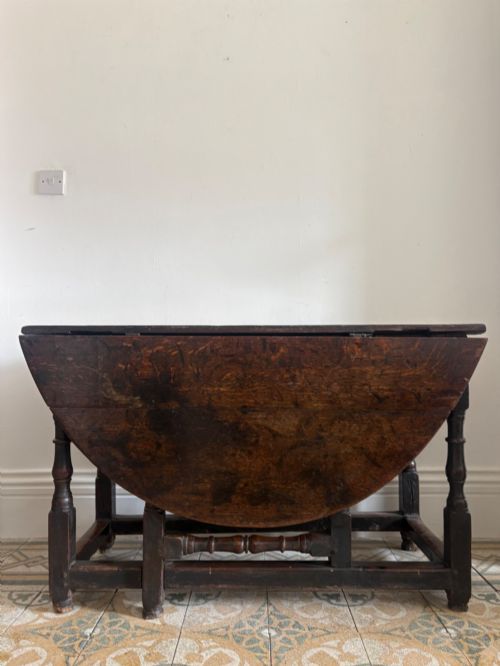

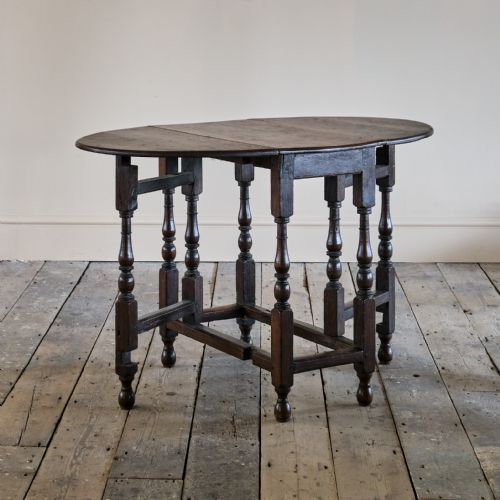
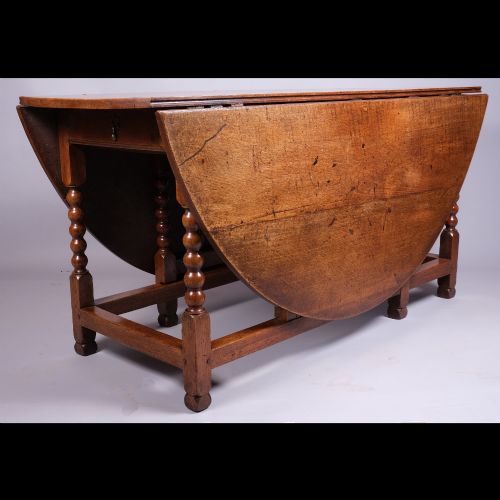
Jacobean Gateleg Dining Table
A jacobean gateleg dining table brings centuries of sturdy English craft and ingenious folding leaves directly into a modern dining room.
Jacobean Gateleg Dining Table
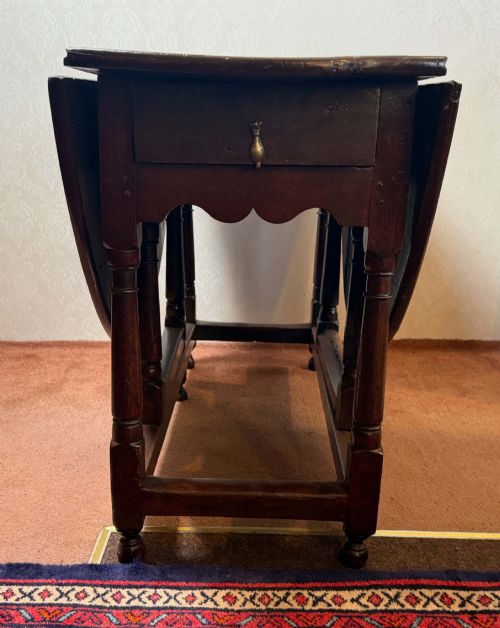
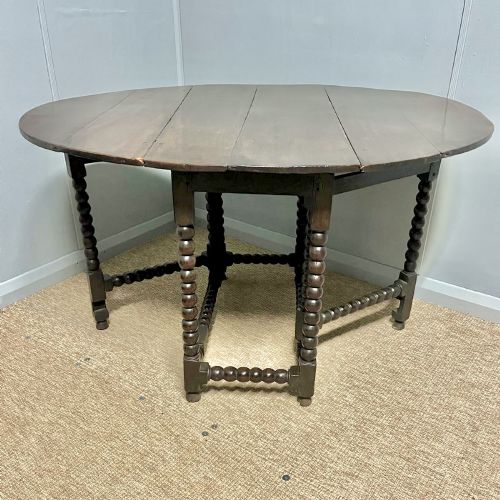
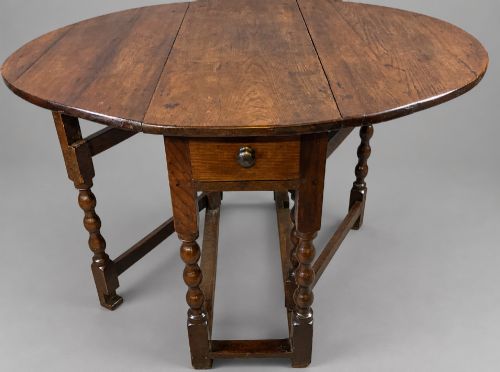
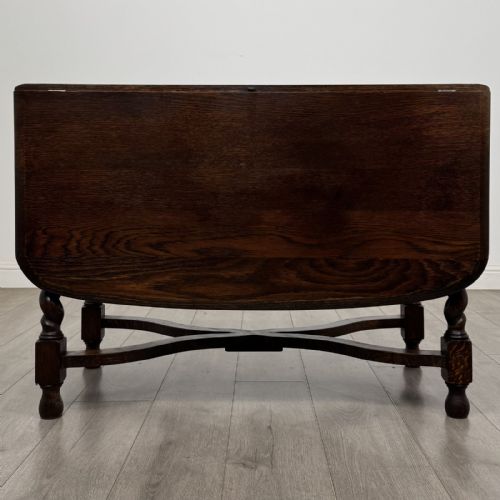
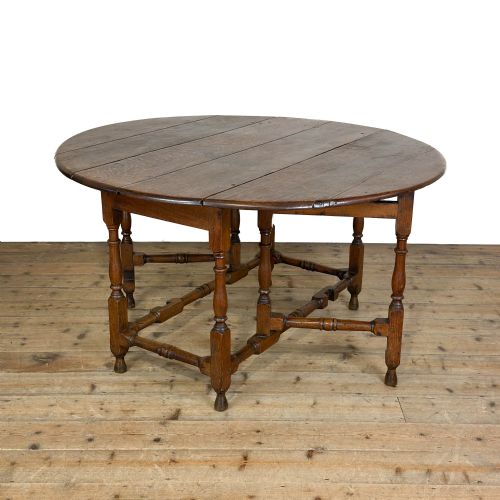
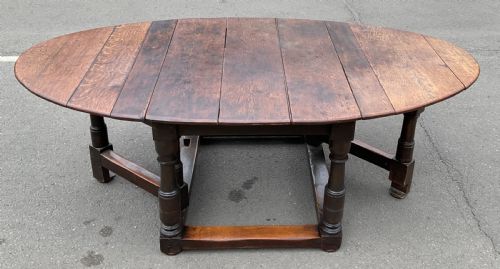
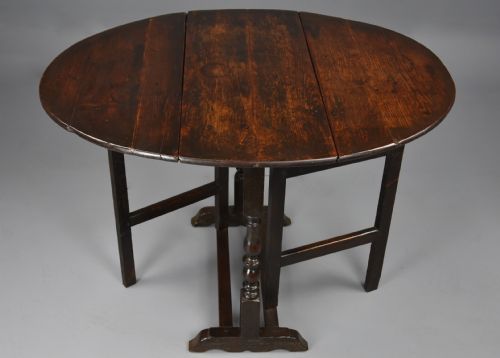
When searching for a jacobean gateleg dining table, buyers encounter heavy timber framing designed to expand with folding drop leaves supported by swinging leg gates. The pieces on this page span from authentic late seventeenth century examples to later revivals from the nineteenth and twentieth centuries.
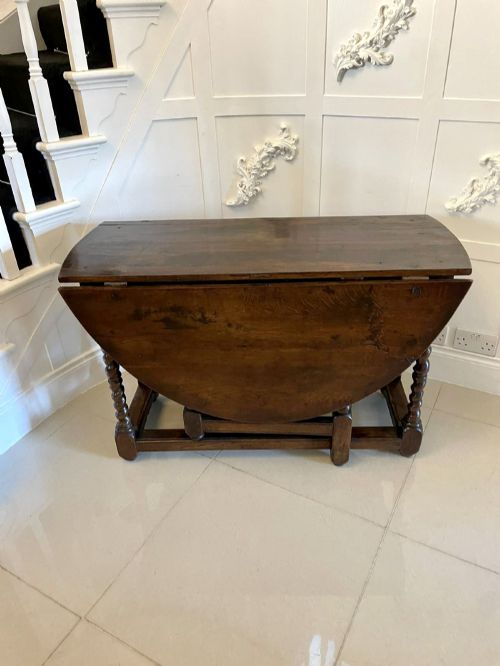
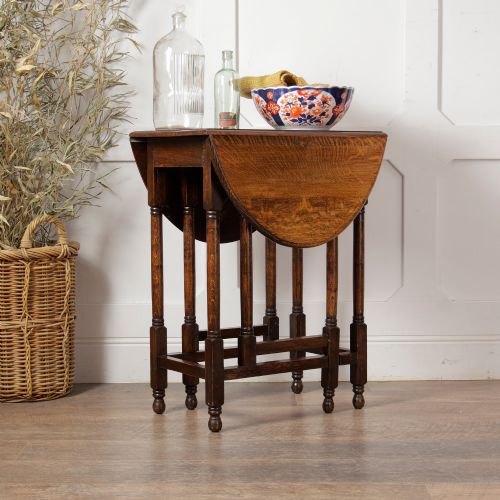
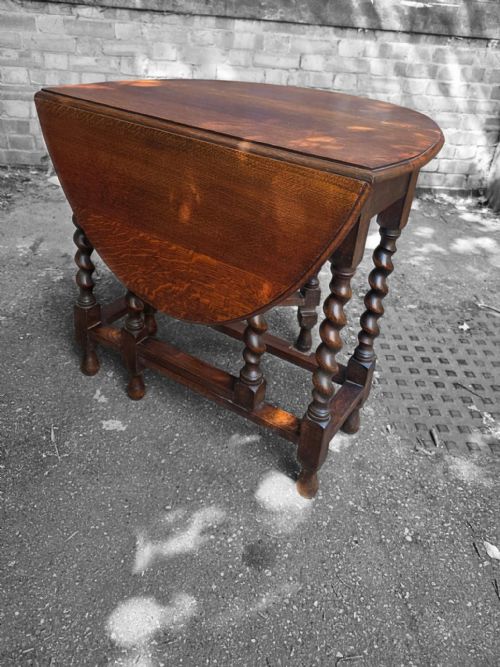
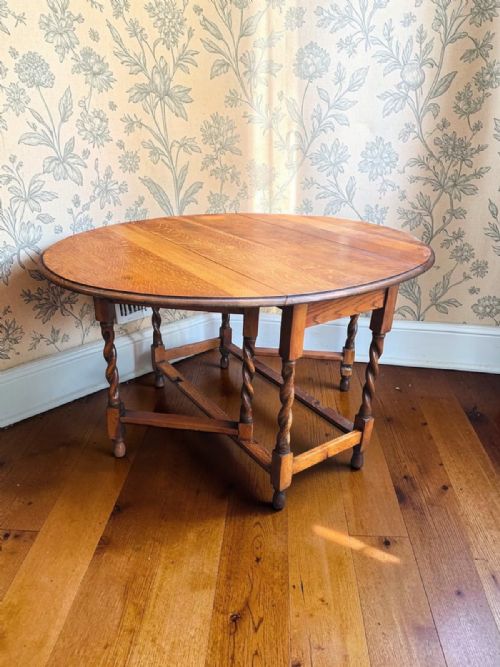
Most pieces sit on turned legs, often featuring bobbin or barley twist details, and utilise solid oak plank tops that reveal deep patinas built over generations of use. Forms range from compact occasional side pieces to large six-seater dining tables intended for central placement in a room.
Originating largely from English country workshops, these tables combine practical space-saving drop-leaf mechanisms with robust joinery that survives centuries of daily family meals.
Materials and Construction
Construction relies heavily on solid oak timbers joined with traditional pegged mortise and tenon joints to bear the weight of thick plank tops. Iron and brass fixings appear in hinges and occasional structural braces that support the swinging gate legs.
Turned elements such as baluster posts, bobbin shapes and barley twist legs are shaped on a lathe to give structural support while adding decorative rhythm beneath the oval or rectangular leaves.
Jacobean Gateleg Dining Table Retail Price Guide 2026
Typical asking prices for jacobean gateleg dining table among the pieces listed under this phrase on Sellingantiques today, from the lower quarter to the upper quarter. They describe what is for sale here now, not the wider market.
Listings span multiple centuries, ranging from authentic seventeenth-century examples and eighteenth-century pieces to twentieth-century revivals featuring oak and barley twist legs.
Markers of Distinction
Quality rests in the depth of the original timber patina and the integrity of the structural frame rather than mere surface decoration. Tables retaining their early plank tops and original turnings without excessive timber replacement command higher regard.
The smoothness of the gateleg swing action and the tightness of the original pegged joints separate superior examples from later, looser interpretations.
The Jacobean Gateleg Dining Table Glossary
- Gateleg table
- A table with hinged leaves supported by swinging legs that pull out like gates. This clever design allows the surface area to double when entertaining.
- Barley twist
- A spiral turning carved into table legs or stretchers resembling twisted rope. This ornamental style appears frequently on seventeenth century and revival pieces.
- Bobbin turning
- A series of rounded wooden spheres turned on a lathe along the length of a leg. It provides a distinctive textured support on early tables.
- Plank top
- A table surface constructed from solid boards joined edge to edge. These boards often show historic grain variation and wear.
- Drop leaf
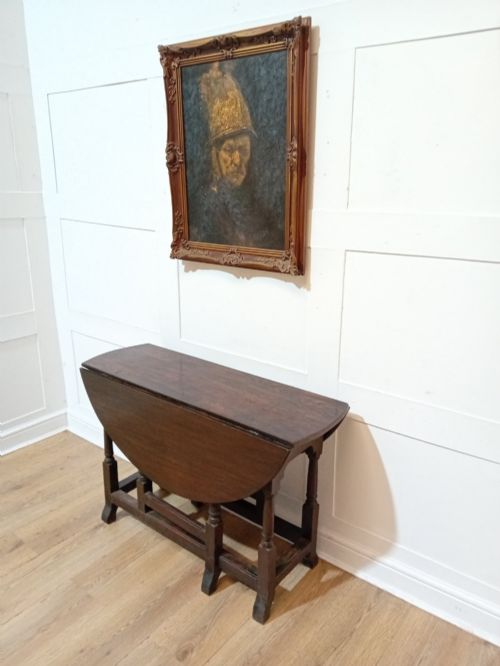
- A hinged flap of wood attached to a fixed tabletop that can be raised and supported. It enables the furniture to fold down compactly when not in use.
Jacobean Gateleg Dining Table: Frequently Asked Questions
How do I seat six people?
Raise both drop leaves fully and pull the swinging gate legs outward until they lock firmly beneath the extended corners.
Ensure the table clearance allows chairs to slide neatly between the turned leg supports.
Are these tables solid oak?
The listings consist primarily of solid oak construction, utilising heavy timber planks for both the top surfaces and the structural underframes.
Metal hinges and occasional brass fittings support the folding leaf mechanisms.
How do I date an old table?
Examine the turnings, timber colour, and joinery methods to distinguish seventeenth-century originals from later nineteenth and twentieth-century revivals.
Early pieces show hand-planed surfaces, pegged joints, and deep patinas acquired through centuries of continuous use.
Will a gateleg table wobble?
A well-constructed table remains stable when the gate legs swing fully into position to support the heavy leaves.
Uneven floors can cause slight movement, which is easily remedied with traditional felt pads under the feet.