



Jacobean Footstool
These pieces sold as a jacobean footstool offer sturdy low seating and tables rooted in seventeenth-century English tradition.
Jacobean Footstool
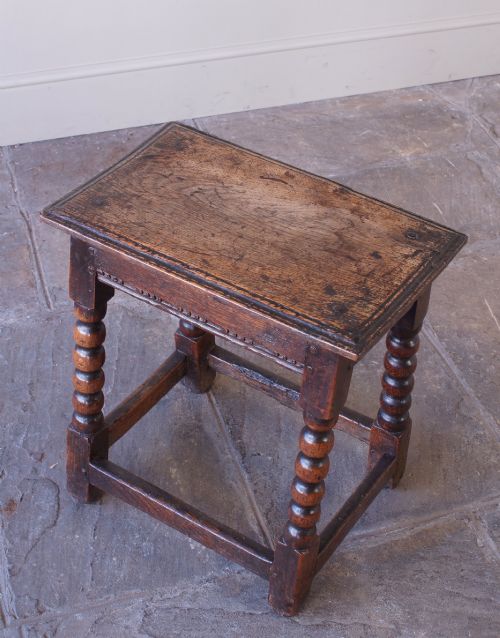
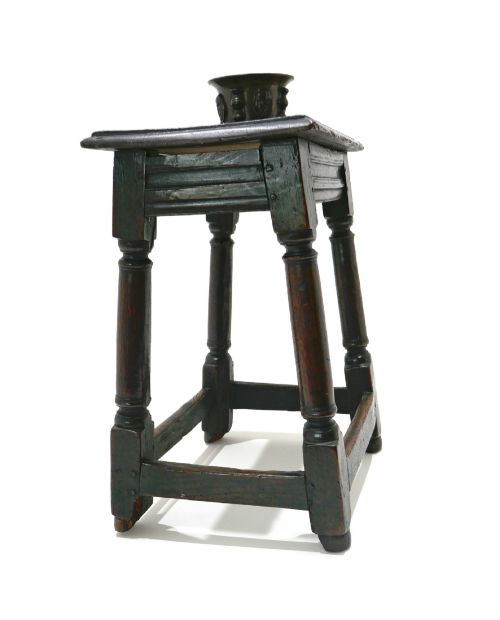
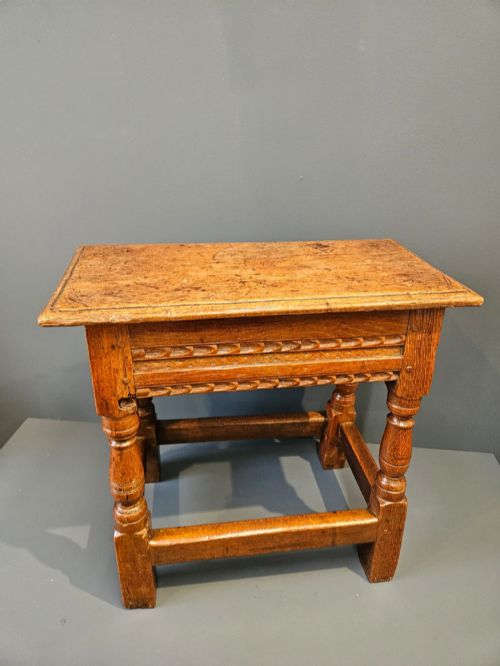
When you search for a jacobean footstool, you encounter low timber seating, joint stools, and box stools originating from the seventeenth century alongside later revivals. These utilitarian items served dual purposes as seats and low tables in early domestic interiors.
The versions most common on this page span the seventeenth century alongside nineteenth-century and early twentieth-century revivals. Forms range from simple rectangular joint stools to cane-topped frames and upholstered centre stools.
Assessing quality and period
Quality rests in the integrity of the timber frame and the depth of period character. Original seventeenth-century examples display honest wear and period construction methods that distinguish them from later nineteenth-century or Edwardian revivals.
The crispness of carved woodwork and the survival of original pegs and timber surfaces determine the standing of each piece. Variations in proportion and the retention of early fabric or cane surfaces further separate examples.
Jacobean Footstool Retail Price Guide 2026
Typical asking prices for jacobean footstool among the pieces listed under this phrase on Sellingantiques today, from the lower quarter to the upper quarter. They describe what is for sale here now, not the wider market.
Some seventeenth-century ancestors of the modern footstool likely spent their youth holding up pewter jugs before ever supporting a tired ankle.
The Jacobean Footstool Glossary
- Joint stool
- A sturdy wooden stool built with pegged mortise and tenon joints rather than turned legs alone. These items were common in seventeenth-century households.
- Commonwealth
- A historical period spanning the mid-seventeenth century associated with plain, utilitarian furniture forms. Pieces from this era often display restrained decoration.
- Carolean
- A style relating to the reign of King Charles II, marked by more elaborate carving and richer upholstery than earlier Commonwealth pieces. It forms part of the broader Jacobean aesthetic.
- Cane work
- Woven plant material used to form resilient seats and panels within wooden frames. This technique appears on both period items and later twentieth-century seating.
Jacobean Footstool: Frequently Asked Questions
Are these stools from the seventeenth century?
The selection includes authentic pieces dating from the seventeenth century alongside later nineteenth-century and early twentieth-century revivals. Examining the timber and joinery helps determine the exact age of each item.
Revival pieces often replicate earlier joint stool forms while utilising nineteenth-century or Edwardian manufacturing techniques.
How were these stools used originally?
Original joint stools served as versatile household items for sitting, reaching high shelves, or holding objects near the hearth. Their sturdy construction allowed them to withstand heavy daily use.
Over time, many adapted to function as low tables or footstools in domestic settings.
What is a joint stool?
A joint stool is an early form of wooden seating constructed by specialist joiners using pegged frame joints. This method predated the widespread use of turned and glued chairs.
They feature rectangular tops supported by four vertical legs connected by stretchers near the base.
How do I care for antique oak furniture?
Solid oak furniture benefits from a stable indoor environment away from direct heat sources and extreme humidity fluctuations. Regular dusting with a soft cloth preserves the natural timber finish.
Applying traditional wax occasionally helps nourish older wood surfaces without building up heavy residues.