

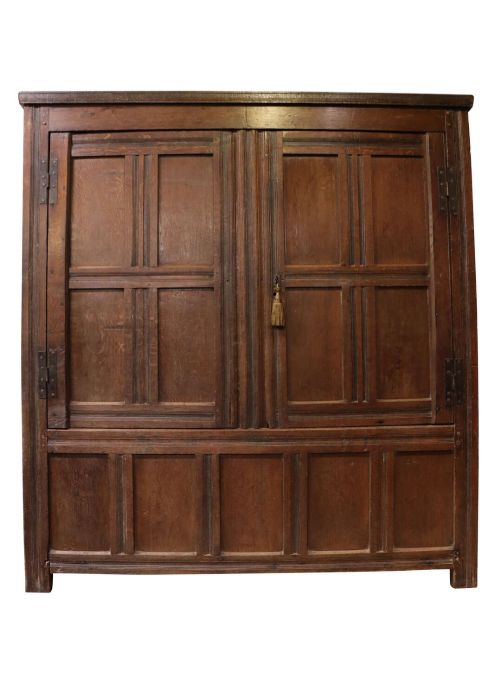
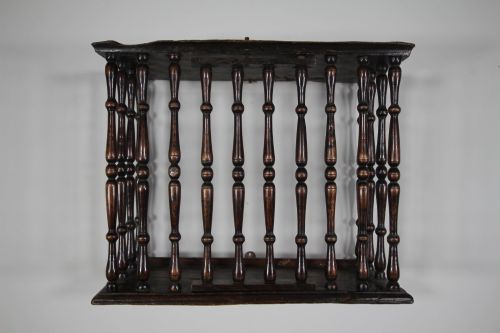
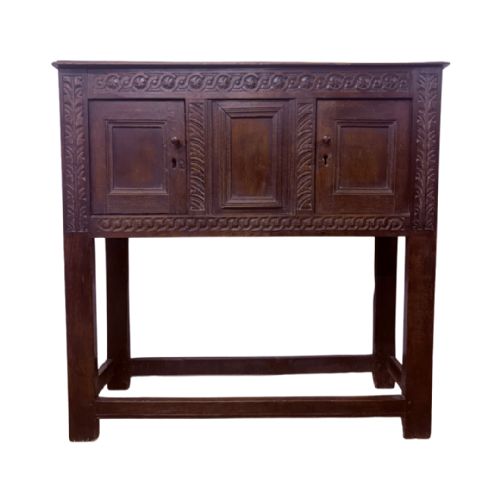
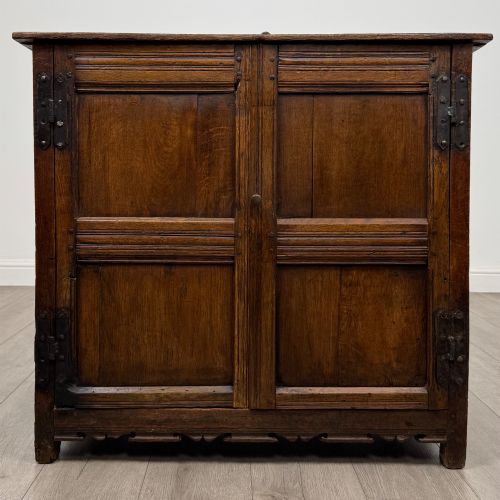
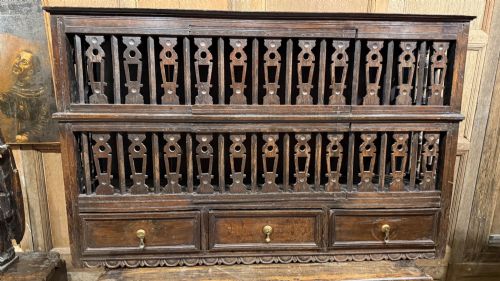
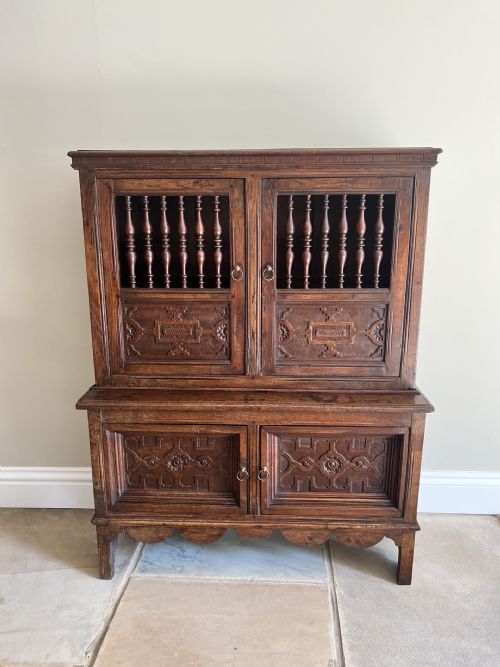


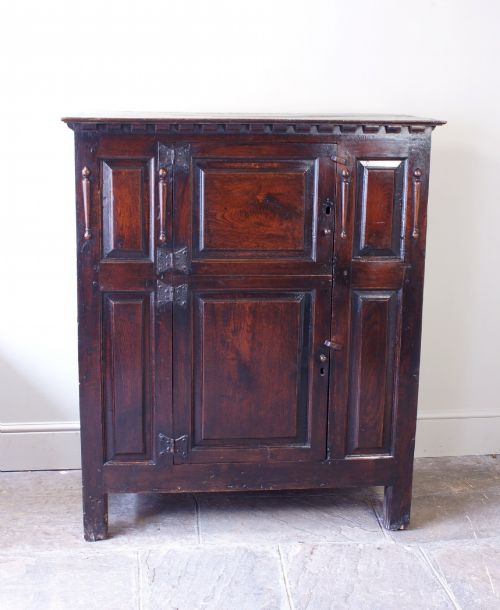


Jacobean Food Cupboard
A jacobean food cupboard brings sturdy seventeenth-century craft and rich timber into a room, offering practical storage with historic presence.
Jacobean Food Cupboard
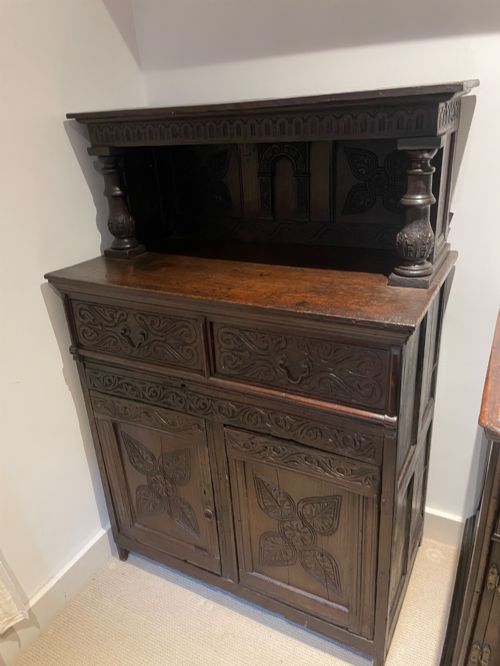
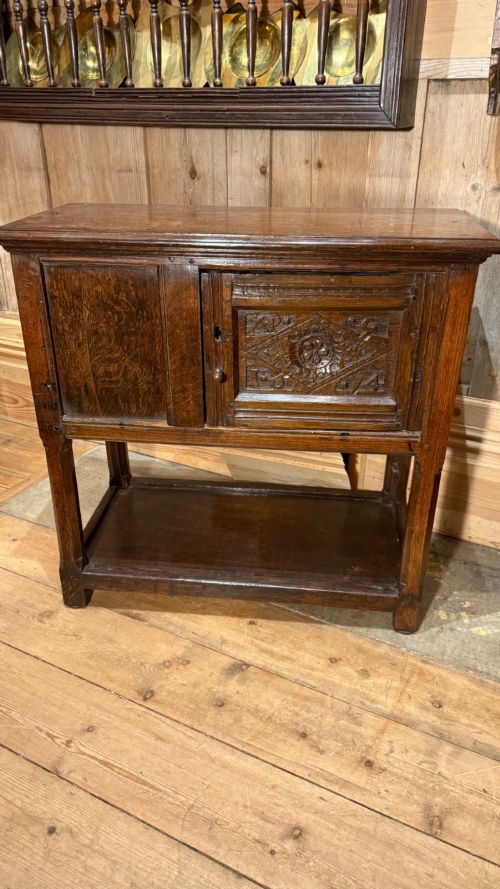
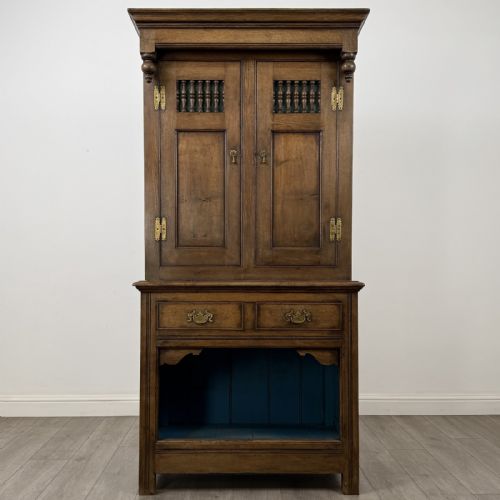
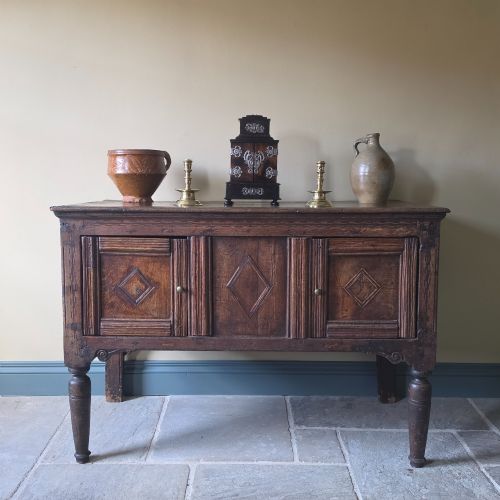
A jacobean food cupboard encompasses heavy timber storage forms from the seventeenth century, alongside later revivals and regional variations. Buyers encounter pieces described variously as court cupboards, livery cupboards, hutches, and press cupboards.
Regional styles such as Welsh vernacular work sit alongside English pieces, showing how local joiners adapted the basic cupboard format. Panel construction, standing frames, and hanging formats define the range available on this page.
Assessing Quality and Character
Quality rests in the crispness of the original carved details, the integrity of the oak framing, and the survival of early timber surfaces. Greater refinement shows in balanced proportions and well-executed joinery rather than mere heaviness.
Later revivals and alterations introduce mixed periods of construction that alter the historical cohesion of a piece. Original patination on the timber separates untouched examples from those heavily restored or re-finished.
Jacobean Food Cupboard Retail Price Guide 2026
Typical asking prices for jacobean food cupboard among the pieces listed under this phrase on Sellingantiques today, from the lower quarter to the upper quarter. They describe what is for sale here now, not the wider market.
The listings here feature oak construction paired with wrought iron and brass hardware, spanning the seventeenth century through to nineteen-twenty revival pieces.
The Jacobean Food Cupboard Glossary
- Court cupboard
- A traditional open or enclosed sideboard used for displaying plate and storing provisions. These pieces typically feature tiered sections and carved supports.
- Livery cupboard
- A small storage cabinet designed for provisions and candles, often featuring pierced or louvred panels for ventilation. They hung on walls or stood on side tables.
- Press cupboard
- A large enclosed storage piece with upper and lower compartments, often featuring panelled doors. These items provided secure storage for household linens and dry goods.
- Hutch
- A simple enclosed box-like cupboard standing on legs or mounted to a wall. They represent the more utilitarian domestic storage of the seventeenth century.
- Joined oak
- Furniture constructed using mortise and tenon joints locked with wooden pegs rather than nails. This method ensured structural strength across heavy timber frames.
Jacobean Food Cupboard: Frequently Asked Questions
What is a jacobean food cupboard used for?
These cupboards originally stored provisions, cheeses, and meats away from pests in early modern households. Today, they serve as substantial storage cabinets in dining rooms or living spaces for tableware and linens.
Their deep shelves and enclosed doors offer practical concealment for modern items while maintaining a historic interior aesthetic.
How do I date a jacobean cupboard?
Dating relies on examining the joinery methods, tool marks, and timber shrinkage patterns visible across the structure. Hand-riven oak panels and pegged mortise and tenon joints typically point to seventeenth-century production.
Later revivals from the nineteenth and twentieth centuries often use mechanical saw marks, standardised screws, or lighter secondary timbers that distinguish them from period work.
Where were these cupboards made?
The majority originate from English workshops, with distinct regional examples coming from Welsh vernacular makers. Local timber availability dictated whether workshops used standard English oak or regional fruitwoods for inlay work.
Country joiners adapted metropolitan court and press cupboard designs to suit local domestic requirements in rural parishes.
How do I care for antique oak furniture?
Keep oak furniture away from direct heat sources and sudden humidity shifts to prevent the heavy timbers from splitting. Regular dusting with a dry cloth and occasional application of appropriate wax maintains the surface sheen.
Avoid modern liquid polishes containing silicone, which can penetrate porous historic timber and damage the natural patination.