
Jacobean Drawers
These jacobean drawers bring tangible seventeenth-century weight and timber grain into a modern interior.
Jacobean Drawers
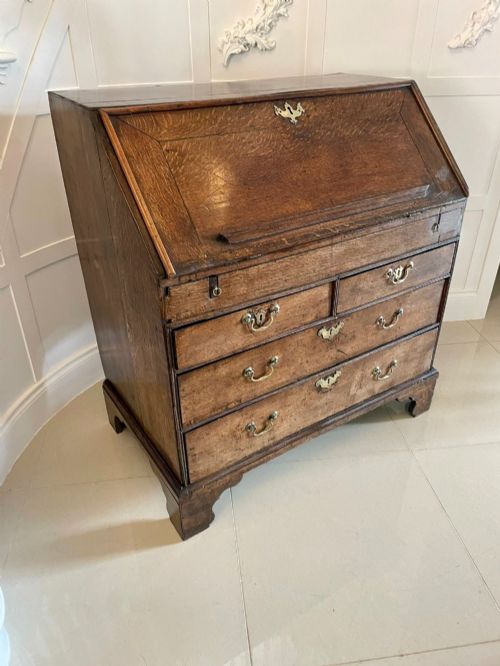
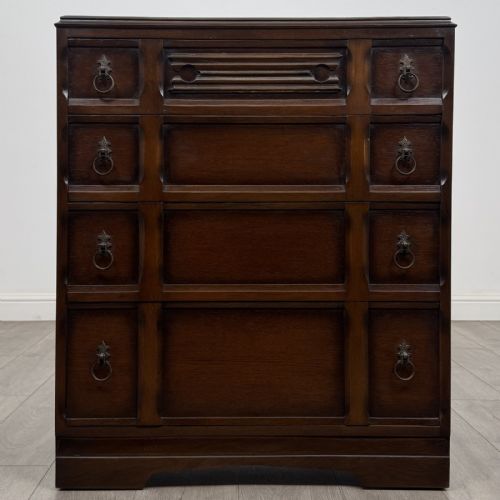
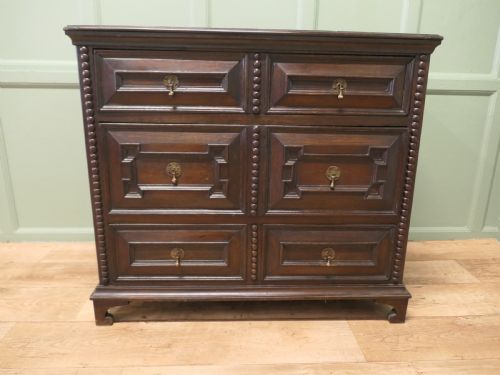
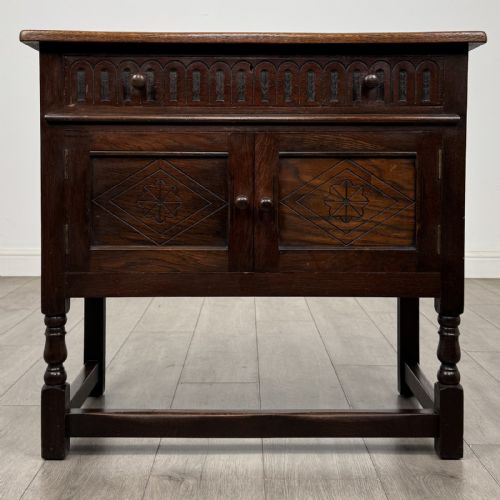
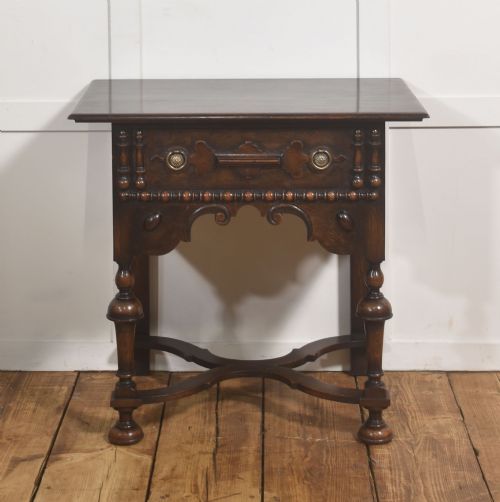
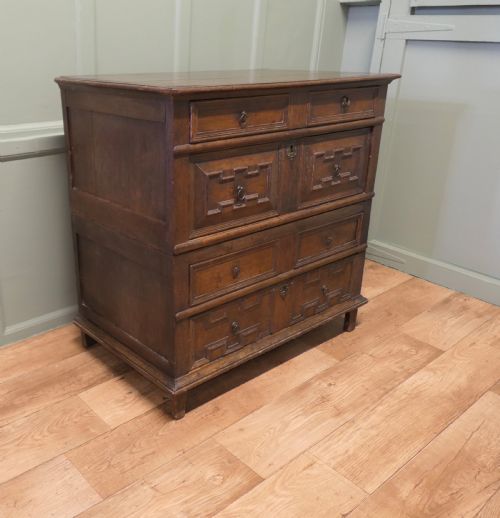
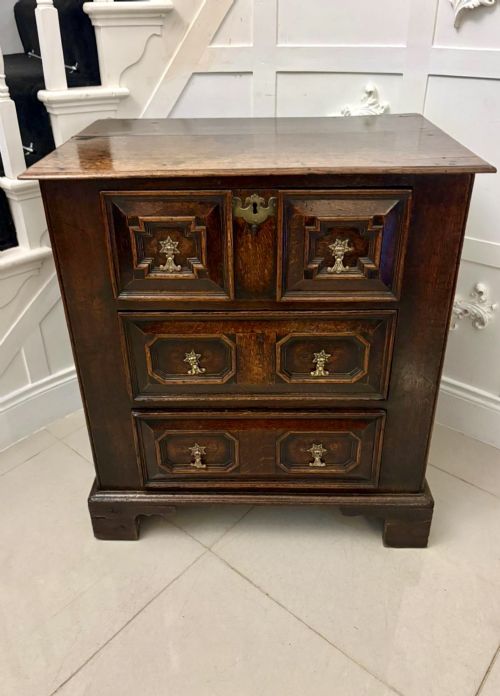
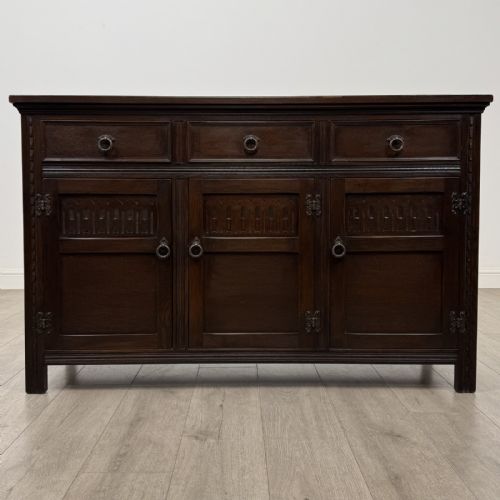
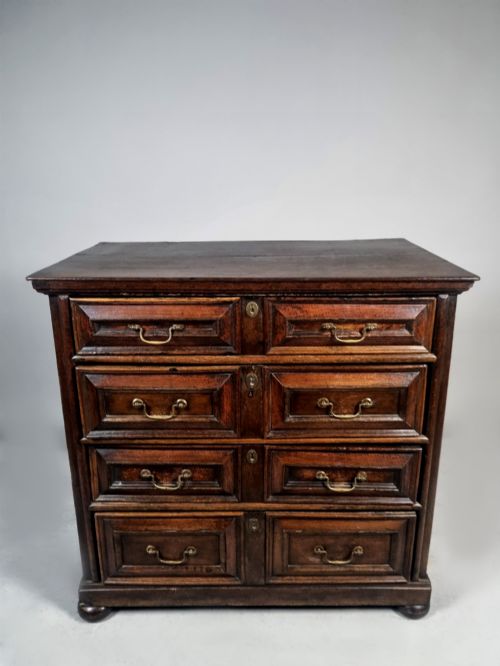
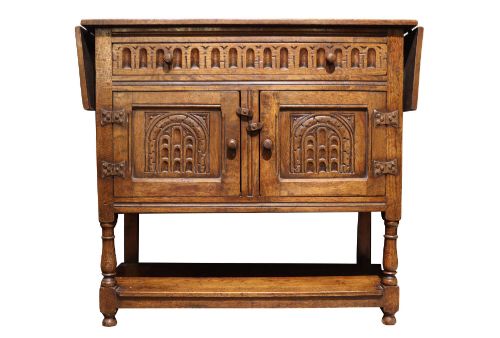
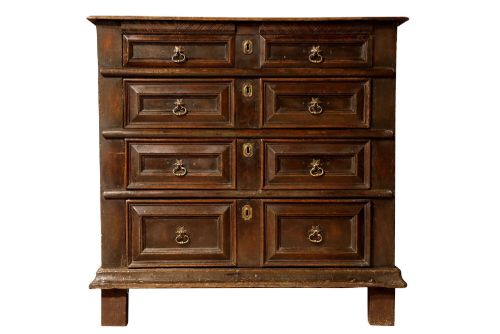
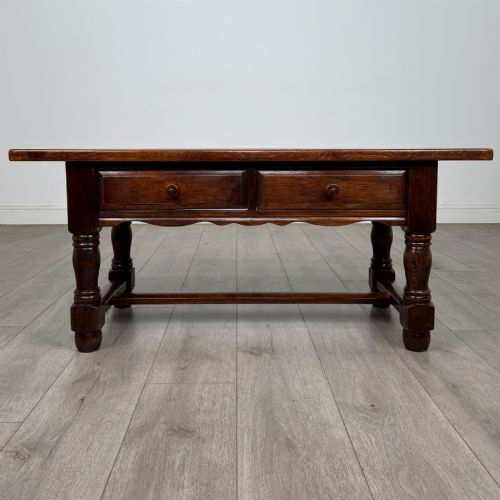
When buyers search for jacobean drawers, they seek sturdy storage forms spanning the seventeenth century through to later revival periods, including Edwardian and 1920s interpretations. The selection on this page centres primarily on oak chests of drawers, side tables, and bureau desks, alongside occasional mule chests and dresser bases. Originals from the seventeenth century sit alongside later revival pieces that emulate the heavy proportions and dark timber of the earlier era.
Forms range from compact two-drawer side tables to imposing geometric chests and fitted writing bureaux. Buyers encounter genuine period examples alongside Edwardian and 1920s revival pieces built with similar attention to solid timber construction. Each piece offers practical storage rooted in historical English cabinet-making traditions.
How they were made
Construction relies heavily on solid oak, shaped into panels, moulded geometric drawer fronts, and robust tabletops. Cabinet makers utilised traditional joinery methods, fixing elements with wooden pegs and sturdy framing rather than modern adhesives.
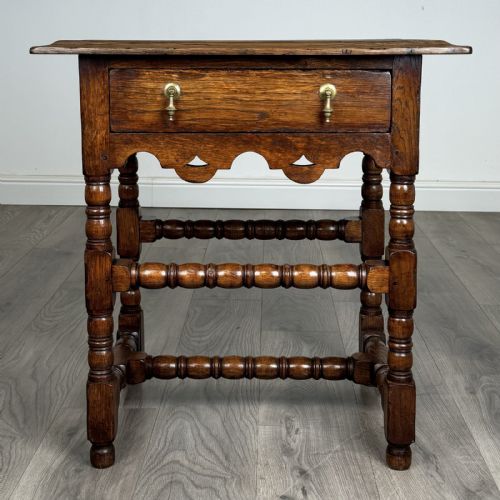
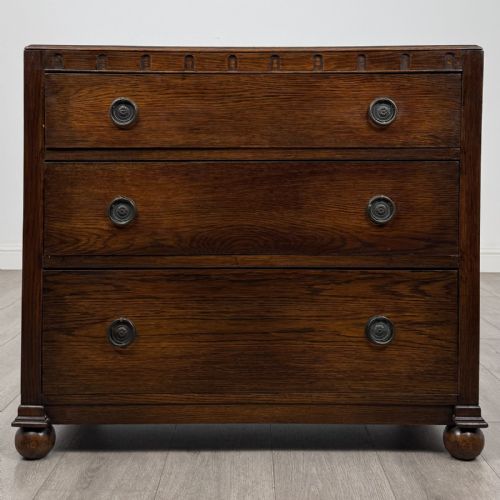
Metal fittings such as brass drop handles and iron hinges appear alongside carved wooden details and turned components like bun feet and bobbin legs. Marquetry inlay and paint surface treatments add decorative contrast to the dense brown grain of the primary timber.
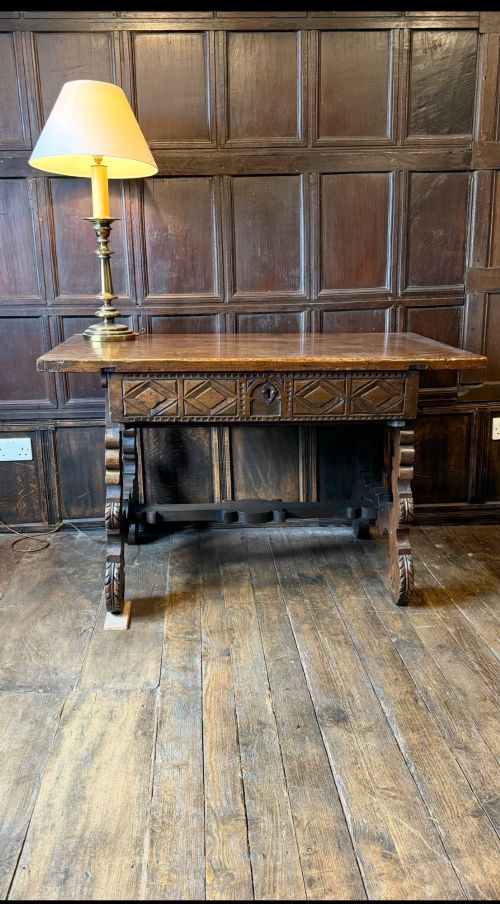
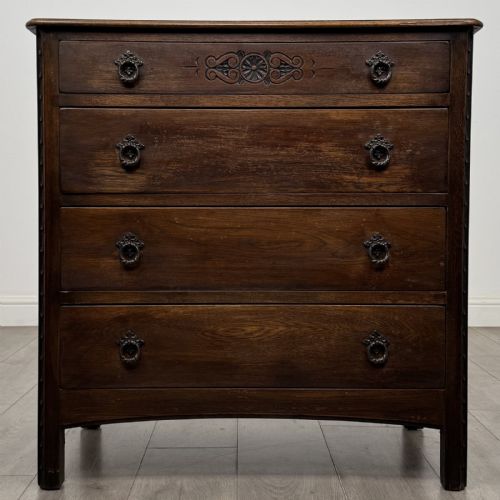
Listings span multiple centuries, uniting authentic 17th-century oak chests with Edwardian and 1920s revival writing bureaux.
What varies in quality
The standard of execution in the carved decoration and geometric moulding dictates the visual success of a piece. Crisp, deeply chiselled detail on drawer fronts and stiles separates superior examples from softer, more mechanised revival work.
The choice and figuring of the oak timber itself governs the distinction across the range. Pieces exhibiting rich grain patterns, original brass hardware, and unaltered structural timber hold greater presence than those assembled from mixed or lesser woods.
The Jacobean Drawers Glossary
- Jacobean Revival
- A nineteenth and twentieth-century style that copies the heavy ornamentation, dark oak, and geometric panelling of the early seventeenth century.
- Geometric Moulding
- Raised wooden mouldings applied to drawer fronts in rectilinear patterns, creating depth and shadow on seventeenth-century pieces.
- Bureaux
- Writing desks featuring a sloping fall-front that opens to reveal internal compartments and small drawers.
- Mule Chest
- A storage chest combining a box base with one or two lower drawers, bridging the transition from trunk to chest of drawers.
- Linenfold
- A carved panel motif resembling folded drapery or linen, frequently seen on Edwardian revival furniture.
- Bobbin Turned
- Furniture legs or stretchers shaped on a lathe to resemble a string of beads or bobbins.
Jacobean Drawers: Frequently Asked Questions
How do I spot a true seventeenth-century piece?
Authentic seventeenth-century pieces display hand-cut joinery, pegged tenons, and distinct tool marks across the inner drawer linings. The timber exhibits the dense grain and oxidised colour that comes only from centuries of ageing.
Revival pieces from the Edwardian era or the 1920s often use machine-cut elements and standardised hardware. Examining the interior construction and timber shrinkage helps clarify the actual period of manufacture.
Were these drawers used as clothes storage?
Early examples served multiple domestic purposes, holding household linens, documents, and valuables rather than folded garments alone. The addition of lower drawers to mule chests and sideboards marked the shift toward dedicated clothing storage.
Smaller side tables and bureaux functioned primarily as writing surfaces and repositories for paperwork. Their compact proportions suited parlour and bedchamber use alike.
How do I care for solid oak furniture?
Solid oak responds best to stable indoor humidity and protection from direct heat sources that can dry out the timber. Regular dusting with a dry cloth maintains the finish without needing heavy polishes.
Occasional application of natural wax preserves the surface sheen of older oak. Avoid silicone-based sprays, which can penetrate porous historical finishes and attract dust.
What is the difference between oak and walnut pieces?
Oak provides a heavy, visibly grained surface that defines much of the early English furniture tradition. It accepts deep carving and geometric moulding with exceptional structural rigidity.
Walnut offers a finer, smoother grain with warmer tonal variations, appearing on select seventeenth-century side tables. Walnut pieces generally present a lighter visual weight compared to their heavy oak counterparts.