



Jacobean Draw Leaf Table
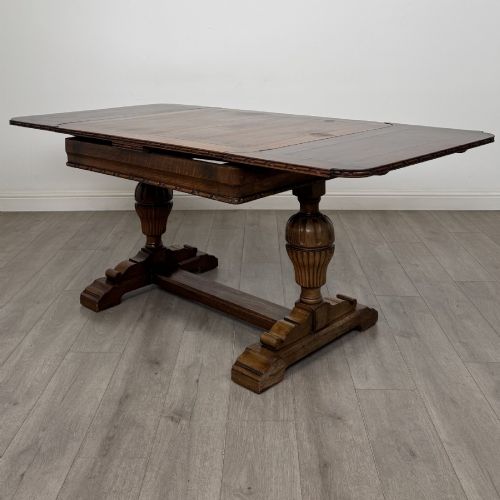
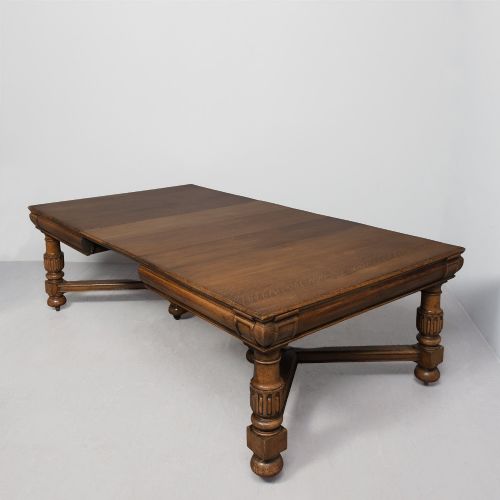
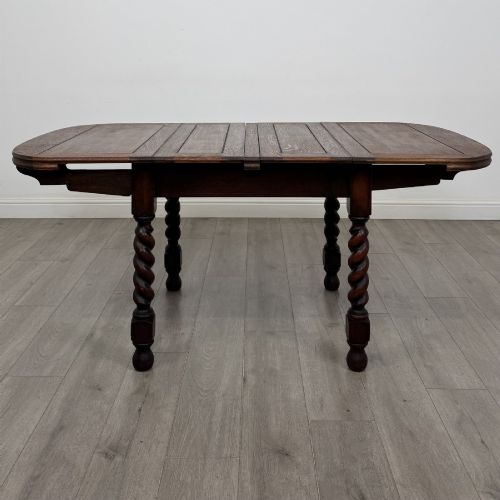
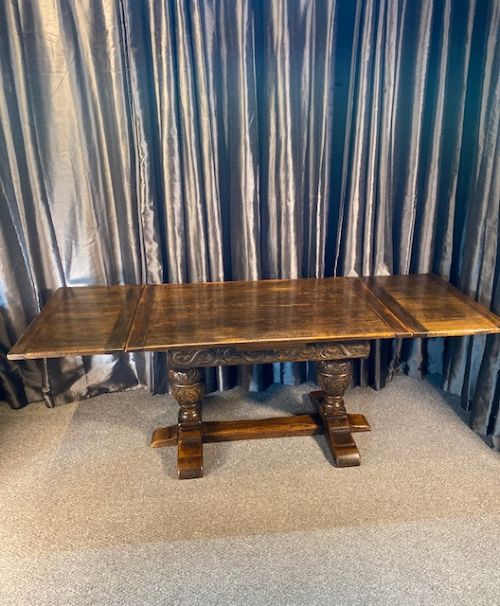
These jacobean draw leaf table examples are sturdy timber dining pieces built to extend easily for guests.
Jacobean Draw Leaf Table
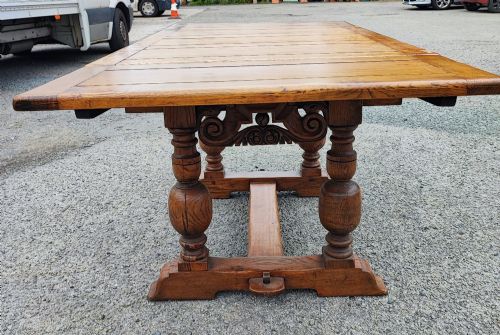
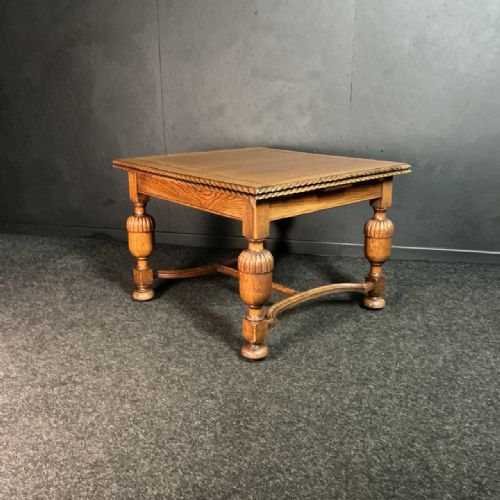
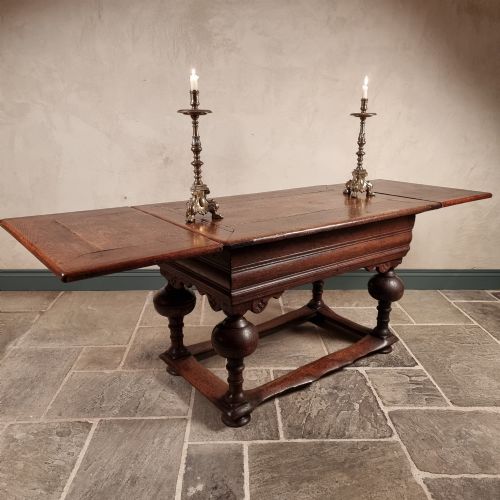
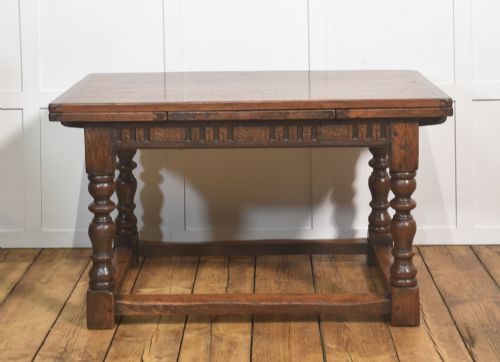
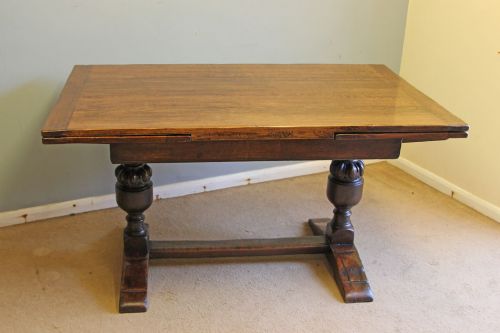
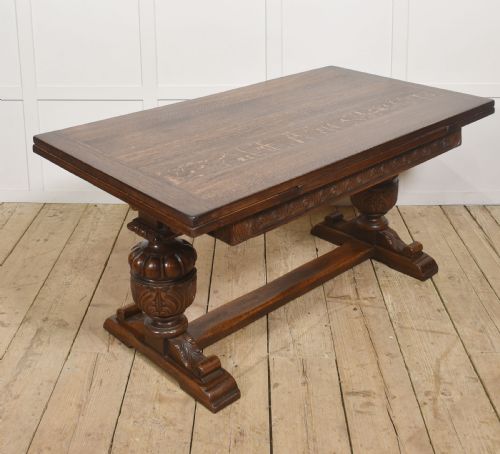
A jacobean draw leaf table provides a robust surface for dining rooms, featuring hidden leaves that slide out from beneath the main top to increase the length. Most pieces on this page emerge from revival periods spanning the early twentieth century alongside genuine seventeenth-century examples.
The forms typically follow refectory or farmhouse kitchen layouts shaped in solid oak. Buyers encounter Jacobean and Elizabethan revival styles alongside plain country house designs.
How they were made
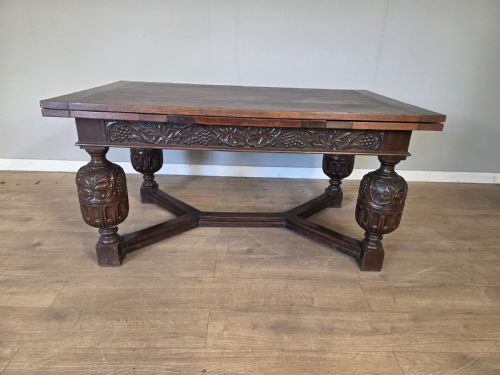
Makers built these tables from solid oak, utilising timber that provides heavy physical weight and dense grain patterns. Carving often decorates the framework, matching the revival aesthetic of the period.
The extending mechanism relies on pull-out leaves positioned beneath the primary surface. These slide smoothly on wooden runners when extended for meals.
Jacobean Draw Leaf Table Retail Price Guide 2026
Typical asking prices for jacobean draw leaf table among the pieces listed under this phrase on Sellingantiques today, from the lower quarter to the upper quarter. They describe what is for sale here now, not the wider market.
Some tables hide their extension leaves so cleverly that guests sit completely unaware they are dining on transforming furniture.
What varies in quality
The distinction between standard and superior pieces rests on the crispness of the carved detailing and the harmony of the timber grain. Finer examples display deeper hand-carved ornamentation across the frieze and legs rather than simple machine shaping.
Construction methods also separate the tiers, with tighter joints in the sliding mechanism and heavier solid oak boards defining the better workshops.
Maple and Co
The Jacobean Draw Leaf Table Glossary
- Draw leaf
- A dining table equipped with sliding leaves stored beneath the main top that pull out to extend the surface. This mechanism allows the table to double its seating capacity with minimal effort.
- Refectory
- A long narrow dining table traditionally used in communal dining halls. These forms provide substantial legroom and a stable base.
- Jacobean revival
- A style popular during the nineteenth and twentieth centuries that copies the heavy turned legs and dark panelled aesthetic of the early seventeenth century. It brings historic character to later dining furniture.
- Solid oak
- Timber taken straight from the tree rather than applied as a veneer over cheaper woods. This material ensures durability and a heavy structure across centuries of use.
Jacobean Draw Leaf Table: Frequently Asked Questions
How do draw leaf tables work?
Two pull-out leaves are stored directly beneath the main tabletop. When guests arrive, you pull these leaves outward from each end while the centre section drops slightly into place.
This clever mechanism extends the surface instantly without requiring separate boards to be stored elsewhere in the house.
Are these tables sturdy enough for daily use?
Solid oak construction and heavy underframes make these pieces exceptionally robust for everyday family dining. The dense timber resists daily wear far better than modern veneered alternatives.
Care for the surface with standard beeswax to maintain the finish against moisture and heat from plates.
How can I tell a seventeenth-century table from a revival piece?
Seventeenth-century examples display hand-tool marks, pegged joints, and timber shrinkage consistent with centuries of age. Revival pieces from the nineteenth and twentieth centuries often show more uniform machine sawing and cleaner internal runner mechanisms.
Both types offer historical charm, but seventeenth-century pieces carry distinct signs of early carpentry techniques.
What chairs match these dining tables?
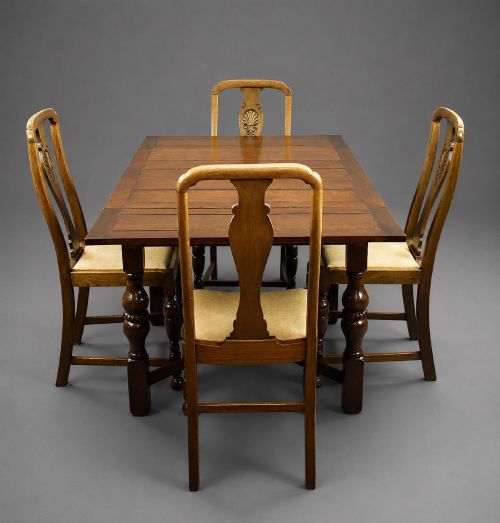
Heavy oak dining chairs or upholstered seating complement the substantial proportions and dark wood tones of these refectory tables. Matching revival sets appear frequently alongside the tables themselves.
Plain wooden benches also suit the farmhouse aesthetic found across many listings on this page.