







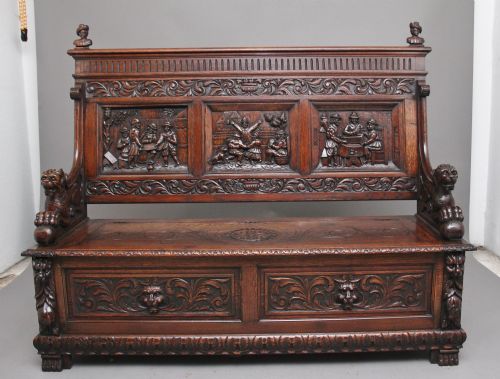

Jacobean Carved Settle
A jacobean carved settle brings solid timber presence to an entrance hall, offering high backs and enclosed seating shaped by centuries of revival taste.
Jacobean Carved Settle
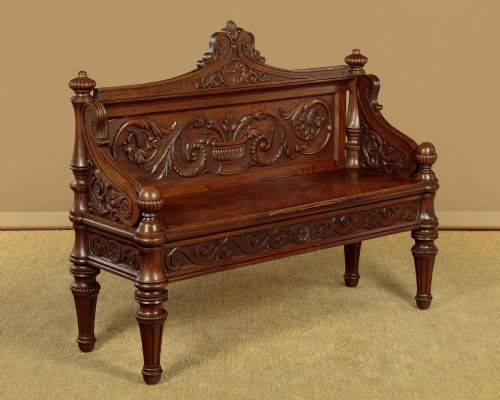
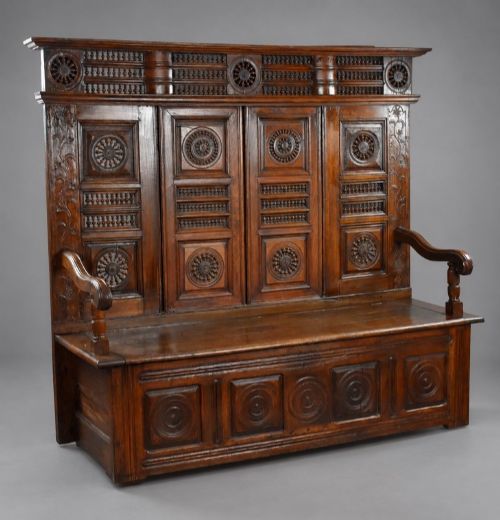
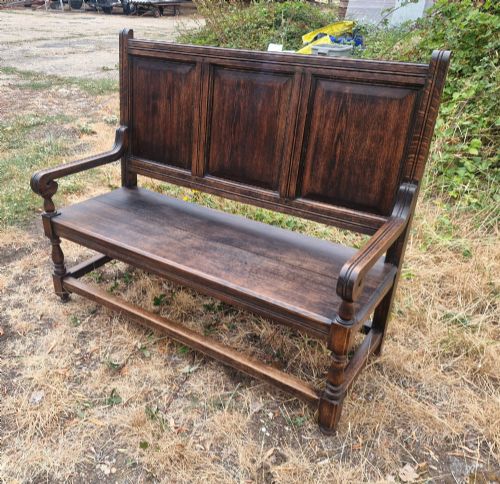
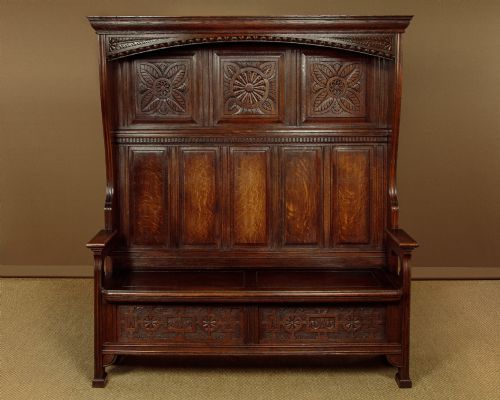
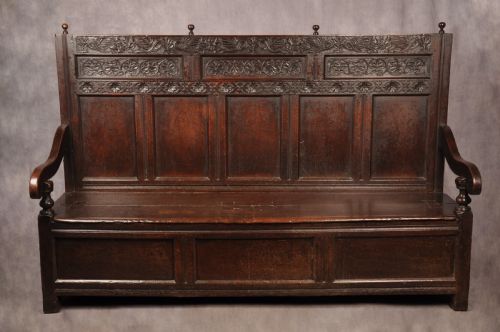
A jacobean carved settle is a substantial wooden bench designed for hallways and reception spaces, featuring high panelled backs and enclosed lower compartments. The pieces meeting this search phrase range from authentic seventeenth century examples to revival furniture produced during the Victorian, Edwardian and early twentieth century periods.
Most items encountered on this page belong to the revival eras of the late nineteenth and early twentieth centuries, alongside genuine seventeenth century pieces originating in England. Forms vary from straightforward panelled benches to complex box settles with lift up seats, canopy tops or dual purpose monastic tables.
Makers and workshops across different centuries utilised traditional forms, producing hall seats, monks benches and high back settles that prioritised sturdy timber construction and decorative carving.
Quality and Proportion
Quality rests in the crispness of the carved detail and the integrity of the timber, distinguishing deeply hand carved seventeenth century originals and well executed nineteenth century revival pieces from simpler later production. The weight of the oak, the depth of the panel work and the proportion of the high back relative to the seat determine the overall balance of the piece.
Jacobean Carved Settle Retail Price Guide 2026
Typical asking prices for jacobean carved settle among the pieces listed under this phrase on Sellingantiques today, from the lower quarter to the upper quarter. They describe what is for sale here now, not the wider market.
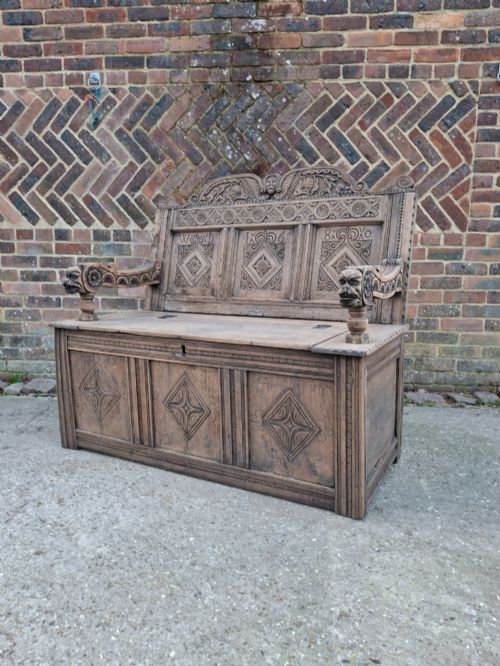
Keep an eye out for hidden green man carvings glaring from the woodwork, silently supervising your hallway post.
The Jacobean Carved Settle Glossary
- Settle
- A wooden bench with a high back, solid arms and an enclosed base designed to keep out draughts in domestic halls. Many examples include lift up lids forming a box seat.
- Monks Bench
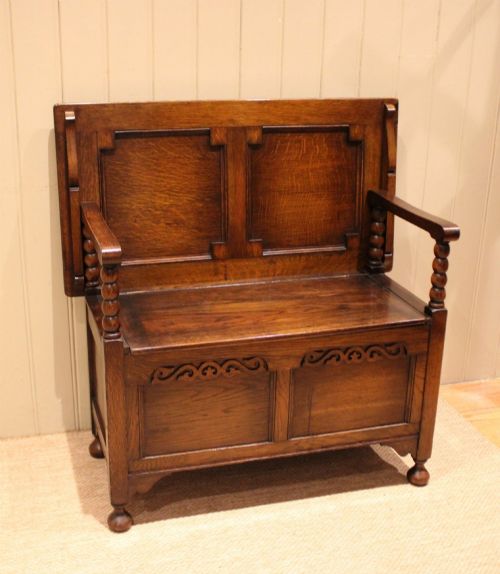
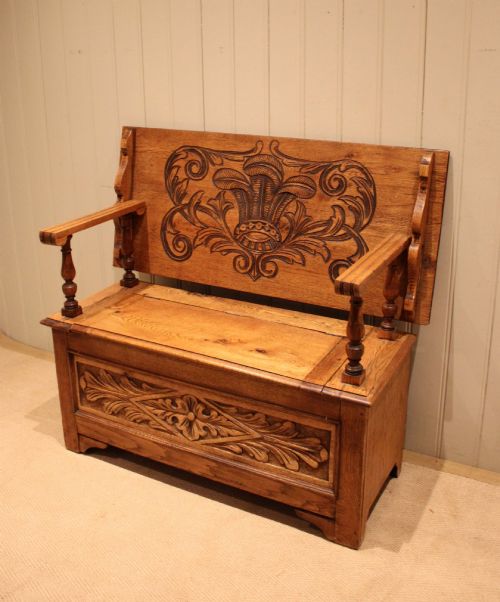
- A convertible piece of furniture featuring a hinged top that folds down over the arms to transform the seat into a table. These versatile items often include storage beneath the seat.
- Box Settle
- A variant incorporating a large enclosed compartment beneath the seat accessed via a lift up lid. This design provided secure storage for household goods in early hallways.
- Jacobean Revival
- A nineteenth and early twentieth century style that resurrects the heavy oak proportions and geometric carving of the early seventeenth century. This revival produced numerous hall benches and settles found in period properties.
- Wainscot
- A type of wooden panelling or a chair and settle construction utilising framed wooden panels. The term links domestic seating to the fine oak panelling found in period interiors.
Jacobean Carved Settle: Frequently Asked Questions
What is a jacobean carved settle?
A jacobean carved settle is a high backed wooden bench featuring panelled construction and decorative carving inspired by seventeenth century design. These pieces serve as substantial hall seats and frequently incorporate storage boxes beneath the seat.
They appear in both authentic seventeenth century formats and later revival interpretations from the Victorian and Edwardian eras, constructed primarily from solid oak.
How do monks benches work?
Monks benches combine a seating unit with a table by utilising a hinged upper backrest that folds flat over the arms. This mechanism allows the bench to convert into a table top when required for dining or writing.
The base typically functions as a box seat with a lift up lid, providing concealed storage within the hallway or reception room.
Where were settles placed historically?
Historically, settles stood near fireplaces or in entrance halls where high panelled backs protected occupants from cold draughts. Their enclosed box bases kept boots and household items out of sight.
In modern interiors, they function as practical hallway seating that anchors large entrance spaces and provides storage.
How do I identify a 17th century settle?
Seventeenth century settles display heavy pegged oak construction, hand carved panels with natural tool marks, and deep patination acquired over centuries of use. They often feature simple board or panel backs without the precise machine cuts seen in later furniture.
Revival pieces from the Victorian and Edwardian periods often mimic these traits but reveal later fixings, lighter timbers, or standardised machine carving upon closer inspection.