


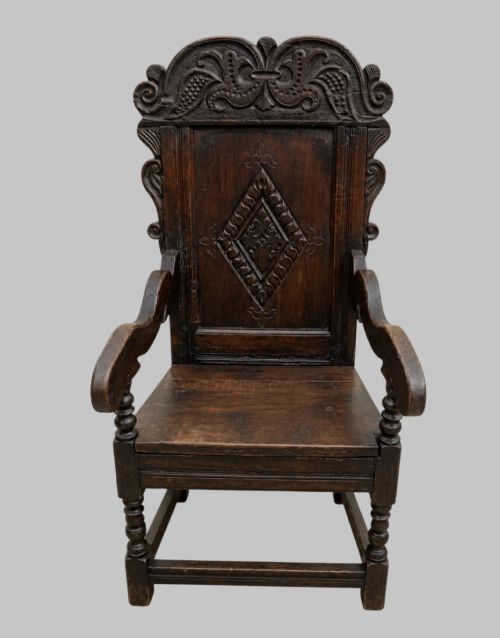

Jacobean Carved Panel Chair
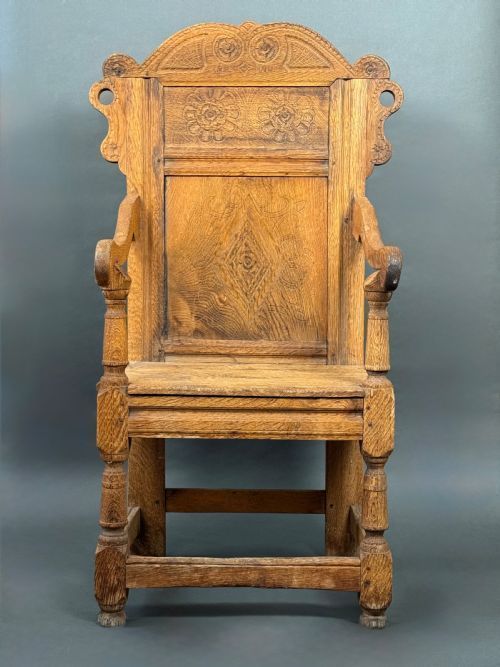
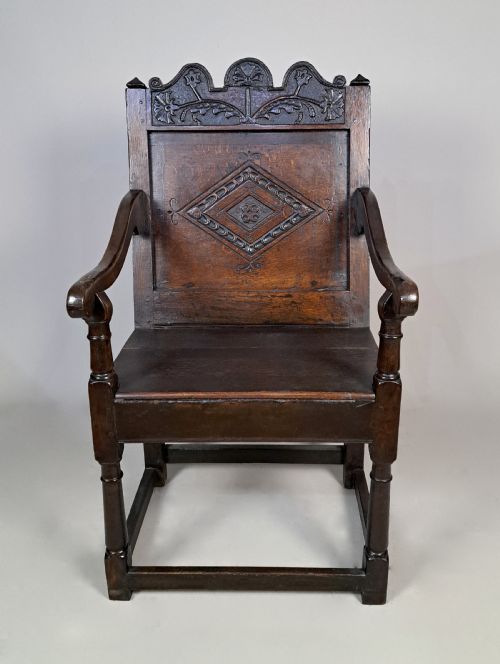
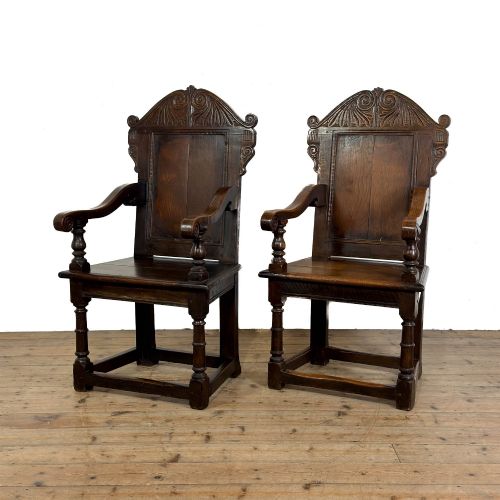
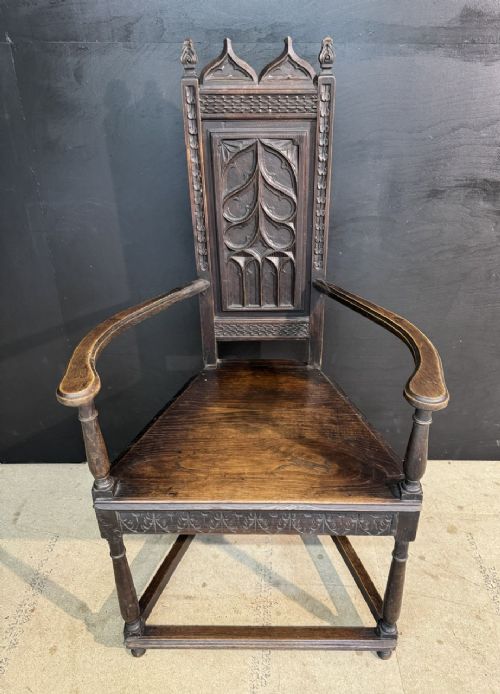
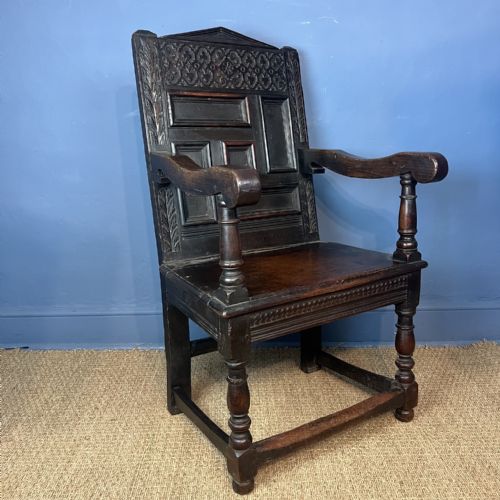
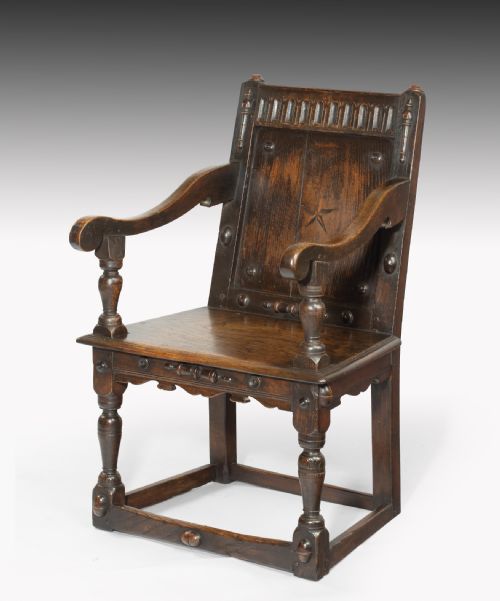
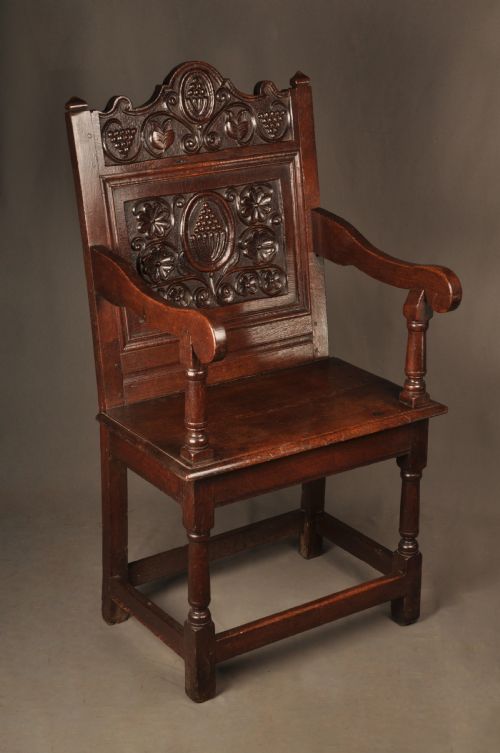
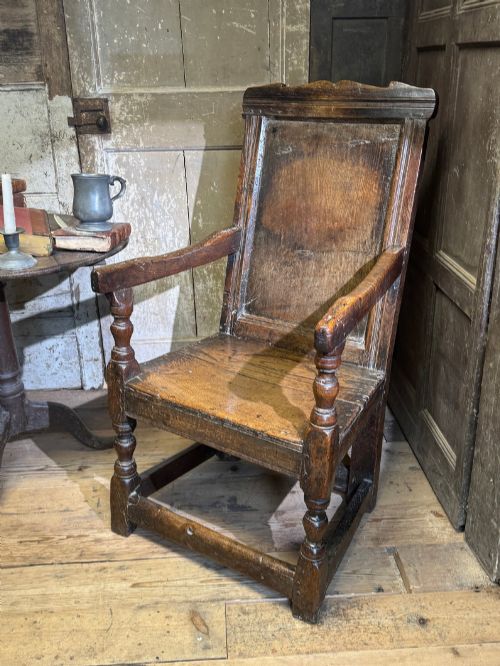
A jacobean carved panel chair brings heavy timber structure and deeply carved wooden surfaces into a room.
Jacobean Carved Panel Chair
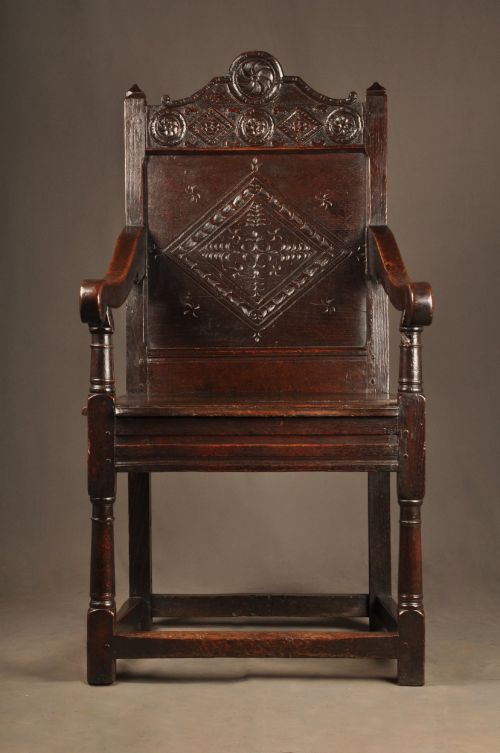
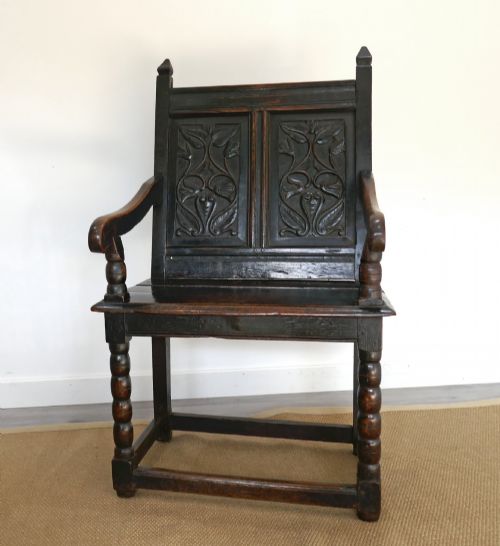
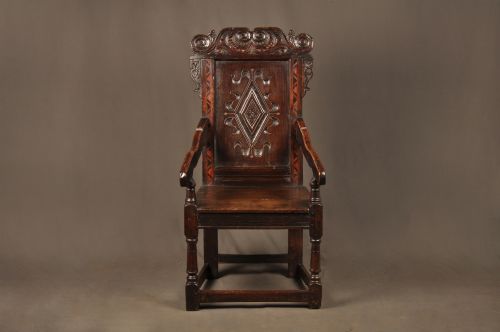
A jacobean carved panel chair comprises solid timber seating constructed with rigid panelled backs and substantial wooden arms. These items span periods from the seventeenth century through to later revival epochs, reflecting centuries of woodworking tradition.
The selections available here range from early provincial wainscot armchairs originating in regions like Yorkshire, Lancashire, and the West Country to later nineteenth-century revival interpretations. Many examples feature solid oak construction paired with carved back panels, standing firmly as heavy functional seating.
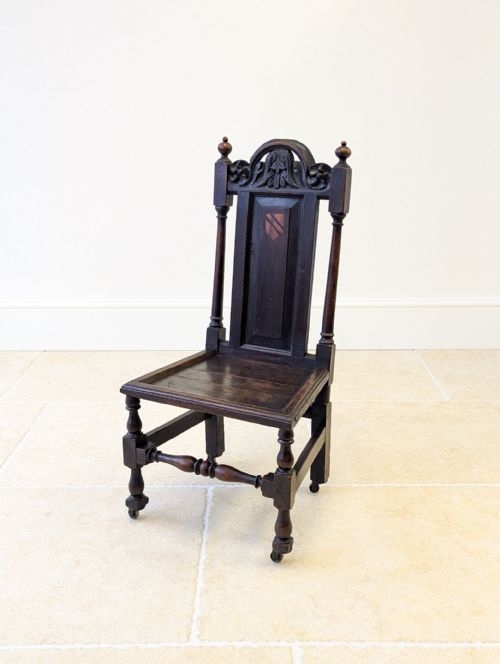
Buyers encounter various forms including elbow chairs, wainscot armchairs, and side chairs designed for halls and dining spaces. The prevalent configuration utilises sturdy vertical posts, wooden seats, and low-relief geometric or floral carving across the backrest.
How they were made
Makers utilised solid oak and timber frames joined primarily by pegged mortise and tenon joints to build rigid structural integrity. Panels were inset into grooved framework to allow for wood movement as humidity changed.
Surfaces were shaped using hand chisels and gouges to cut linear patterns, scrolls, and stylized floral motifs directly into the dense oak. Certain pieces incorporate wood inlay or brass elements alongside basic upholstery fabric or velvet.
What varies in quality
The depth and crispness of the hand carving distinguish superior examples from plain or heavily worn alternatives. Sharp chisel work and well-defined relief indicate skilled seventeenth-century craftsmanship compared to softer, more rounded revival milling.
Originality of the timber components determines overall desirability, as replacement panels or heavily re-carved surfaces alter the integrity of the piece. The richness of the natural oak patination and surface colour also sets apart pieces exposed to centuries of care.
The Jacobean Carved Panel Chair Glossary
- Wainscot chair
- A heavy wooden armchair constructed primarily with panelled woodwork rather than upholstered padding. These seats typically feature solid oak backs and sturdy armrests.
- Joint backstool
- An early wooden side chair built using pegged mortise and tenon joints similar to a joint stool. This form lacks the enclosed arms of a standard armchair.
- Panel chair
- A seating form defined by a flat wooden back panel fitted into a framed structure. The central panel usually carries carved ornamentation or plain grain.
- Elbow chair
- An alternative term for an armchair featuring short wooden armrests fitted to the sides of the seat. These supports provide leverage when rising from low-slung frames.
Jacobean Carved Panel Chair: Frequently Asked Questions
Where were these chairs placed?
These chairs stood primarily in the principal rooms of large houses, such as the hall or parlour, where heavy wooden furniture projected status and stability.
Over time, owners moved them into dining rooms and studies as domestic layouts evolved and seating requirements shifted toward movable comfort.
How do I care for solid oak?
Maintain the timber by keeping the surface clean with a soft dry cloth and applying occasional traditional wax polish to nourish the grain.
Protect the wood from direct heat sources and sudden humidity shifts to prevent the dry panelling from splitting or warping.
Are these chairs comfortable?
Original examples offer firm, upright wooden seating designed for posture rather than lounging, reflecting period domestic habits.
Owners frequently added loose squab cushions upholstered in velvet or fabric to soften the hard oak seat bases.
How do I spot a revival piece?
Nineteenth and twentieth-century revival pieces often exhibit machine-cut uniformity and lighter timber tones compared to seventeenth-century originals.
Examine the construction joints and fastener marks underneath the seat to understand the manufacturing period and structural methods used.