
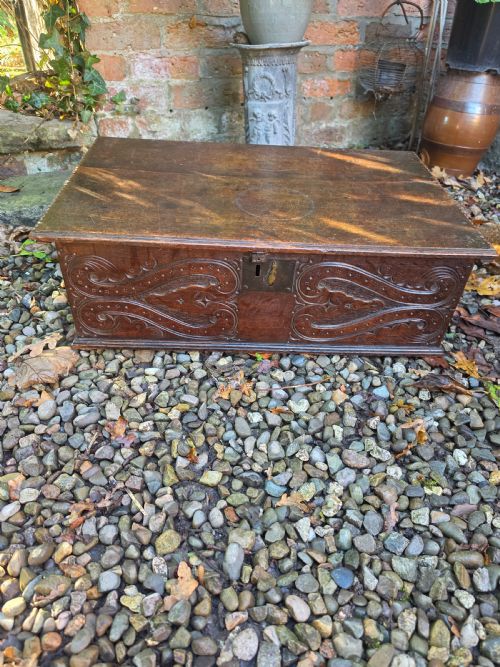
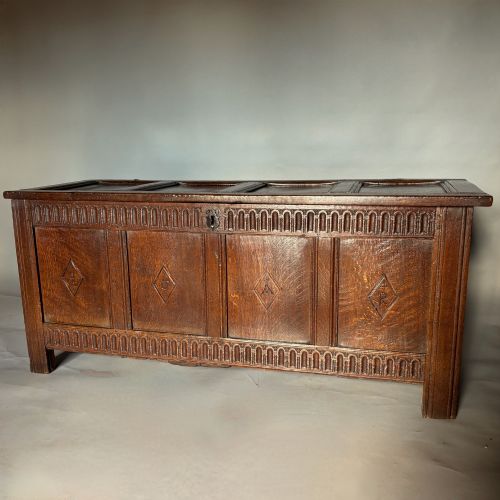
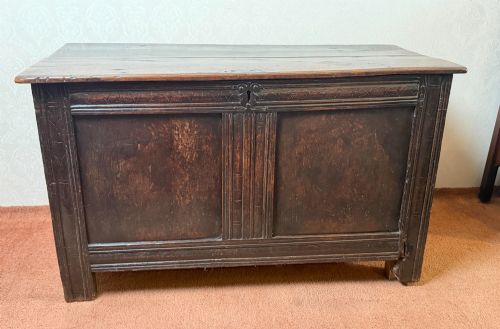
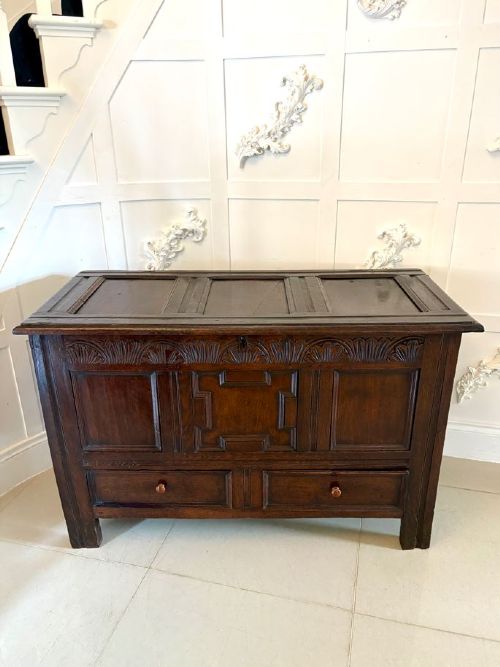
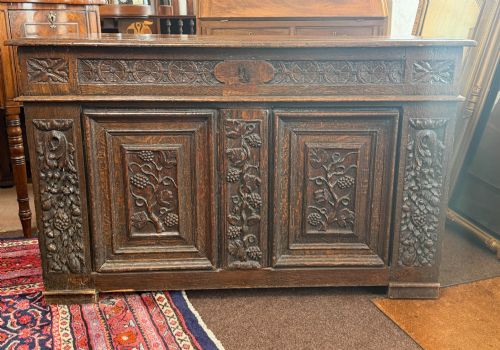
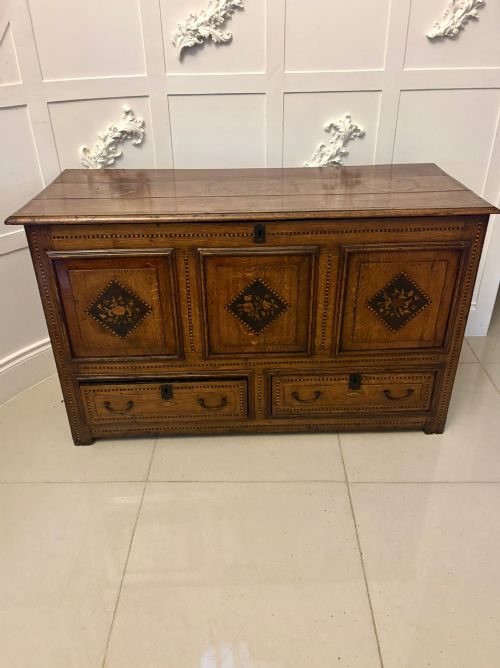
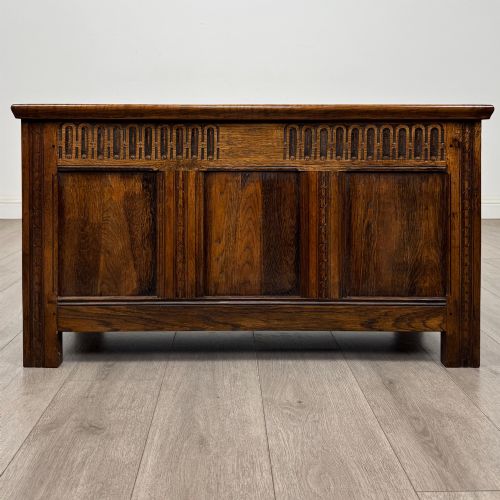

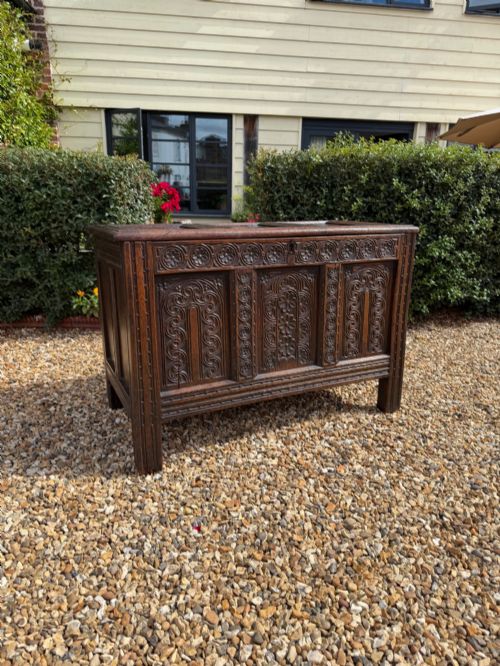
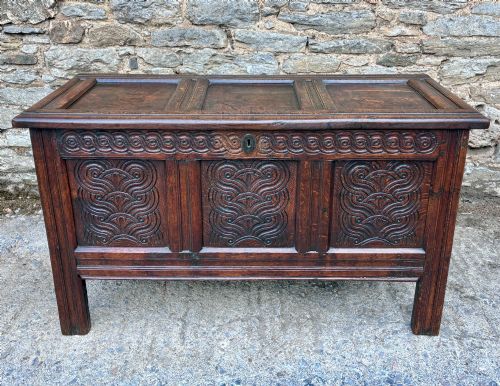
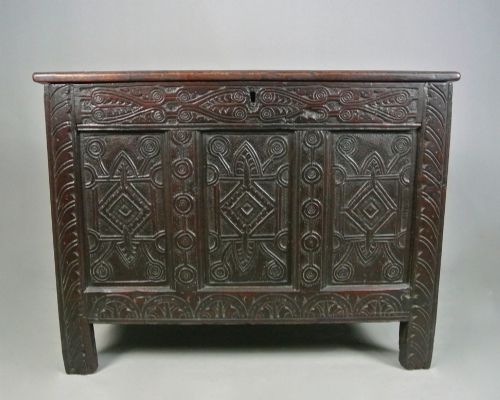
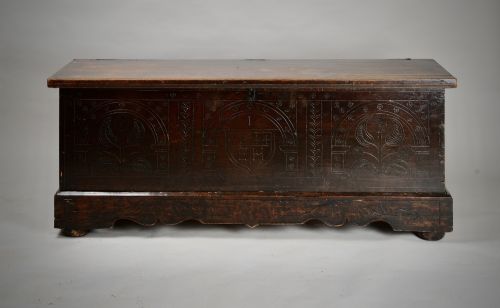
Jacobean Carved Blanket Box
These jacobean carved blanket box examples bring robust seventeenth-century storage and historic timber character straight into a modern interior.
Jacobean Carved Blanket Box
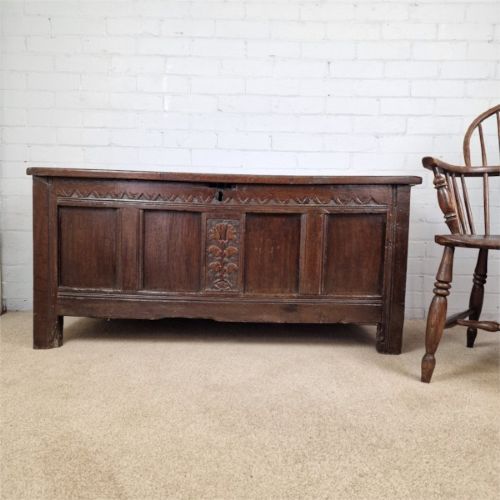
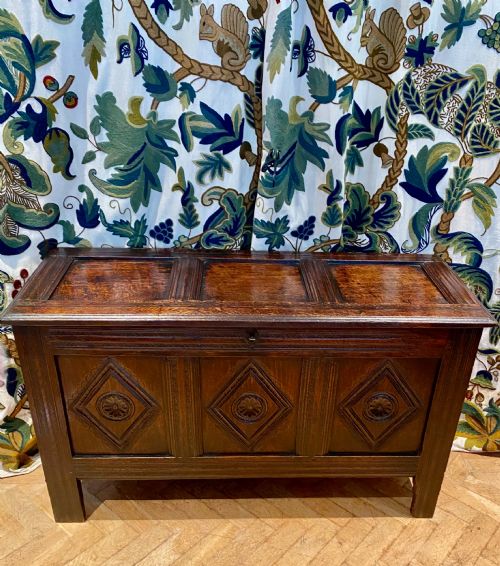
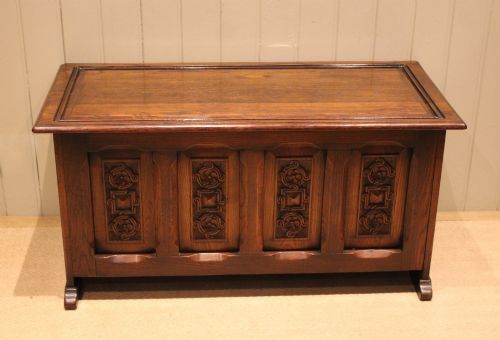
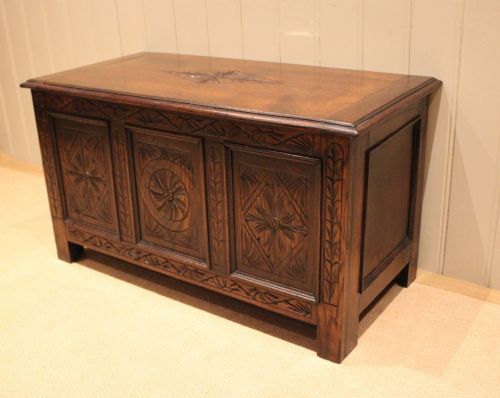
A jacobean carved blanket box is fundamentally a sturdy timber chest built for household storage, most commonly seen here as a seventeenth-century oak coffer or a later revival piece.
The selection ranges from authentic period coffers dated to the sixteen-hundreds up to twentieth-century interpretations, alongside mule chests and smaller panelled box forms.
Buyers encounter heavy joined construction, hinged lids, and deep internal compartments designed originally to safeguard linens, documents, and valuables.
Standards of craftsmanship
Quality depends heavily on the crispness and depth of the timber carving, distinguishing master craftsmanship from simpler provincial work.
The integrity of the original joined framing and the proportional harmony of the panels separate superior pieces from heavily altered examples.
Some seventeenth-century examples double as close stools, hiding a domestic convenience quietly beneath a panelled wooden lid.
The Jacobean Carved Blanket Box Glossary
- Cofer
- A large wooden chest used historically for storing valuables and household goods. These heavy boxes typically feature hinged flat lids and sturdy joined construction.
- Mule chest
- A storage chest equipped with one or more drawers at the base beneath the main compartment. This form evolved by combining the traditional cofer with drawer storage.
- Joined oak
- Furniture constructed using mortise and tenon joints secured with wooden pegs rather than modern fasteners. This method provides immense structural strength.
- Linenfold
- A style of wood panelling carved in low relief to resemble folded parchment or linen. It appears frequently on Tudor and seventeenth-century English woodwork.
- Cassone
- An ornate chest associated with the Italian Renaissance, sometimes used in British collections to describe deeply carved continental forms.
Jacobean Carved Blanket Box: Frequently Asked Questions
How were these chests used?
These boxes served primarily as secure household storage for textiles, household linen, and important family documents before fitted wardrobes existed.
Due to their flat tops, they frequently doubled as occasional benches, tables, or resting surfaces within the main rooms of early homes.
Are these pieces genuinely from the seventeenth century?
The selection includes authentic seventeenth-century survivals alongside later revival pieces made during the Edwardian era and the twentieth century.
Examining the construction methods, timber ageing, and tool marks helps determine whether a piece belongs to the Jacobean period or later imitation styles.
How do I care for antique oak?
Maintain a stable room temperature and avoid placing the timber near direct heat sources or strong sunlight to prevent splitting.
Apply a traditional beeswax polish occasionally to nourish the dry oak surface and preserve the natural patina.
What is the difference between a cofer and a blanket box?
A cofer is the historic term for a heavy, boarded or joined wooden chest built with structural frame and panel techniques.
Blanket box is a broader, more modern descriptor applied to any large chest intended for storing bedding, regardless of its specific era.