


Ivory Area Carpet
When you search for an ivory area carpet, you are looking at woven floor coverings spanning from the mid-nineteenth century through the early twentieth century.
Ivory Area Carpet
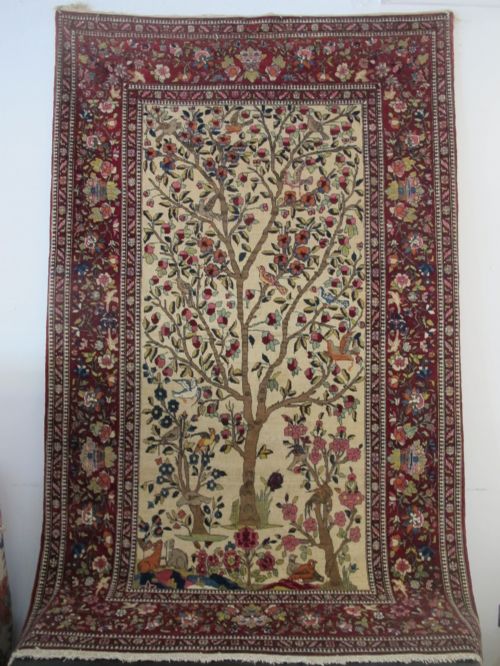
An ivory area carpet encompasses hand-knotted rugs and carpets featuring prominent pale or cream grounds, originating predominantly from Persia, the Caucasus, and surrounding regions. The selections on this page range from room-sized carpets down to smaller tribal rugs dating across several decades from the mid-nineteenth century onwards.
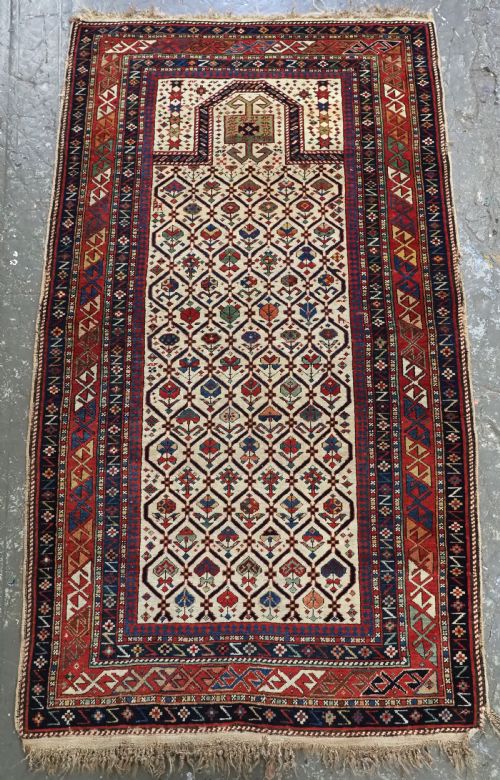
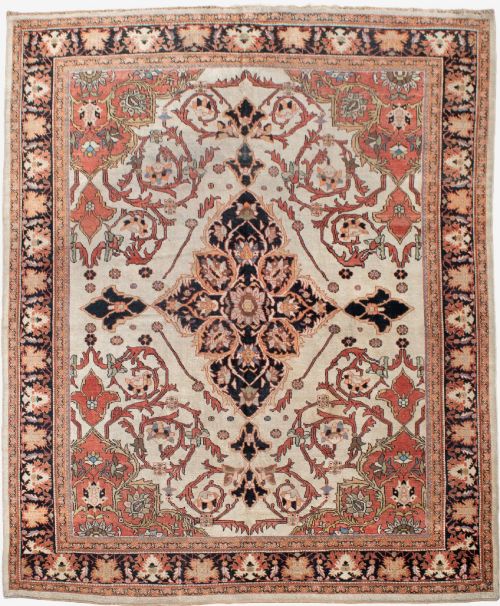
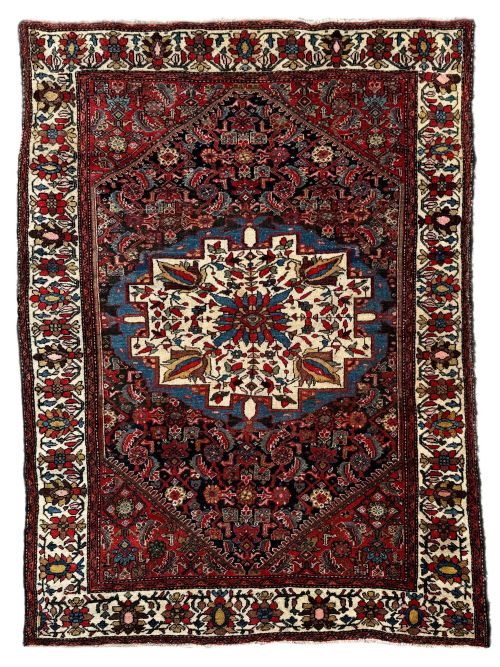
Makers and weavers utilised traditional regional designs such as star medallions, floral lattices, and prayer niches set against neutral ivory fields. Village workshops and tribal groups produced distinct formats, from Caucasian Dagestan prayer rugs to large Persian Mahal and Ziegler carpets.
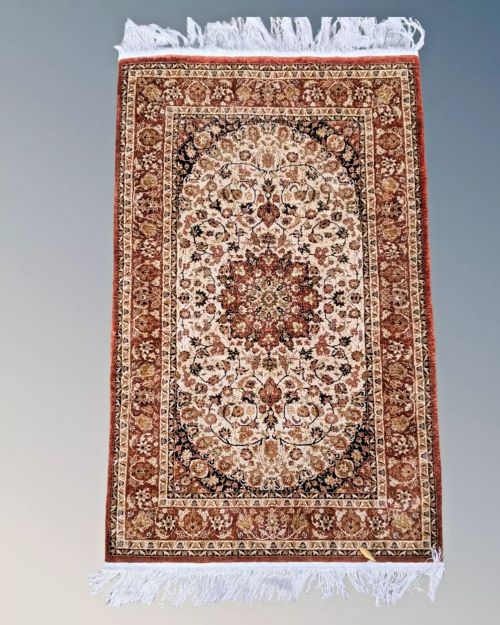
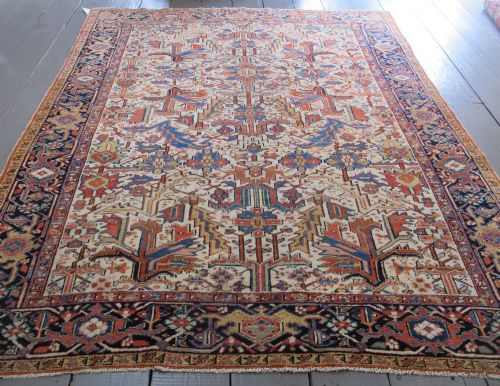
Buyers encounter diverse regional attributes, including intricate silk highlights on wool foundations and bold geometric motifs characteristic of nomadic weaving traditions. Each piece reflects the specific aesthetic of its origin, whether a fine Isfahan city carpet or a rustic Baluch tribal rug.
Materials and construction
The foundation and pile rely heavily on natural wool and cotton, occasionally combined with fine silk to create textural contrast and delicate highlights. Weavers tied hand-spun wool yarns onto sturdy warps, employing natural dyes that yielded subtle, enduring colour palettes across the fields and borders.
Construction techniques vary between city workshops and tribal camps, where looms supported the creation of dense pile carpets as well as lighter prayer formats. The integration of organic dye stuffs allowed craftsmen to achieve the characteristic soft ivory background tones that define these textiles.
Several nineteenth-century village weavers included hidden butterflies within their ivory ground designs to charm future admirers.
Factors of quality
Knot density and precision of execution dictate the crispness of geometric and floral motifs across the ivory ground. Finer city rugs exhibit meticulous detail in the drawing of medallions and lattices, whereas tribal pieces display a looser, more expressive interpretation of traditional designs.
The choice of materials also elevates certain examples, particularly those incorporating hand-spun wool with exceptional lustre or deliberate silk highlights. Preservation of the original pile and borders remains central to the integrity of each carpet.
Ahmadi
The Ivory Area Carpet Glossary
- Ground
- The background colour of the central field behind the main pattern. In these pieces, the field is predominantly ivory.
- Medallion
- A symmetrical ornamental motif positioned at the centre of the carpet field. Many regional rugs feature a star or geometric medallion as their focal point.
- Prayer rug
- A small format rug featuring a mihrab or arch design used traditionally for daily devotions. Caucasian examples frequently employ this layout.
- Warp
- The stationary vertical threads stretched across the loom upon which the knots are tied. Cotton and wool serve as standard warp materials.
- Pile
- The upright surface of yarn that forms the soft texture of the carpet. This is created by individual knots tied around the warp threads.
Ivory Area Carpet: Frequently Asked Questions
How do I clean an antique ivory carpet?
Professional specialist cleaning is essential to protect natural wool fibres and organic dyes. Regular gentle vacuuming without a beater bar prevents dust accumulation within the pile.
Harsh chemical treatments or household detergents risk damaging the delicate ivory ground and historical foundations. Consult a conservator experienced in antique textiles for maintenance advice.
Are these carpets suitable for high traffic areas?
Many of these woven pieces were built for daily use in traditional homes using durable wool and cotton. Placing a suitable underlay beneath the rug reduces friction and extends the lifespan of the foundation.
Heavier traffic zones benefit from thicker village or city carpets rather than delicate silk highlights. Regular rotation ensures even wear across the ivory field over time.
How do I distinguish regional styles?
Regional provenance reveals itself through specific structural traits, palette choices, and motif arrangements. Caucasian pieces often display crisp geometric lattices, while Persian carpets favour curvilinear floral designs.
Examining the borders, fringe finishing, and knotting style helps attribute a piece to centres such as Tabriz, Mahal, or Shirvan.
Why choose an ivory ground carpet?
An ivory ground creates an open, luminous quality that brightens room interiors and complements varied decorative schemes. The neutral background allows intricate medallion and lattice patterns to stand out clearly.
These versatile neutral fields have remained popular across different periods from the nineteenth century onward.