
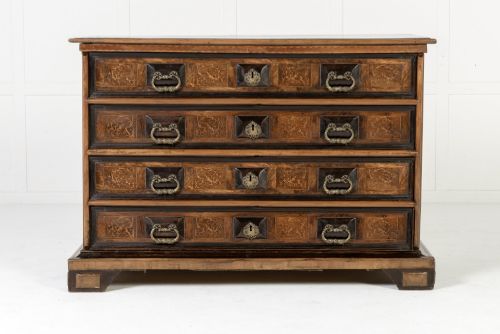


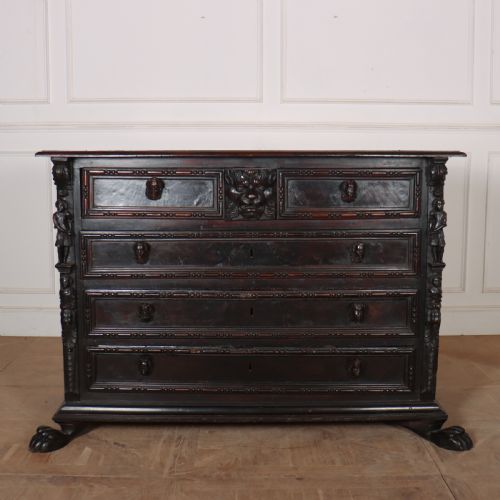
Italian Walnut Commode
An Italian walnut commode brings substantial timber and serpentine grace to a room, offering deep drawers set behind elaborate continental forms.
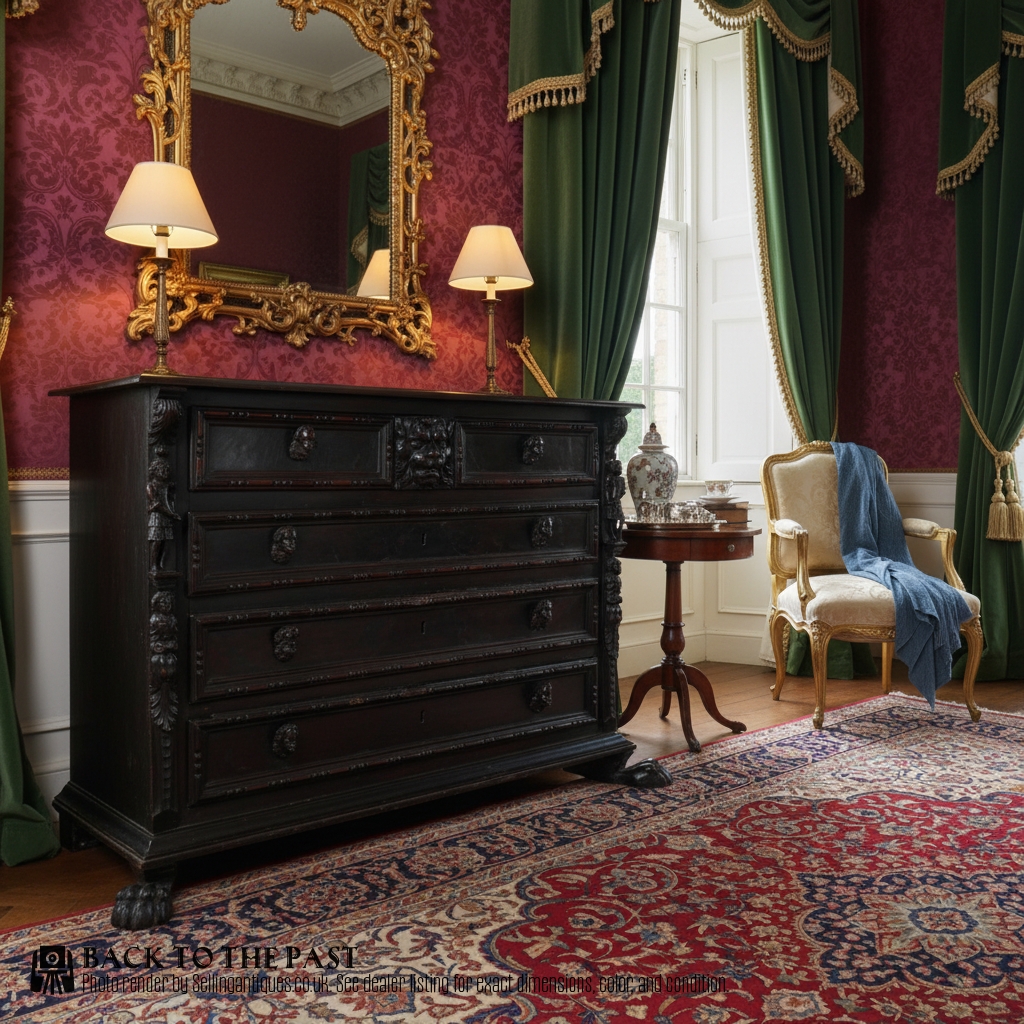
Italian Walnut Commode
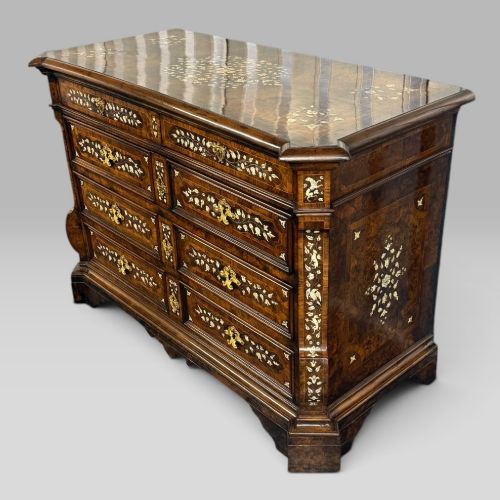
An italian walnut commode is a low storage chest designed with drawers, appearing frequently in eighteenth and nineteenth century periods. These items encompass varied local regional styles from Venetian curves to Lombardy marquetry.
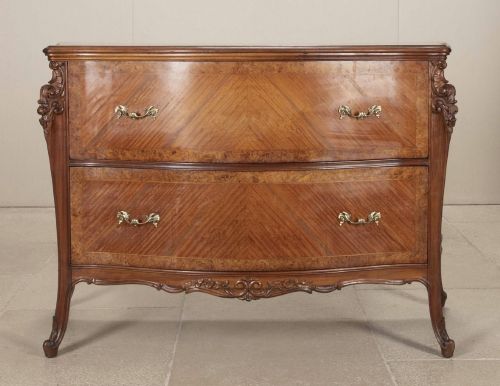
The selections span standard drawer chests, serpentine bedside cabinets, and bombe profiles alongside bureau bookcases. Walnut dominates the construction, supported by secondary timbers like fruitwood and satinwood.
Most examples originate from eighteenth century workshops, though nineteenth century interpretations and twentieth century exhibition pieces also emerge. Buyers encounter both plain timber grains and highly inlaid decorative surfaces.
How they were made
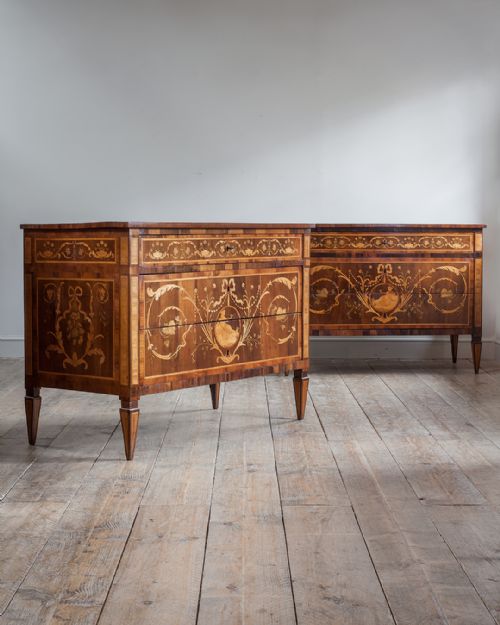
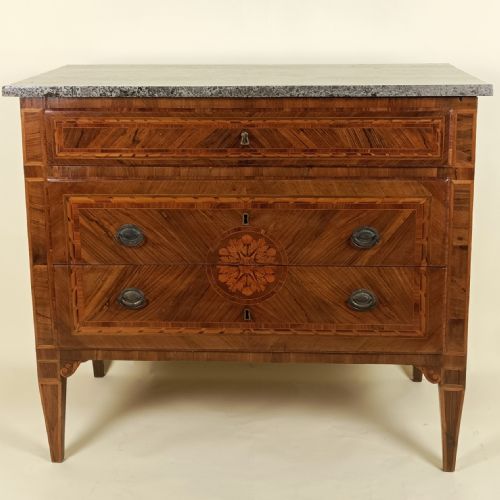
Cabinet makers utilised solid walnut and decorative burl veneers applied over firmer secondary woods, shaping timber into serpentine and bombe contours. Marquetry and parquetry designs integrate contrasting woods such as fruitwood, satinwood, and kingwood into geometric or pictorial arrangements.
Brass hardware often fastens the drawer fronts, while marble tops provide durable surfaces on specific regional variants. Ebonised wood and giltwood details occasionally accent the primary walnut structure.
Some chests hide their contents behind such complex curved drawers that guests may need a map just to find the spare socks.
What varies in quality
The refinement of the surface marquetry and the fluidity of the carved serpentine or bombe outline distinguish standard pieces from superior examples. Natural grain movement in burr walnut and the precision of drawer construction indicate the level of workshop execution.
Attributions to notable centres like Lombardy or specialised workshops elevate certain items, while matching pairs command particular interest from collectors seeking symmetry.
Pietro Ferrario
The Italian Walnut Commode Glossary
- Bombe
- A bulging, convex shape swelling outward on the front and sides of the chest. This contour requires advanced cabinet making skill to achieve proper structural balance.
- Serpentine
- A line curving inward centrally and outward at the ends, creating a wavy silhouette. This profile frequently defines the drawer fronts and top edges of regional furniture.
- Marquetry
- Decorative patterns formed from thin wood veneers inlaid into a primary surface. Craftsmen use contrasting timbers to create pictorial or geometric designs.
- Parquetry
- Geometric wood inlay forming repetitive mosaic patterns across a tabletop or drawer front. This technique relies on precise cutting of small veneer segments.
- Burl walnut
- Wood grain featuring swirling knots and distorted growth patterns harvested from tree burls. Furniture makers prize this material for its highly figured and decorative appearance.
Italian Walnut Commode: Frequently Asked Questions
Where were italian walnut commodes placed?
These chests originally served in formal bedrooms, grand salons, and hallways across various Italian regions. Their decorative facades allowed them to function as display surfaces as well as practical storage.
Today, they adapt easily to living rooms and studies, holding household items while anchoring a room's decorative scheme.
How do I identify an eighteenth century piece?
Eighteenth century examples typically show hand-cut dovetails, regional timber choices like native walnut and fruitwood, and characteristic baroque or rococo silhouettes. Construction methods rely entirely on hand tools and traditional animal glues.
Examining the interior drawer linings and backboards reveals the age of the timber and the manufacturing techniques used by period joiners.
What is the difference between bombe and serpentine?
Bombe refers to a pronounced outward bulging profile on the front and sides, creating a rounded, swelling form. Serpentine describes a rhythmic wave shape that curves inward and outward along a flat plane.
Both styles demand complex woodworking techniques, but bombe forms generally present a more voluminous and dramatic silhouette.
How do I care for antique walnut furniture?
Maintain stable indoor humidity and temperature levels to prevent the walnut timber and delicate veneer inlays from splitting or warping. Keep the surface away from direct sunlight to preserve the natural colour of the wood.
Apply a traditional wax polish occasionally to nourish the grain and protect the finish without building up heavy chemical residues.