

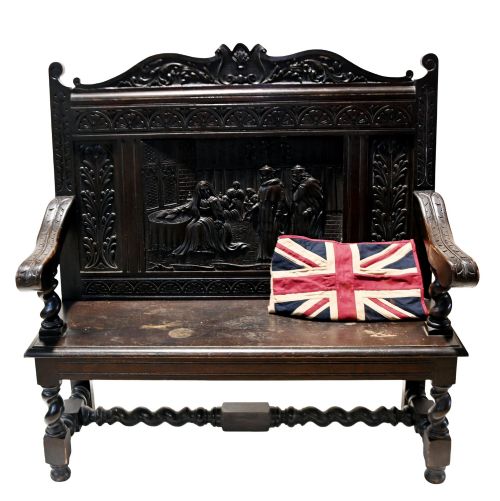
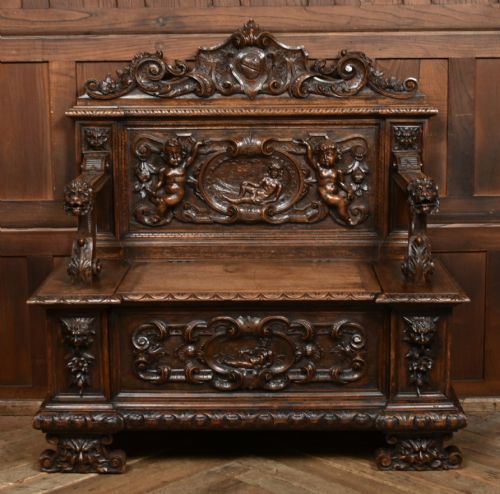


Italian Walnut Bench
These Italian walnut bench examples bring grand Renaissance forms and rich timber into a room, offering historic seating with strong architectural presence.
Italian Walnut Bench
When you search for an italian walnut bench, you encounter substantial seating forms that span the eighteenth and nineteenth centuries. These pieces appear as hall benches, settees, settle variants, and X-framed stools shaped by Renaissance Revival and Venetian designs.
The selections on this page demonstrate the enduring popularity of walnut, often enhanced by carved details and occasional upholstery in leather or linen. Most examples originate from Italian workshops, reflecting regional styles from Lombardy to Venice.
The forms range from high-backed hall settles to smaller window seats and daybeds. Each piece serves as both a functional seat and a striking focal point in a hallway or principal room.
Materials and construction
Walnut serves as the primary structural timber, chosen for its durability and rich grain, occasionally supplemented by secondary woods like pine or fruitwood. Craftsmen shaped these timbers using traditional joinery and hand-carving techniques.
Carving defines the surface ornamentation, particularly in Renaissance Revival and Venetian pieces attributed to master carvers. Details often include mixed wood inlay, brass accents, and fitted elements of leather or linen for upholstery.
Italian Walnut Bench Retail Price Guide 2026
Typical asking prices for italian walnut bench among the pieces listed under this phrase on Sellingantiques today, from the lower quarter to the upper quarter. They describe what is for sale here now, not the wider market.
The inventory spans the eighteenth and nineteenth centuries, incorporating Renaissance Revival and Venetian styles.
Judging quality in historic seating
Quality rests primarily in the crispness and depth of the hand-carving across the walnut framework. Master craftsmanship shows in the fluid lines of figural or floral motifs and the precise assembly of structural joints.
The selection of the timber grain and the integrity of secondary materials, such as original leather or brass hardware, further distinguish superior examples. Proportion and balance between the decorative carving and the underlying form dictate the overall success of the piece.
The Italian Walnut Bench Glossary
- Cassapanca
- A traditional Italian wooden bench featuring a storage box beneath the seat and a high back. This form often includes armrests and elaborate carved panels.
- Settle
- A wooden bench with a high back, solid arms, and enclosed base designed to block drafts in large halls. Historic examples often utilise panel construction.
- X-Framed
- A structural form where intersecting diagonal legs support the seat, reminiscent of ancient curule chairs. This design frequently appears in decorative Renaissance Revival stools and benches.
- Renaissance Revival
- A nineteenth-century architectural and decorative style that drew inspiration from sixteenth-century Italian forms. It relies on heavy carving, symmetry, and classical motifs.
- Settee
- A long upholstered or wooden seat for more than one person, sharing stylistic traits with sofas and large benches. These pieces often feature scroll ends or carved frames.
Italian Walnut Bench: Frequently Asked Questions
Where were these benches placed?
Historic Italian benches were traditionally positioned in grand entrance halls, corridors, or principal reception rooms of large residences.
Their substantial size and architectural carving made them suitable for formal display as well as functional seating for guests.
How do I live with one?
Integrating an antique bench into a modern interior requires careful consideration of its scale and the natural oils needed to maintain the walnut timber.
Keep the piece away from direct heat sources and strong sunlight to protect the wood and any leather or textile upholstery.
How do I tell periods apart?
Eighteenth-century examples typically display restrained, authentic proportions and hand-tooled joinery suited to their original domestic context.
Nineteenth-century revival pieces often exhibit heavier, more dramatic carving influenced by historical revivals and structured workshop production.