
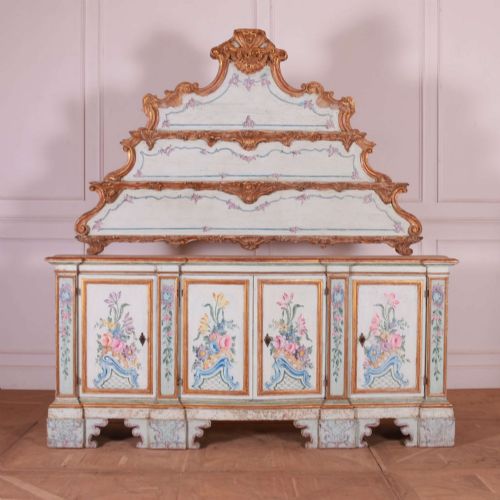
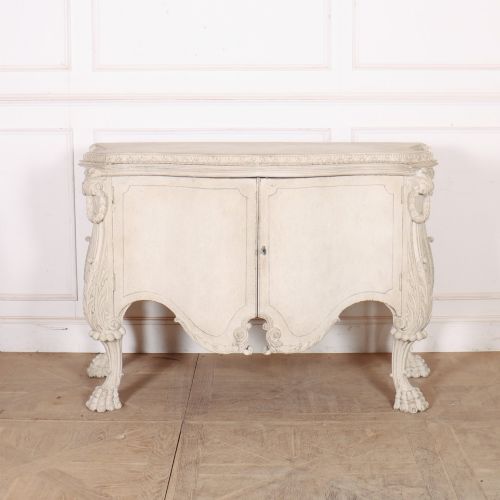


Italian Rococo Cupboard
An italian rococo cupboard brings sweeping curves and painted elegance into a room, offering both sculptural presence and hidden storage.
Italian Rococo Cupboard
When you search for an italian rococo cupboard, you encounter a variety of forms ranging from compact bedside tables to grand sideboards and commodes. The pieces span centuries, including authentic eighteenth-century examples alongside later revival items from the Victorian era and the early twentieth century. Side cabinets, corner cupboards, and serpentine buffets also appear frequently among these furnishings.
The aesthetic leans heavily into ornate regional styles, most notably Venetian rococo and broader Italian rococo interpretations, occasionally alongside French chateau influences. Buyers are most likely to meet pairs of bedside cupboards or single painted sideboards as they browse this selection. Each object demonstrates the characteristic serpentine lines and decorative surfaces typical of the tradition.
How they were made
Cabinetmakers utilised timber foundations of walnut, burr walnut, kingwood, and softwood to construct the carcases of these cupboards. Surface decoration often involved detailed painting on wood or the application of rich giltwood finishes to accentuate the carved contours. Marble tops were frequently fitted to bedside tables and commodes, adding a heavy, polished contrasting element to the wooden structures.
Metal and brass hardware, such as handles and escutcheons, punctuate the designs to complement the ornate joinery. The physical construction relies on the shaping of serpentine fronts and curved panels that define the rococo aesthetic. Artisans shaped both solid timbers and veneers to achieve the characteristic fluidity of the style.
Materials recorded on this page include walnut, burr walnut, kingwood, softwood, painted wood, giltwood, brass, metal, and marble.
What varies in quality
The refinement of the carved details and the execution of the painted or gilt surfaces set the finest examples apart from standard production. Superior pieces display fluid, hand-carved contours in the wood that integrate seamlessly with the overall serpentine form. Lesser items rely on stiffer lines and simpler surface treatments that lack depth.
The choice and preservation of materials also dictate the standing of a piece within the range. High-grade items feature well-figured burr walnut or carefully preserved eighteenth-century painted finishes rather than plain secondary woods. The integration of fitted marble tops and quality brass hardware further elevates the stature of the individual cupboard.
The Italian Rococo Cupboard Glossary
- Serpentine
- A curved shape that undulates inward and outward, frequently seen on the fronts of rococo commodes and sideboards. This contour requires skilled woodworking to achieve a harmonious flow across the piece.
- Giltwood
- Timber that has been coated with a thin layer of gold leaf or metallic gilt, highlighting the carved ornamentation of the frame. It reflects light to enhance the dramatic presence of the furniture.
- Commode
- A low chest of drawers or a cabinet with doors, functioning primarily as a decorative storage piece in bedrooms or living spaces. The form often incorporates a shaped marble top.
- Burr walnut
- A veneer taken from the knotted growth of a walnut tree, prized for its swirling, highly figured grain pattern. Cabinetmakers used it to create rich visual textures on door fronts and tabletops.
- Venetian rococo
- A regional Italian style characterised by lighter palettes, elaborate painted decorations, and dramatic, asymmetrical curves. It reflects the theatrical aesthetic of eighteenth-century Venice.
Italian Rococo Cupboard: Frequently Asked Questions
Where should I place an italian rococo cupboard?
These cabinets suit living rooms, hallways, and bedrooms where their distinctive curves and decorative surfaces can serve as a focal point. Smaller bedside versions fit easily beside low sleeping furniture.
Larger sideboards and buffets work well against expansive wall spaces in dining areas or reception rooms to anchor the room's layout.
How do I care for painted wood surfaces?
Dust the painted or gilt exterior gently with a dry, soft cloth to prevent the accumulation of grit. Avoid using modern chemical polishes that can degrade historic pigments and finishes.
Keep the furniture away from direct sunlight and strong heat sources to prevent the timber underneath from drying and cracking.
Are marble tops original to these pieces?
Marble tops frequently accompany walnut and kingwood bedside tables and commodes from both the eighteenth century and the later revival periods. They provided a durable, cooling surface for daily use.
Inspect the fit and edge profiling of the stone to understand how it integrates with the underlying wooden carcase.
How can I tell an eighteenth-century piece from a revival one?
Authentication relies on examining the construction methods, tool marks, and the natural ageing of the internal softwoods and hardwoods. Eighteenth-century items show hand-cut joinery and period-specific material wear.
Revival pieces from the Victorian era or the early twentieth century often display machine-assisted precision and different secondary timber choices.