


Italian Pricket Candlesticks
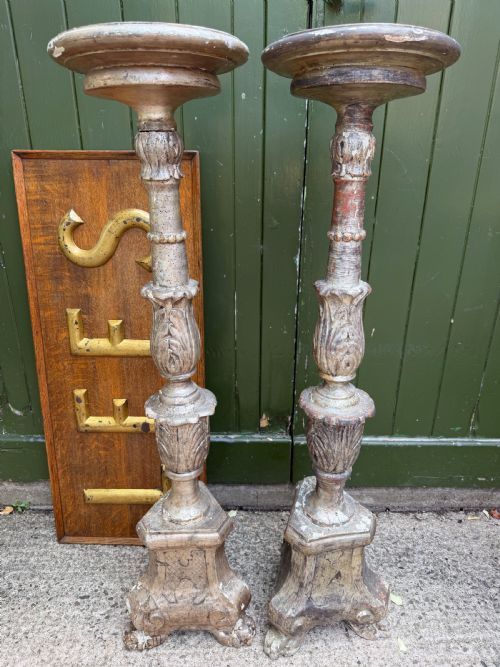
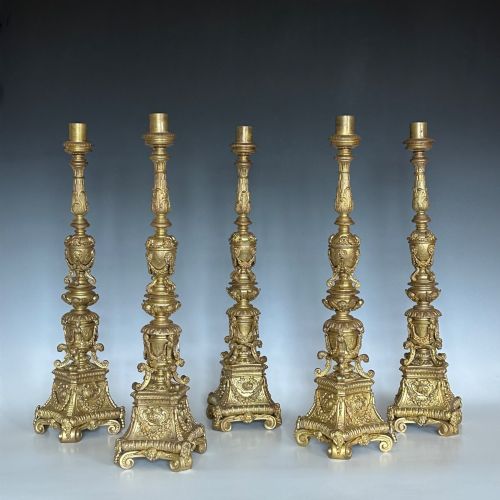
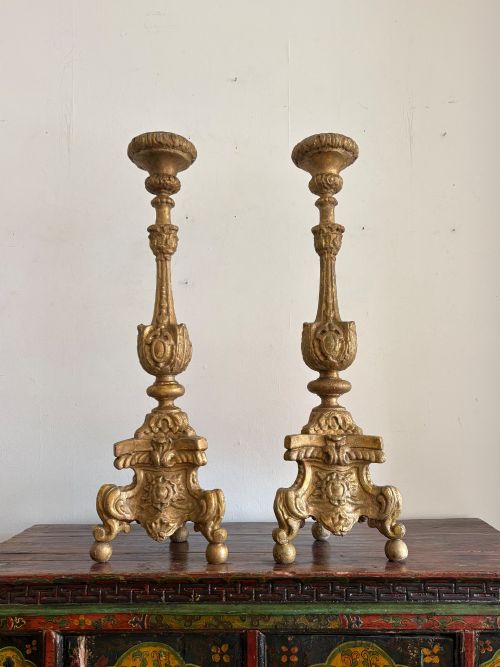
These Italian pricket candlesticks are towering altar pieces and carved wooden candle stands that bring heavy Baroque presence into a room.
Italian Pricket Candlesticks
Italian pricket candlesticks combine architectural form with devotional purpose, designed originally for altars and large halls. When you search for Italian pricket candlesticks, you encounter monumental altar sticks and floor-standing torcheres alongside smaller table versions.
The objects seen here stem largely from the eighteenth and nineteenth centuries, often manifesting the theatrical weight of the Baroque style. Many examples carry traces of ecclesiastical origin, constructed as tall candle holders for heavy tapers.
The inventory ranges from diminutive giltwood holders to massive carved wooden torcheres. Some pieces bear the conversion marks of later electrification, shifting from traditional candle holders to lamps.
Materials and Construction
Carvers shaped solid pine and other woods into complex, scrolling forms before applying gesso and layers of gold or silver leaf. This mecca technique imparted a warm, glowing metallic finish over carved wooden surfaces.
Metal components utilise gilt bronze, ormolu, and brass, particularly in smaller Venetian table examples. Workshops also combined carved wood with polychrome paintwork to imitate richer materials.
Structural heft was essential for supporting tall tapers, leading to broad triangular or stepped bases on floor standards and heavy turned shafts on altar pieces.
Several heavy altar sticks survived centuries of holy mass only to spend their retirement holding up reading lamp bulbs.
Craftsmanship and Proportion
The depth and vigour of the wood carving separate standard decorative objects from superior examples. Master carvers produced crisp acanthus leaves, bold volutes, and balanced proportions that hold the eye on tall standards.
The integrity of the original surface finishes, whether aged giltwood, silver leaf, or polychrome, dictates the visual authority of the piece. Losses to the underlying gesso reveal the bare pine beneath, altering the piece's presence.
Proportion and scale distinguish monumental altar sticks and floor-standing torcheres from domestic adaptations. Pieces retaining their original pricket spikes rather than later conversions hold greater architectural fidelity.
The Italian Pricket Candlesticks Glossary
- Pricket
- A metal spike on top of a candlestick designed to skewer and hold a large candle in place. This form predates socket-type candle holders.
- Torchere
- A tall, highly ornamental stand or candlestick meant to hold a single light source. They often feature carved wooden shafts and grand proportions.
- Giltwood
- Wood that has been coated with a thin layer of gold leaf over a prepared gesso ground. It provides a luminous surface that catches candlelight.
- Mecca
- A transparent golden varnish applied over silver leaf to simulate the appearance of true gold at a lower cost. It ages with a distinct warm tone.
- Gesso
- A plaster-like mixture applied to wood surfaces to create a smooth base for gilding and painting. It allows carvers to achieve sharp detail before finishing.
Italian Pricket Candlesticks: Frequently Asked Questions
What is a pricket candlestick?
A pricket candlestick uses an upright metal spike instead of a socket to secure the base of a candle. This design was standard for large altar candles in churches.
Over time, many of these pieces lost their central spikes or underwent conversion to hold electric lamp fittings for domestic use.
How do I date an antique Italian candlestick?
Dating relies on examining the timber species, the preparation layers beneath the surface, and the stylistic vocabulary of the carving. Eighteenth-century pieces typically display deep Baroque or Rococo asymmetry and hand-wrought iron spikes.
Later nineteenth-century and revival examples often use machine-sawn timber elements and brighter, more uniform gilding applications.
Were these originally used in homes?
The largest examples originated in churches and chapels as altar furnishings or processional stands. Wealthy Italian households also commissioned grand torcheres for palace reception rooms.
Today, these substantial wooden stands serve as decorative floor lamps or sculptural focal points in domestic interiors.
How do I care for giltwood and silvered surfaces?
Giltwood and silvered surfaces require gentle dusting with a dry, soft cloth to prevent abrasive wear to the thin metal leaf. Avoid all liquid cleaners, polishes, and direct sunlight, which can damage the underlying gesso.
Stable indoor humidity prevents the wooden substrate from expanding and causing the gesso layers to crack or flake.