




Italian Neoclassical Seat
An italian neoclassical seat brings architectural symmetry and refined carving into a room, offering both history and functional elegance.
Italian Neoclassical Seat
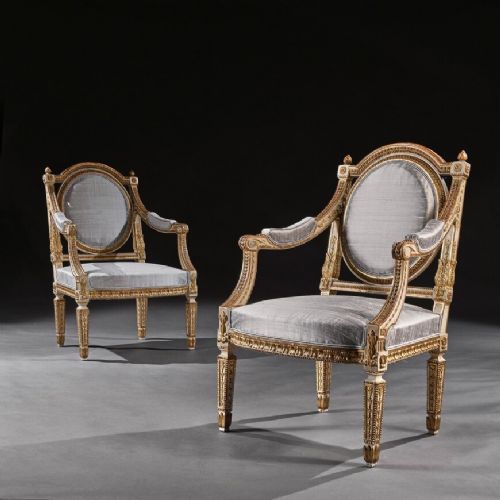
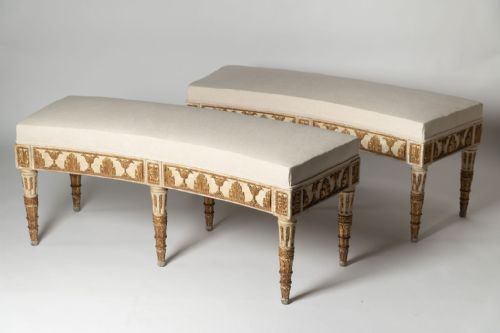
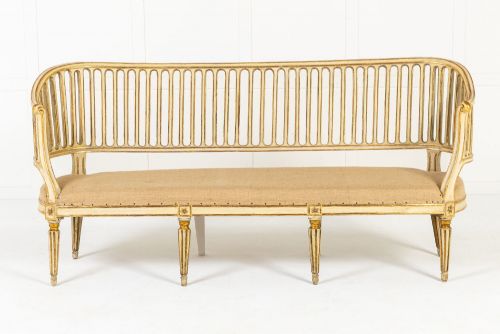
An italian neoclassical seat encompasses forms like armchairs, settees, window seats, benches, and stools that reflect the classical revival. These pieces derive from the eighteenth and nineteenth centuries, including items from the grand tour era and later nineteenth century revivals.
Buyers encounter various formats on this page, most commonly painted wood and giltwood armchairs alongside settees and stools. These items originate from Italian workshops, displaying characteristic neoclassical design principles through balanced proportions and restrained ornamentation.
Materials and Construction
Makers shaped these frames from timber, applying paint, gold leaf, and gesso to finish the surfaces. Giltwood and parcel gilt finishes highlight the carved architectural details on chairs and settees.
Upholstery relies on traditional textiles such as linen, fabric, and silk upholstery. Bronze components and marble elements occasionally appear alongside the woodwork in related grand tour pieces.
Hermes and Agrippina keep silent company among the furniture, reminding us that ancient Romans loved a good statue just as much as a sturdy bench.
Assessing Quality
The refinement of the carving separates standard joinery from exceptional work, particularly in the crispness of giltwood and gesso details. Original painted surfaces and preserved parcel gilt enrich the historic character of a frame.
Proportion and structural balance dictate the visual weight of settees and armchairs. Finer examples retain their original upholstery materials like silk and linen or demonstrate superior timber selection such as walnut.
Zoffoli
The Italian Neoclassical Seat Glossary
- Giltwood
- Wood that has been coated with gold leaf or a gold-coloured preparation. This finish is typical of high-status Italian neoclassical furniture.
- Curule stool
- An ancient Roman stool shape with X-shaped legs revived during the neoclassical period. It provides a distinct architectural profile for seating.
- Grand Tour
- A cultural journey undertaken by wealthy young Europeans in the eighteenth and nineteenth centuries to study classical art. Pieces from this context often reflect classical antiquity.
- Parcel gilt
- A decorative technique where only specific portions of an object are gilded while the rest is painted or left exposed. It accentuates carved motifs on chairs and settees.
Italian Neoclassical Seat: Frequently Asked Questions
What is an italian neoclassical seat?
An italian neoclassical seat is a chair, settee, bench, or stool made in the neoclassical style, drawing on ancient Greek and Roman design motifs. These pieces typically date from the eighteenth and nineteenth centuries.
They feature balanced proportions, geometric lines, and carved wooden frames often finished with paint or gold leaf.
How do I date an italian neoclassical seat?
Dating involves examining the timber, construction methods, and surface finishes like gesso and paint. Eighteenth-century pieces differ in material handling compared to nineteenth-century revivals.
Comparing decorative details such as carving depth and upholstery types helps determine the likely period of manufacture.
Where were these seats used?
These seats served primarily in formal reception rooms, grand halls, and parlours of elite residences. They were designed to project classical taste and sophistication.
Today, they function as statement seating in period and modern interiors alike.
How do I care for giltwood and painted finishes?
Giltwood and painted surfaces require gentle dusting with a soft, dry cloth to prevent abrasion. Avoid moisture and chemical cleaning agents that can damage the gold leaf and gesso.
Maintaining stable room humidity protects the underlying wood and prevents cracking in the finish.