



Italian Neoclassical Columns
Italian neoclassical columns bring classical architecture indoors, offering carved marble and scagliola forms that collectors use to display sculpture and light rooms.
Italian Neoclassical Columns
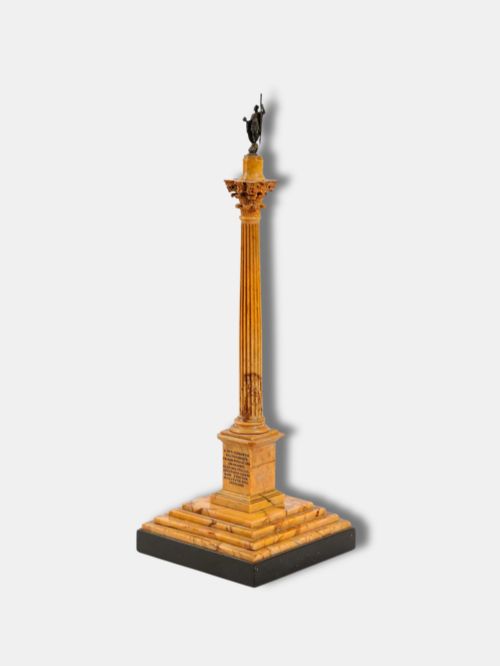
Italian neoclassical columns comprise architectural models, pedestals, and decorative supports drawn from classical antiquity. These pieces reflect the Grand Tour tradition where travellers brought home miniature temples, columns, and ruins.
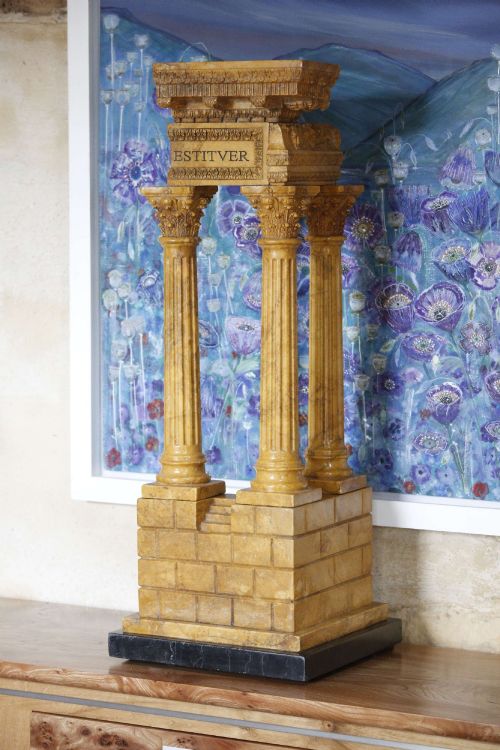
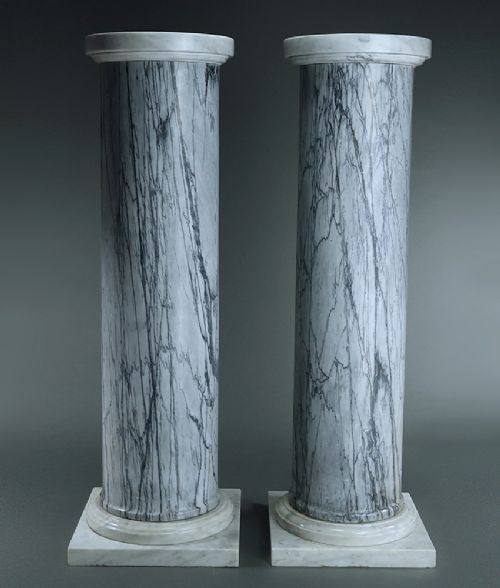
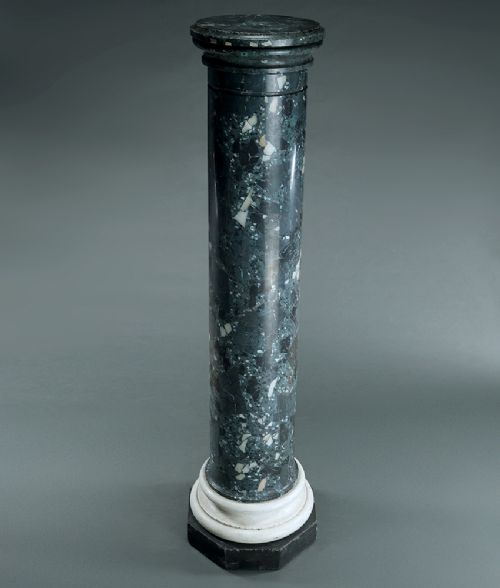
The most common examples on this page are carved marble columns and pedestals dating from the nineteenth century. These range from substantial architectural supports to smaller decorative models in variegated marbles.
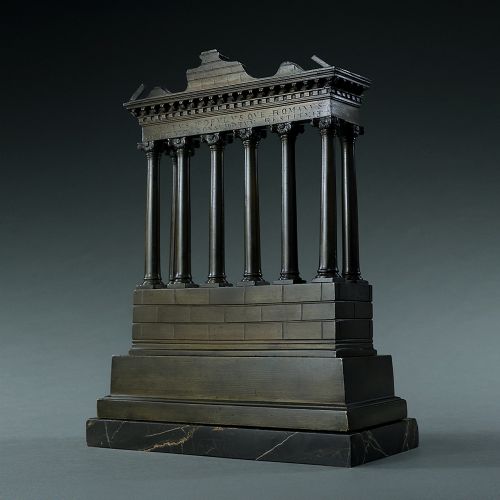
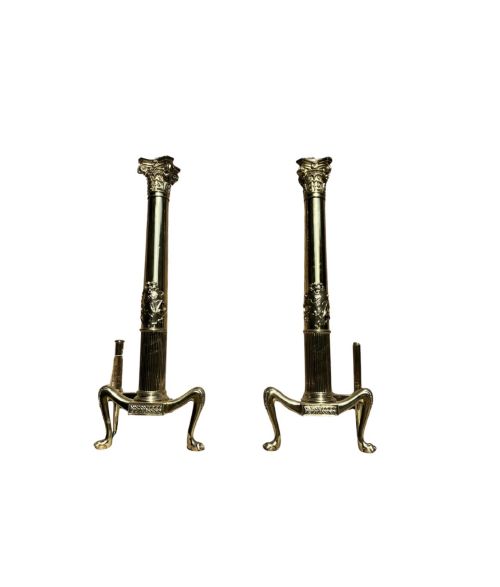
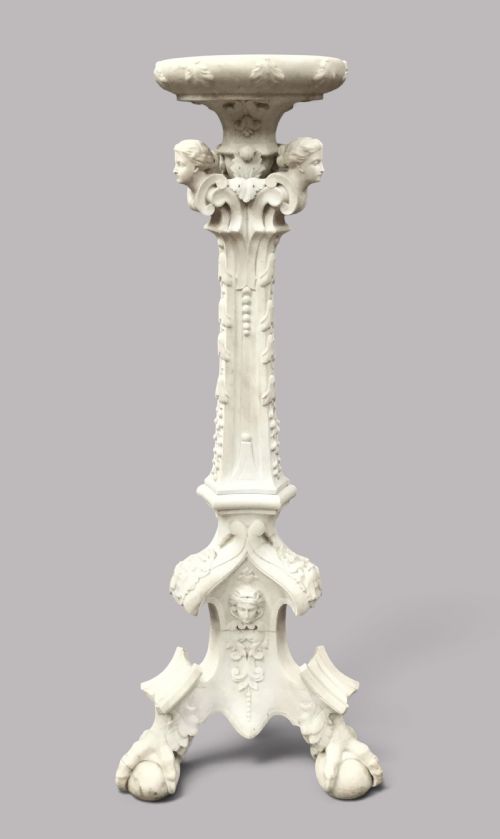
Makers utilised a range of forms beyond standalone columns, including table lamps, torchere stands, and architectural models of famous Roman structures. Each piece embodies the enduring eighteenth and nineteenth-century fascination with classical antiquity.
Materials and Construction
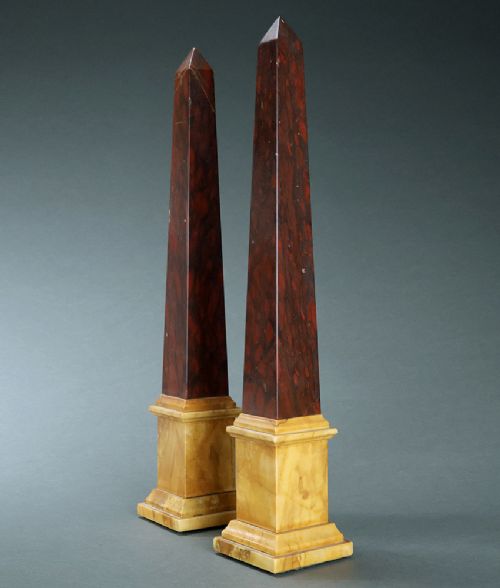
Masonry dominates the construction of these items, with artisans employing Carrara, Giallo Antico, Verde Antico, and Siena marble. Stonemasons turned and carved these dense stones on lathes or by hand to replicate ancient architectural orders.
Carving and turning demand high precision, particularly when creating fluted shafts and Corinthian capitals from brittle stone. Artisans finished marble surfaces by hand, achieving smooth or polished textures that highlight natural mineral veining.
Italian Neoclassical Columns Retail Price Guide 2026
Typical asking prices for italian neoclassical columns among the pieces listed under this phrase on Sellingantiques today, from the lower quarter to the upper quarter. They describe what is for sale here now, not the wider market.
Assessing Quality
The quality of an Italian neoclassical column rests upon the selection and working of the marble. Superior pieces display striking natural veining without clumsy repairs, while lesser examples use uniform or heavily patched stone.
Carving definition separates standard decorative items from exceptional ones. Crisp acanthus leaves on capitals and precise fluting indicate a skilled hand, whereas softened edges suggest hurried production or excessive later polishing.
The Italian Neoclassical Columns Glossary
- Grand Tour
- A traditional trip through Europe, chiefly Italy, undertaken by upper-class young men in the eighteenth and nineteenth centuries to study arts and antiquities. Travellers often purchased architectural models and marble specimens as mementos.
- Scagliola
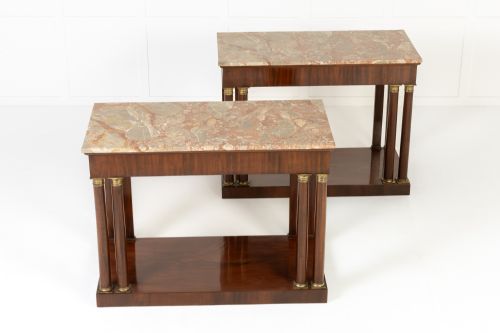
- A composite technique using pigmented plaster, glue, and selenite to imitate costly marbles and stone inlay. Craftsmen applied this mixture to a core to create smooth columns and tabletops.
- Giallo Antico
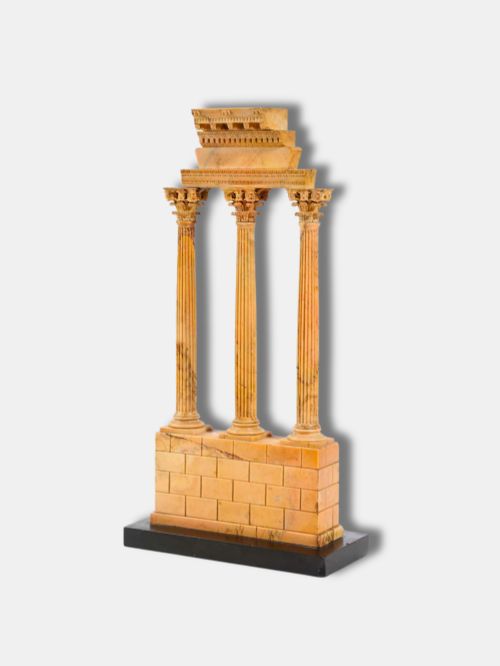
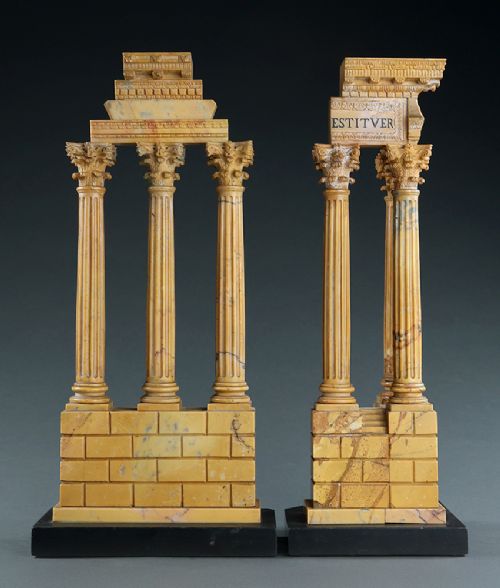
- A yellow antique marble quarried in ancient Tunisia and prized by Italian lapidaries for its deep ochre colour and dark veining. It appears frequently in Grand Tour architectural models.
- Verde Antico
- A dark green serpentine breccia marble quarried in Greece and Italy, favoured for its mottled appearance. Makers used it to lend rich colour contrast to architectural columns.
- Carrara Marble
- A white or blue-grey marble from the mountains of Tuscany used extensively for sculpture and architecture. Its fine grain made it the preferred material for neoclassical capitals and shafts.
Italian Neoclassical Columns: Frequently Asked Questions
Are these columns solid marble?
Many columns and pedestals utilise solid natural stone such as Carrara or Giallo Antico marble. Other pieces employ scagliola, which is a composite material formed from plaster and pigments over a supportive core.
Larger architectural supports sometimes incorporate internal framing or wooden bases to manage weight. Examining the underside or base usually reveals whether the piece is carved stone or a composite mixture.
How do I date a marble column?
Dating relies on tool marks, stone selection, and stylistic details typical of nineteenth-century workshop practices. Grand Tour pieces often align with travellers' accounts and stylistic revivals from eighteen-hundred onwards.
Patina on the stone surface and the method of joining the capital to the shaft also provide chronological clues. Unsigned pieces are usually attributed by comparing their marble types and turning techniques to dated examples.
Where should I place a heavy marble column?
Marble columns and pedestals require sturdy flooring capable of supporting concentrated weight without shifting. Placing them away from high-traffic zones prevents accidental knocks against protruding corners or capitals.
Pairing a column with a suitable sculpture or lamp creates a balanced vertical display in a hallway or reception room. Ensuring the base sits level on floorboards or stone prevents any risk of tipping.
What is the difference between architectural models and pedestals?
Architectural models replicate specific ancient ruins or temples, such as the Temple of Castor and Pollux, often on a small scale for tabletop display. Pedestals and columns are functional furniture pieces designed to elevate lamps, urns, or busts.
Models prioritize archaeological accuracy and intricate stonework, while pedestals focus on load-bearing stability and column orders. Both categories stem from the nineteenth-century passion for classical Italian design.