



Italian Landscape Watercolour Painting
An italian landscape watercolour painting brings the light of the south and the classical ruins of the Mediterranean directly into the home.
Italian Landscape Watercolour Painting
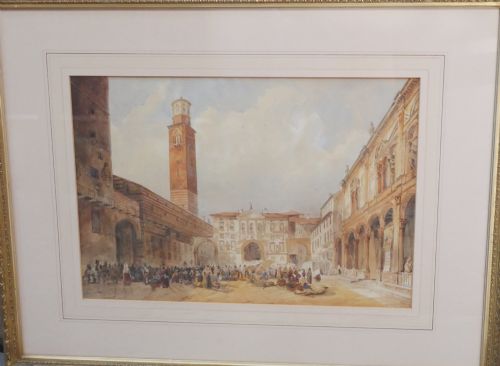
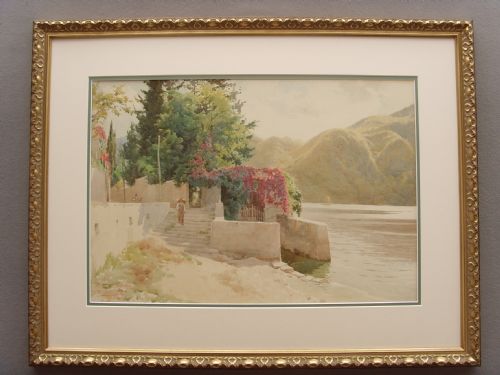
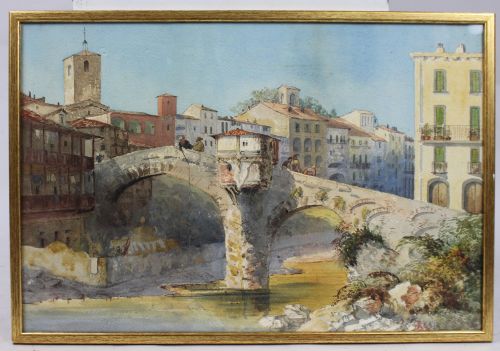
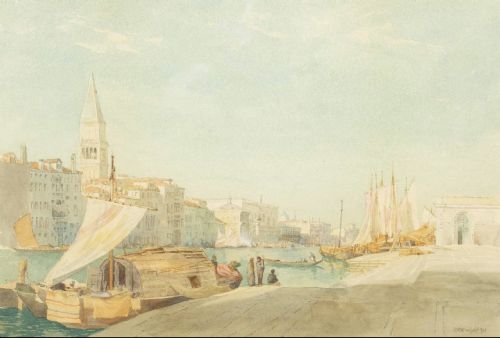
An italian landscape watercolour painting captures the topography, architecture and atmosphere of Italy, from the canals of Venice to the Roman Campagna and the shores of Lake Como. These works emerge predominantly from the nineteenth and early twentieth centuries, spanning periods from the Regency era through Victorian classicism to Edwardian travel sketching.
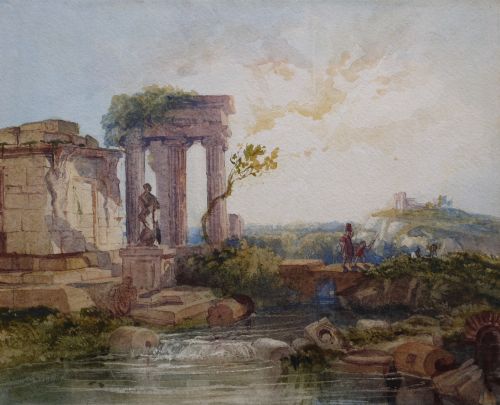
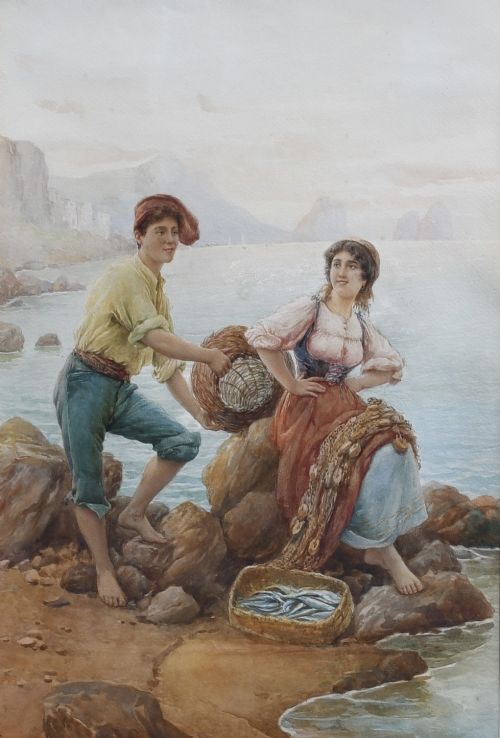
The subjects range from grand architectural landmarks such as the Colosseum, the Arch of Titus and the Venetian lagoons to intimate rural scenes featuring Neapolitan fisherfolk, country houses and Italian river landscapes. Buyers encounter works produced during the Grand Tour alongside plein-air studies executed by British and European artists travelling south for light and inspiration.
Compositions often arrive framed behind glass in period surrounds, utilising wood or gilded frames that complement the delicate paper supports. The visual language balances topographical accuracy with romantic or picturesque interpretations of Southern European scenery.
Materials and technique
Artists executed these works using watercolour pigment and watercolour paint applied to paper surfaces, occasionally employing embossed card or adding subtle touches of gold leaf. The medium relies on the transparency of washes to build luminous skies, shimmering water surfaces and sunlit stone architecture.
Framing materials such as wood and gilded wood protect the vulnerable paper supports behind glass, preserving the fugitive pigments from light damage and atmospheric moisture over the decades. Surviving examples demonstrate careful handling of washes, pencil underdrawing and bodycolour highlights to create depth and texture.
Listings feature works from the nineteenth and early twentieth centuries, utilising watercolour pigment on paper, housed in gilded wood frames.
Judging quality in these watercolours
The distinction between standard topographical records and superior works rests on the confidence of the brushwork, the handling of natural light and the atmospheric depth of the composition. Master practitioners capture the specific glare of the Venetian lagoon or the warm dust of the Roman Campagna with economy and precision, whereas lesser examples rely on stiff outlines and flat, uniform washes.
Condition plays a decisive role, distinguishing works that retain their original pigment vibrancy from those affected by fading, foxing or heavy toning of the paper support. Original framing, particularly exceptional period gilt or carved wood surrounds, further elevates the integrity of a piece.
Richard Principal Leitch·Thomas Ellison·Richard Henry Wright·Carlo Ferranti·Robert George Talbot Kelly·Franz Knebel·Benedetto Salviati·Hercules Brabazon Brabazon·Charles H Poingdestre·David Law·Wilfred Knox·Ettore Ascenzi·Henry Wimbush·John D Walker·Arthur Severn·Helen Donald-Smith·Thomas Brabazon Aylmer·Thomas L Rowbotham·Arthur John Black·A E Martin·M Argeles·William Page
The Italian Landscape Watercolour Painting Glossary
- Grand Tour
- An extended journey through continental Europe, particularly Italy, undertaken by wealthy young men and tourists in the eighteenth and nineteenth centuries as part of their education and cultural enrichment. Many watercolours were acquired or commissioned specifically to commemorate these travels.
- Watercolour pigment
- Finely ground colour particles mixed with a water-soluble binder, used by artists to create translucent or opaque washes on paper. The medium allows for rapid sketching on location as well as highly finished studio compositions.
- Gilded wood
- Wood treated with a thin layer of gold leaf or gold paint, frequently used for the ornate frames enclosing nineteenth-century artworks. These frames enhance the warmth of the southern light depicted within the painting.
- Wash
- A fluid layer of diluted watercolour paint applied across the paper to create smooth areas of tone or colour, often forming the skies and bodies of water in landscape scenes.
- Plein-air
- Painting outdoors in direct natural light to capture the transient effects of weather and atmosphere on the landscape. This practice gained popularity among artists working in Italy during the nineteenth century.
Italian Landscape Watercolour Painting: Frequently Asked Questions
What is an italian landscape watercolour painting?
These works are paintings on paper depicting Italian scenes, produced by artists capturing the architecture, light and topography of the peninsula. They range from rapid topographical sketches to finished exhibition pieces.
Subjects include Venetian canals, Roman ruins, Neapolitan coastal views and rural landscapes. Artists travelled extensively through Italy, recording the scenery during the nineteenth and early twentieth centuries.
How were these watercolours displayed?
Period works are typically housed behind glass within wooden or gilded frames designed to protect the delicate paper support from dust and handling. The framing often reflects the aesthetic tastes of the Victorian or Edwardian eras.
Collectors generally hang them away from direct sunlight to prevent the watercolour pigments from fading. Proper mounting with acid-free materials ensures the longevity of the paper.
How do I date an italian landscape watercolour?
Dating relies on artist signatures, exhibition dates, stylistic markers, and occasionally inscriptions on the reverse of the paper or frame. Victorian and Edwardian works often display specific framing styles and paper watermarks characteristic of the period.
Grand Tour watercolours frequently correspond to the travel dates of documented artists active in Rome, Venice or Naples during the nineteenth century. Costume details in figures and the depiction of ruined versus excavated architecture also offer chronological clues.
Who painted these landscapes?
A mix of British and European artists created these views, including both professional painters exhibiting at major institutions and talented amateurs recording their travels. Many professionals spent months working in Italy to supply the demand for southern imagery back home.
Notable figures represented in the archive include David Law, Hercules Brabazon Brabazon, Franz Knebel and William Page. Their works document the changing face of Italian cities and countryside over two centuries.