


Italian Grand Tour Painting
An italian grand tour painting records the classical ruins, sunlit canals and southern landscapes collected by travellers across the centuries.
Italian Grand Tour Painting
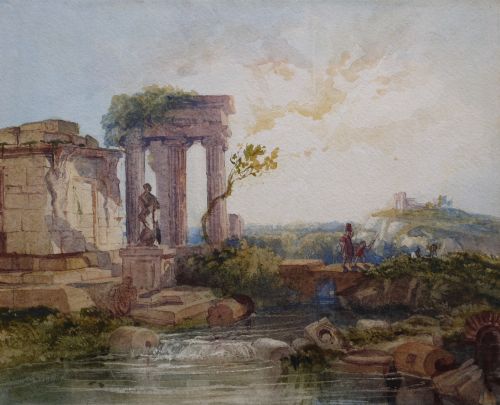
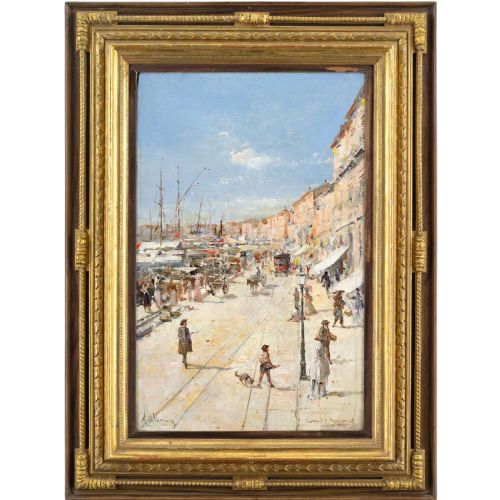
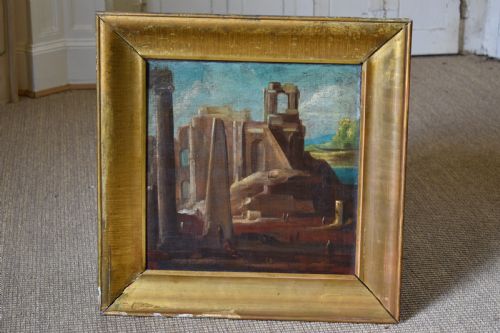
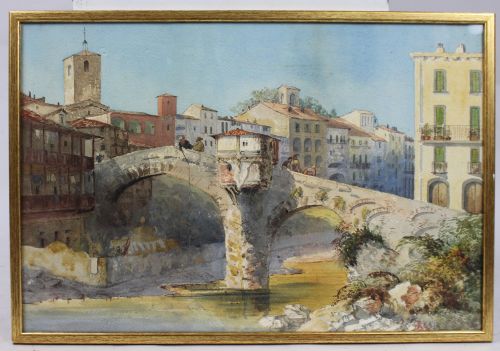
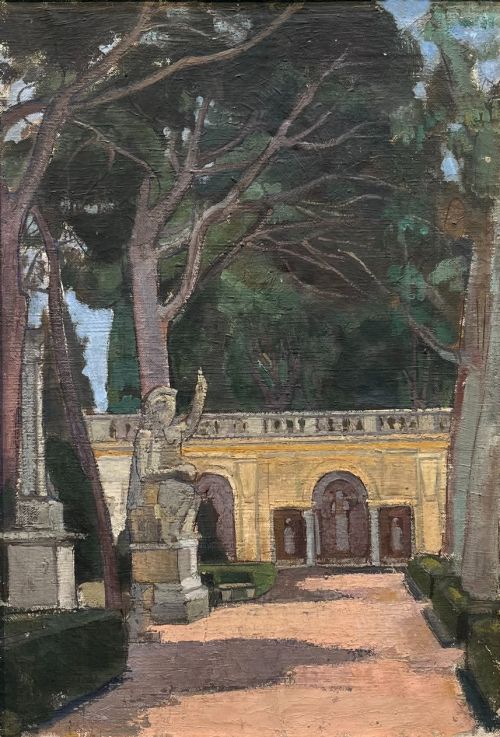
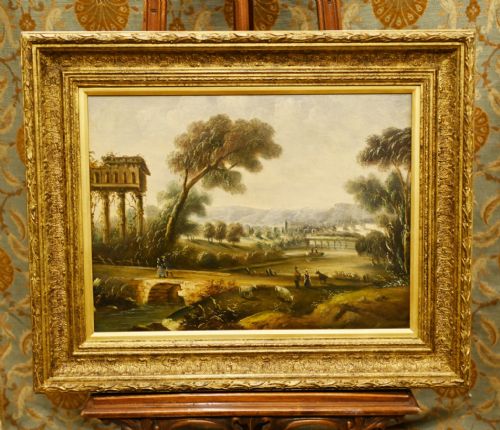
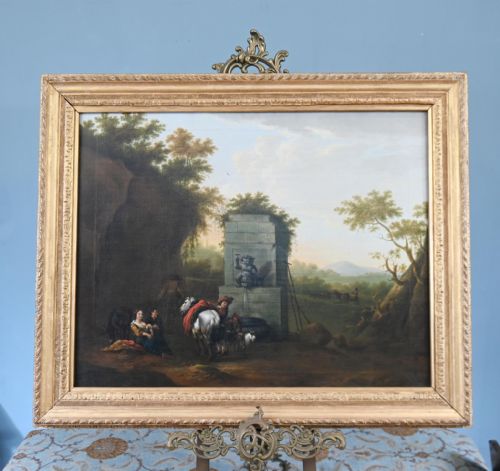
When you search for an italian grand tour painting, you are looking at topographical views, architectural capriccios and pastoral scenes produced across the eighteenth and nineteenth centuries for travellers abroad.
The version you are most likely to meet on this page is a nineteenth-century watercolour on paper or an oil on canvas depicting famous sights in Rome, Venice, Naples or the surrounding countryside.
These works range from modest gouache souvenir sheets and signed watercolours to expansive oil paintings executed by British and Italian artists working in Rome and Venice.
Materials and execution
The works rely primarily on paper for watercolours and gouaches, or canvas for oil paintings, mounted within wood, giltwood or gilded frames.
Artists built their compositions using layered washes of watercolour, opaque gouache bodycolour, or traditional oil pigments applied to stretched canvas.
Frames play a structural role, often period-appropriate gilded wood that complements the classical subject matter.
Travellers often bought gouaches in sets so they could pack home an entire Italian tour in a portfolio.
Judging the standard
Quality separates hasty souvenir sketches from accomplished works by observing the precision of architectural perspective, the handling of light, and the assurance of brushwork.
The distinction lies in whether the artist merely records a landmark or composes a balanced landscape with atmosphere, depth, and carefully placed figures.
Original frames also influence the standing of a piece, with period giltwood settings adding integrity to the artwork.
Richard Principal Leitch·Augusto Alberici·Franz Knebel·E. Perez Senet·Jane Vivian·Alfred Pollentine·Vittore Zanetti Zilla·Benedetto Salviati·Francesco Guardi·Charles H Poingdestre·Ettore Ascenzi·Guido Agostini
The Italian Grand Tour Painting Glossary
- Capriccio
- An architectural fantasy placing classical ruins, buildings and other architectural elements in a fictional combination. It allows artists to rearrange real monuments for pictorial effect.
- Gouache
- An opaque watercolour medium containing pigment mixed with water and a binding agent. It provides solid, vibrant areas of colour well suited to southern light.
- Campagna
- The countryside surrounding Rome, historically dotted with ancient aqueducts and ruined tombs. It served as a primary sketching ground for visiting landscape painters.
- Watercolour
- A painting method in which the paints are made of pigments suspended in a water-based solution. Paper serves as the reflective ground, letting light pass through translucent washes.
Italian Grand Tour Painting: Frequently Asked Questions
What subjects appear most often?
The subjects focus heavily on Venetian canals, Roman ruins, the Bay of Naples, and local peasants in traditional dress.
Artists frequently painted the Colosseum, the Arch of Titus, the Doge's Palace, and the surrounding Campagna.
How do I date these paintings?
Dating relies on stylistic clues, artist signatures, inscriptions on the reverse, and the construction of the frame.
Watercolours and oils from this tradition span from the eighteenth century through the early twentieth century, with the nineteenth century producing the highest volume.
How should I frame and hang them?
Watercolours require conservation framing with UV-filtering glass to protect the paper and pigments from fading under direct light.
Keep them away from direct sunlight and damp environments to preserve both the paper support and any giltwood frame.
Are gouache paintings different from watercolours?
Gouache uses opaque pigments that create a heavier, matte finish compared to the transparent washes of traditional watercolour.
Both mediums were frequently used during travels across Italy, sometimes combined within the same sheet to capture highlights.