
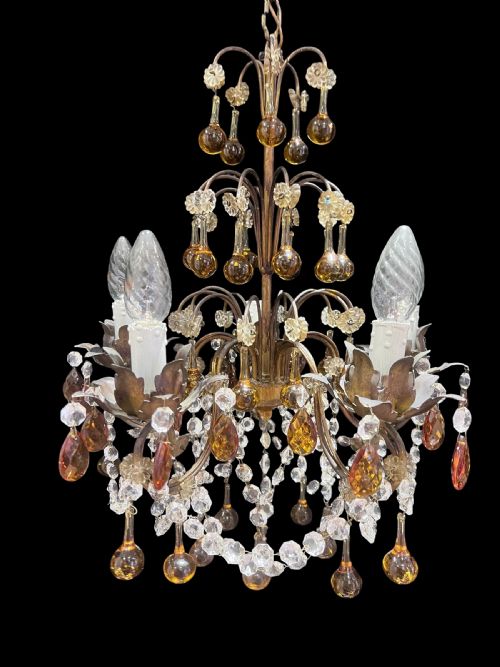
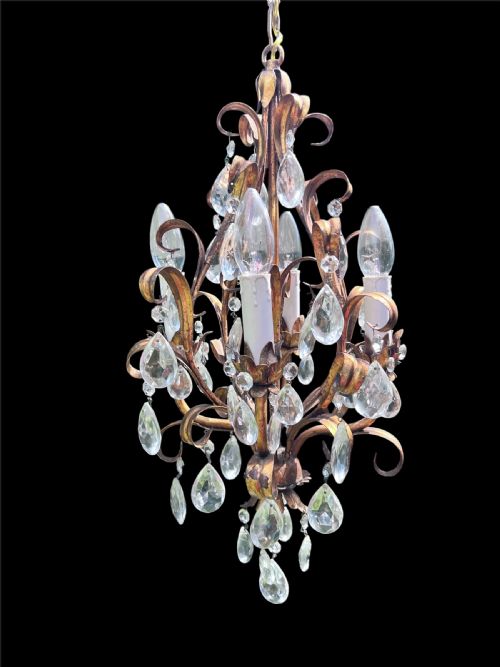


Italian Gilt Chandelier
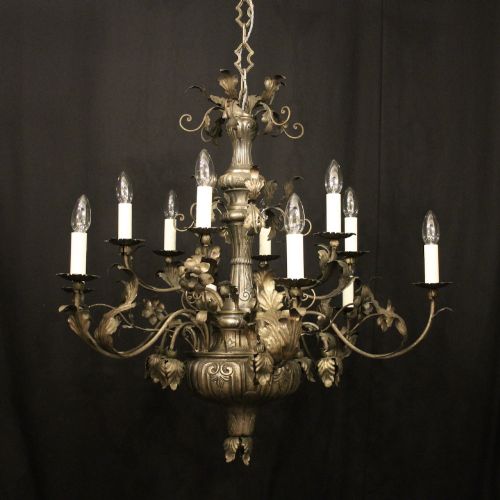
An italian gilt chandelier brings dramatic presence to a room through gilded surfaces, carved details and glass drops.
Italian Gilt Chandelier
An italian gilt chandelier encompasses multi-tiered hanging lights, wall lights and lanterns originating from various Italian regions. These pieces frequently draw upon Florentine and Baroque design traditions, incorporating elaborate floral elements and scrolling arms. The selection ranges from intimate three-light fixtures to monumental multi-armed centrepieces designed for grand spaces.
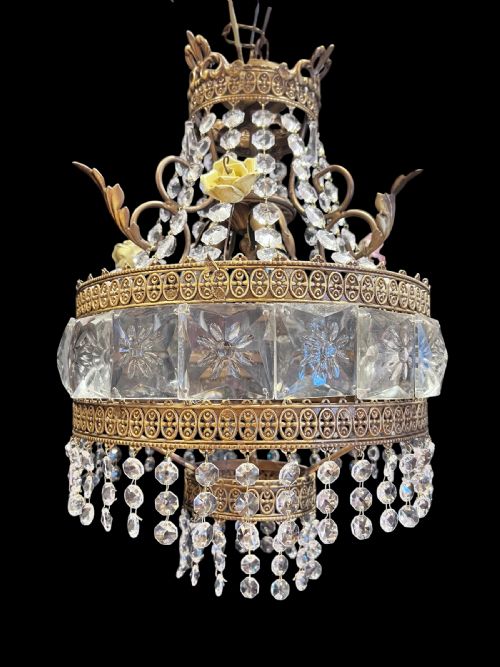
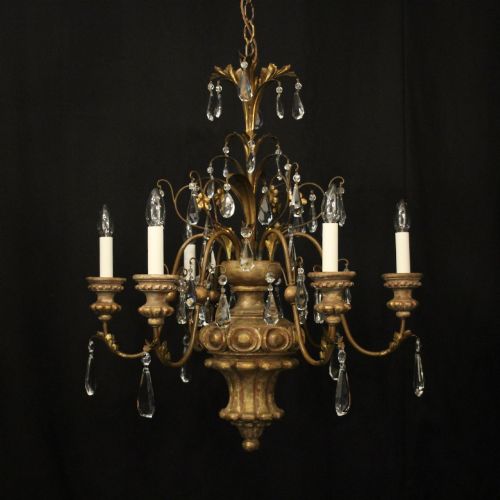
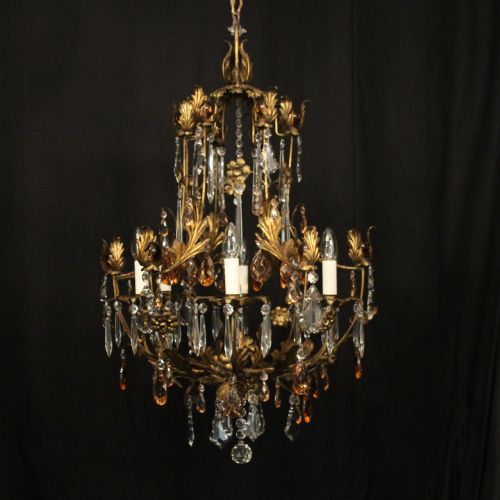
Most examples encountered date from the nineteenth and early twentieth centuries, reflecting enduring artisan techniques. Forms vary from carved giltwood frames to gilded bronze structures, often embellished with coloured crystals, porcelain flowers or glass drops. Buyers commonly encounter Florentine styles characterised by leafy motifs and polychrome accents.
Materials and construction methods
Artisans constructed these lighting fixtures using carved timber, forged iron and cast bronze, subsequently applying gold leaf or liquid gilding to the surfaces. Giltwood frames required skilled woodcarvers to shape intricate leafy patterns and structural components before applying the metallic finish. Metal frameworks utilised iron and bronze elements soldered or bolted together to support numerous light branches.
Glass and crystal components, including faceted drops, beads and fruit motifs, were wired directly onto the frames or hung via small metal loops. Porous materials like porcelain flowers and toleware elements were introduced to add tactile variety and colour contrast against the predominant gold surfaces. Double-tiered designs required robust central columns and reinforced arms to safely distribute the weight of dozens of lights.
The listings span periods from the eighteenth century through the 1930s, featuring materials like wrought iron, giltwood, and crystal.
Assessing craftsmanship and construction
Quality reveals itself in the depth and execution of the carved wood or the precision of the cast bronze armature. Finely made pieces display meticulously hand-carved details on giltwood frames rather than simple moulded resin or plaster substitutes. The consistency of the gilding and the clarity of the hanging glass crystals further distinguish superior examples from standard production.
The complexity of the wiring layout and the structural integrity of multi-tiered frames dictate the overall standard of the fixture. Heavier chandeliers demand substantial internal bracing to maintain the alignment of the arms over decades of hanging. Superior examples integrate electrical fittings discreetly without compromising the historical integrity of the carved or cast elements.
The Italian Gilt Chandelier Glossary
- Florentine
- Pertaining to the artistic traditions of Florence, frequently featuring carved leafy motifs and gilded wooden scrollwork. This style defines many of the mid-sized and large chandeliers found within these collections.
- Giltwood
- Timber that has been coated with a thin layer of gold leaf or powder over a prepared gesso ground. It provides a warm, reflective surface for ornate chandelier frames.
- Toleware
- Painted or lacquered sheet metal items often integrated into decorative light fixtures. These components introduce painted colour details alongside the standard gilded elements.
- Polychrome
- Decorated in several colours, often applied to carved wooden flowers or leaves on Florentine frames. This technique breaks up the uniform gold appearance with naturalistic hues.
Italian Gilt Chandelier: Frequently Asked Questions
How do I clean an antique gilt chandelier?
Dust the structure gently with a soft feather duster to prevent particulate buildup on the delicate gold leaf surfaces. Crystal drops and glass elements can be wiped carefully using a lint-free cloth dampened with mild soapy water while supported by hand.
Avoid harsh chemical cleaners or abrasive materials that might strip the historic gilding or damage the wiring. Regular, gentle maintenance preserves the reflective quality of both the metal and the glass adornments.
Can these chandeliers be hung on standard ceilings?
Many larger examples require reinforced ceiling joists and professional installation due to their substantial weight and multi-tiered structure. Standard residential ceilings can typically support smaller fixtures, provided appropriate fixings are used.
Consult a qualified electrician to assess the weight capacity and ensure the wiring matches modern safety standards. Proper suspension prevents structural strain on both the ceiling and the antique metal armature.
What is the difference between giltwood and gilt bronze?
Giltwood consists of carved timber surfaces covered in thin sheets of gold leaf, offering a lighter weight and softer visual texture. Gilt bronze, orormolu, involves cast metal alloy treated with a gold finish, providing greater structural strength and sharper cast details.
Both materials were utilised extensively across different Italian decorative periods to achieve opulent metallic finishes. Identifying the base material helps determine the appropriate hanging requirements and care routines.
How do I date an antique Italian chandelier?
Dating relies upon stylistic markers such as the presence of Baroque scrolling, Rococo Revival asymmetry, or early twentieth-century Florentine floral carvings. Construction techniques, including hand-cut glass drops and early wiring methods, offer additional clues to the era of manufacture.
Comparing the specific combination of materials, such as polychrome accents or Capodimonte porcelain elements, assists in narrowing the production period. Most surviving examples span from the eighteenth century through the interwar decades.