



Italian Gilded Console
An italian gilded console brings theatrical drama and rich surface texture to a room, functioning as both table and wall display.
Italian Gilded Console
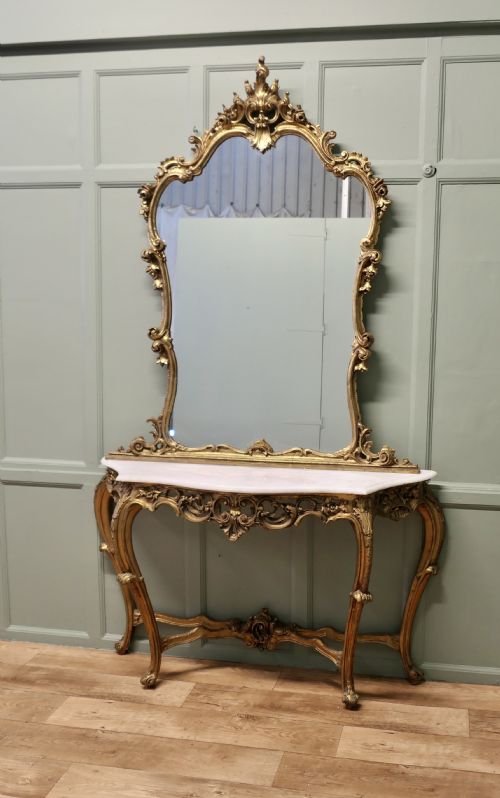
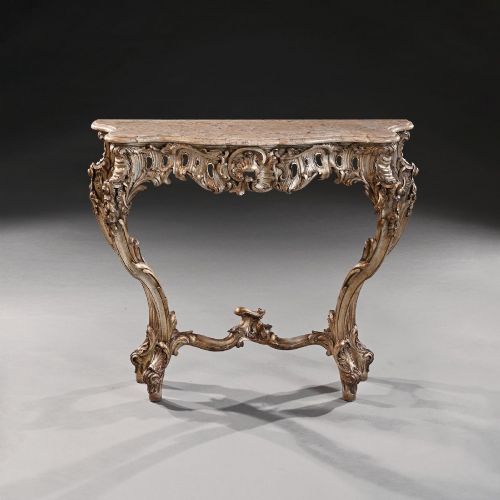
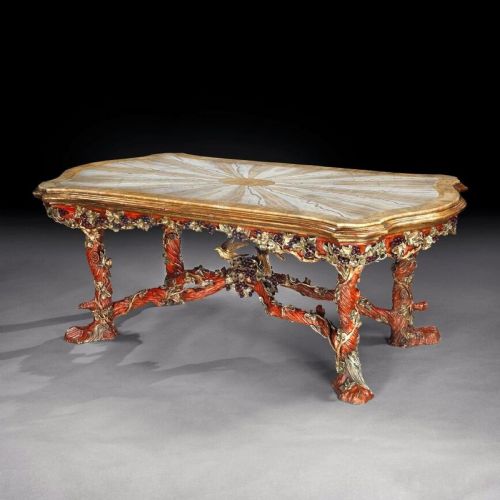
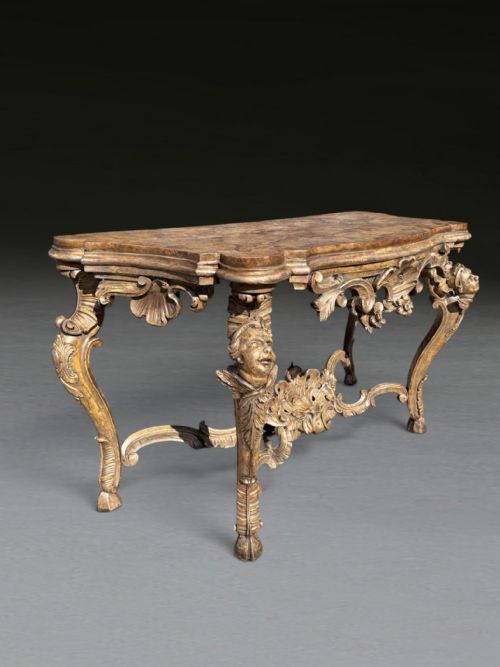
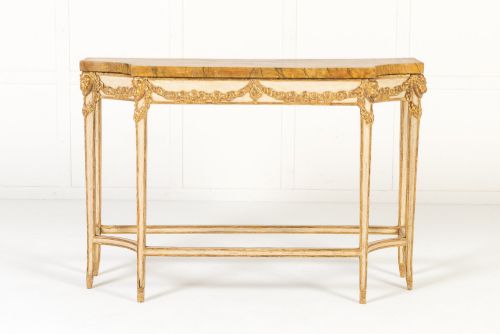
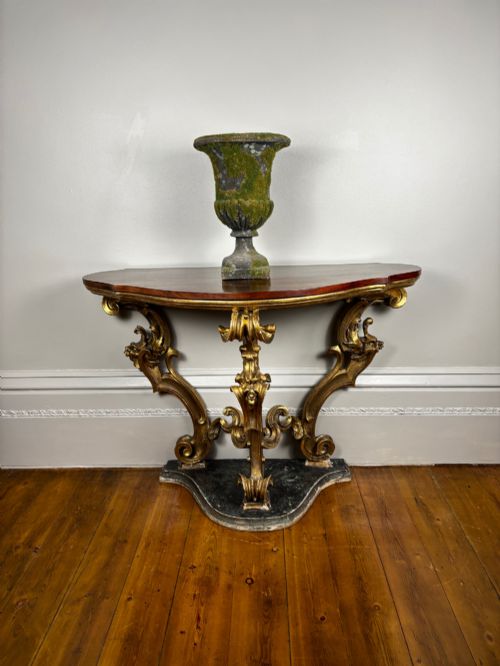
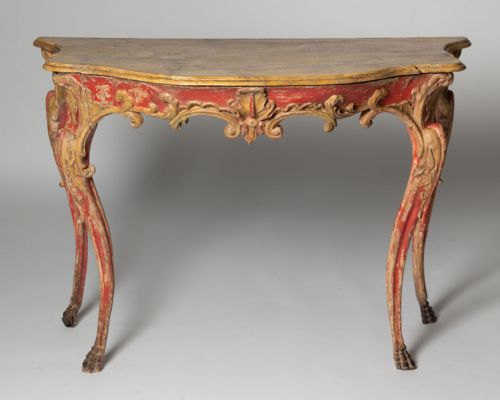
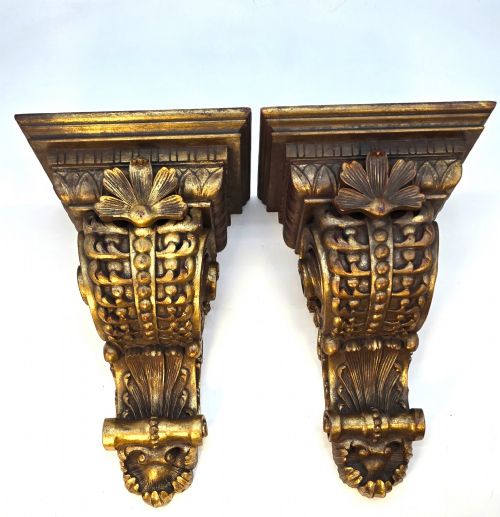
An italian gilded console typically takes the form of a console table designed to stand against a wall, often paired with matching wall brackets. These pieces emerge primarily from the eighteenth and nineteenth centuries, spanning regional expressions such as Venetian Rococo and Italian Neoclassical designs.
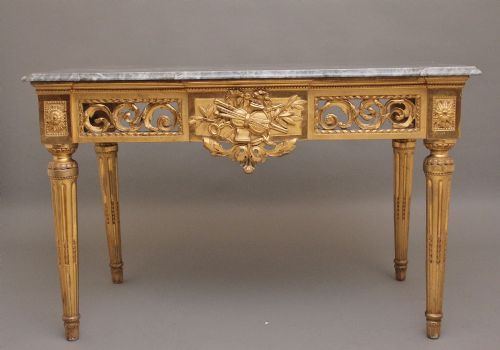
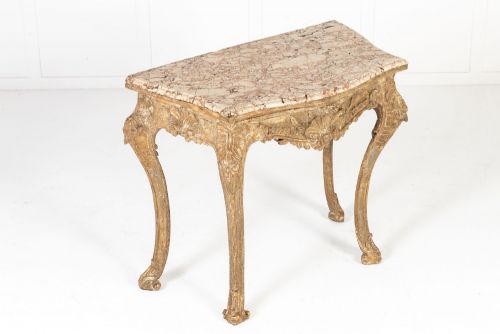
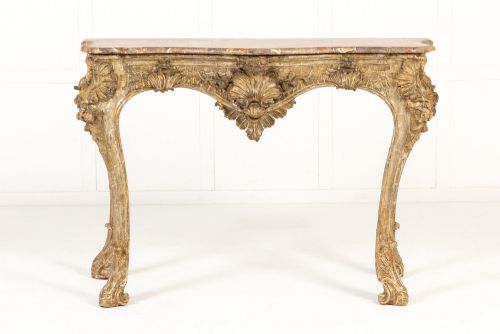
The dominant survival on the market is the eighteenth-century giltwood console table, frequently topped with marble. Forms range from monumental Baroque revival pieces with lion's paw supports to smaller side tables and wall-mounted consoles.
Materials and construction methods
Carved wood and gesso form the structural base of these pieces, providing the malleable surface necessary for intricate relief work. Artisans applied gold leaf or silver gilt over this prepared ground to achieve the luminous metallic finish characteristic of the style.
Many examples incorporate stone tops such as marble, onyx, or breccia, fitted precisely to the wooden frames. Surface decoration also includes polychrome paint and flame mahogany accents, sometimes combined with carved figural elements like putti, dolphins, and rams' heads.
Evaluating craftsmanship and survival
The crispness of the wood carving dictates the primary tier of quality, separating deeply undercut, hand-carved relief from softer, more generalized moulding. Original gilding surfaces that retain their historic depth and wear differ significantly from later overgilding or repainting.
Structural integrity of the wall mountings and the quality of the fitted marble or onyx top influence the overall standing of a piece. Finer examples display harmonious proportions between the ornate base and the stone surface, with integrated joinery that remains stable.
Amleto Bertoni
The Italian Gilded Console Glossary
- Giltwood
- Wood that has been coated with gold leaf over a prepared gesso layer. This technique creates a rich, reflective surface that defines the classical Italian aesthetic.
- Gesso
- A plaster-like mixture applied to carved wood to create a smooth surface for gilding. It allows artisans to shape sharp decorative details before applying metal leaf.
- Console table
- A table designed to be fixed against a wall, often supported by ornate brackets or legs rather than four independent corners. They frequently feature shaped marble tops.
- Wall bracket
- A small architectural shelf designed to be mounted directly to a wall for display purposes. These pieces mirror the carved and gilded decoration of larger console tables.
- Breccia marble
- A type of multi-coloured marble composed of broken fragments cemented together in a fine matrix. It appears frequently as the decorative top on nineteenth-century revival tables.
Italian Gilded Console: Frequently Asked Questions
How were italian gilded consoles used?
These tables stood against reception room walls, frequently placed beneath large mirrors or paintings to create a formal focal point. They served as display surfaces for decorative objects rather than heavy domestic use.
Because they were often secured directly to the wall for stability, their placement in historic interiors was usually permanent. Their narrow depth suited hallways and drawing rooms where floor space was restricted.
Are all italian gilded consoles made of solid wood?
The structural carcass typically consists of carved wood, but the ornate surface decoration relies on layers of gesso. This mixture allowed craftsmen to model fine relief details before applying gold or silver leaf.
Subsequent repairs or restorations might involve replacement gesso and touch-ups to the metal leaf, which is common in pieces with long histories.
How do you distinguish eighteenth century from nineteenth century pieces?
Eighteenth-century examples often display fluent Rococo or Neoclassical carving with lighter, more organic asymmetry. Nineteenth-century revival pieces tend towards heavier proportions, featuring dramatic motifs like lions' paws, rams' heads, and monumental dimensions.
Material choices also shift across eras, with certain nineteenth-century variants incorporating flame mahogany alongside traditional giltwood and polychrome paint.
Do these tables require wall attachment?
Many console tables of this type were constructed to rely partially on wall brackets or fixings for complete stability. The weight of the marble or onyx top meant that secure placement against a vertical surface was essential.
When living with these pieces, checking the wall mounting points ensures the console remains safe and balanced in daily use.