


Italian Genre Scene Artwork
Italian genre scene artwork captures everyday moments of nineteenth-century life through watercolour and oil paint.
Italian Genre Scene Artwork
Italian genre scene artwork portrays daily life, social interactions and domestic settings from the nineteenth century. These paintings and watercolours focus on human activities rather than formal portraiture or grand historical narratives.
Buyers will most frequently encounter nineteenth-century works executed in oil on canvas or watercolour on paper. Many pieces arrive framed in gilt wood, preserving the original presentation of the period.
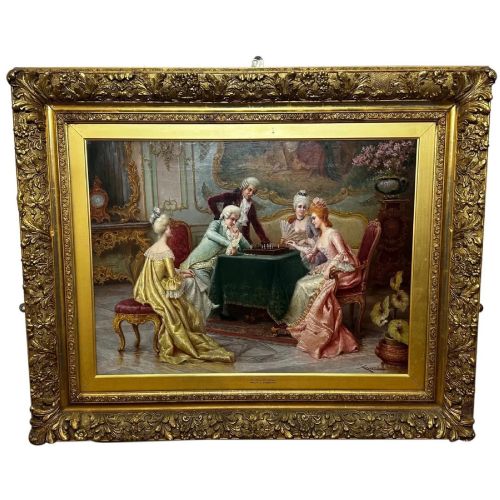
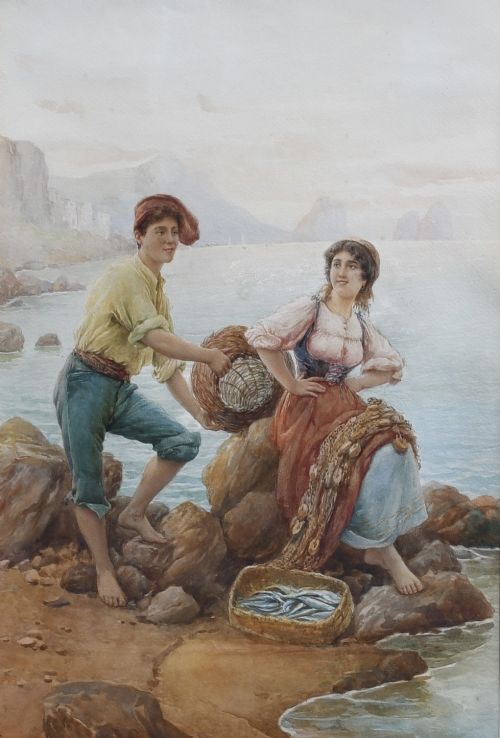
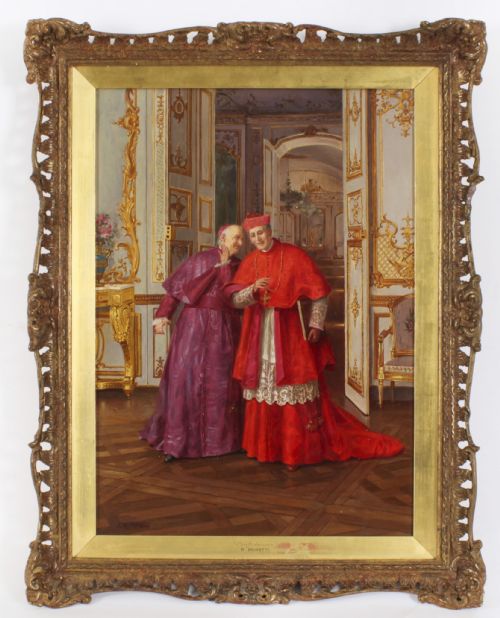
The styles range across academic realism, neoclassical influences and rococo revival interpretations. Subjects span from musical recitals and quiet domestic readings to coastal fisherfolk resting by the sea.
Materials and methods of execution
Artists utilised oil paint on canvas or watercolour on paper to capture light and texture. These traditional media allowed creators to build intricate detail in figures, clothing and interior settings.
Many works incorporate glass protection alongside gilt wood frames. The combination of pigment, paper, canvas and wood defines the physical construction of these nineteenth-century pieces.
Materials span oil on canvas, watercolour on paper, glass and gilt wood within nineteenth-century Italian academic styles.
Distinctions in quality and execution
Quality rests in the precision of the brushwork and the naturalism of human figures. Master painters achieved depth through careful handling of light and shadow across canvas or paper.
The sophistication of the composition and the complexity of the narrative separate standard decorative pieces from accomplished academic works. Framing also plays a role, with original gilt wood enhancing the overall presentation.
Carlo Ferranti·Renato Moretti·Martinetti·Charles H Poingdestre·Arturo Orselli·Federico Andreotti·Willem Johannes Martens·Pompeo Massani·Belisario Gioja·Francesco Bergamini
The Italian Genre Scene Artwork Glossary
- Watercolour
- A painting method where fine pigment is suspended in water-based solution on paper. This medium produces translucent washes and delicate details.
- Oil on Canvas
- Pigment mixed with drying oil applied to a stretched cloth support. This technique allows for rich colour blending and textured surface application.
- Academic Realism
- A style rooted in the rigorous training of nineteenth-century European art academies. It prioritises accurate anatomical drawing and convincing spatial perspective.
- Gilt Wood
- Wood treated with gold leaf or gold paint for decorative framing. This finish provides a reflective border suited to nineteenth-century display conventions.
Italian Genre Scene Artwork: Frequently Asked Questions
What subjects appear in these paintings?
These works depict everyday scenes from nineteenth-century life, including domestic interactions, musical gatherings and coastal views.
Figures engage in quiet moments, such as reading scrolls, playing chess or resting by the sea.
Are these works painted on canvas or paper?
The pieces utilise both oil on canvas and watercolour on paper. Each medium offers a distinct visual texture suited to the artist's approach.
Watercolours often feature protective glass, while oil paintings are displayed directly on stretched canvas.
How do I identify a nineteenth-century piece?
Dating relies on stylistic markers associated with academic realism and neoclassical influences from the 1800s. Specific artist signatures and dated inscriptions further confirm the period.
Original gilt wood frames frequently accompany these nineteenth-century works.
How should I display these artworks?
Display requires stable indoor environments away from direct sunlight to protect delicate watercolours and oil pigments. Proper wall placement preserves both the paper or canvas and the gilt wood frame.
Lighting should be indirect to highlight the details without causing fading.