
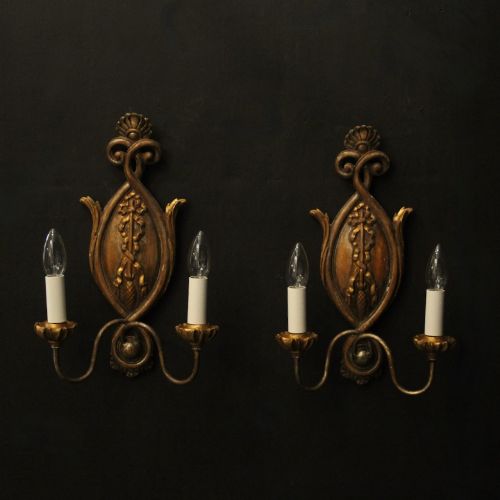

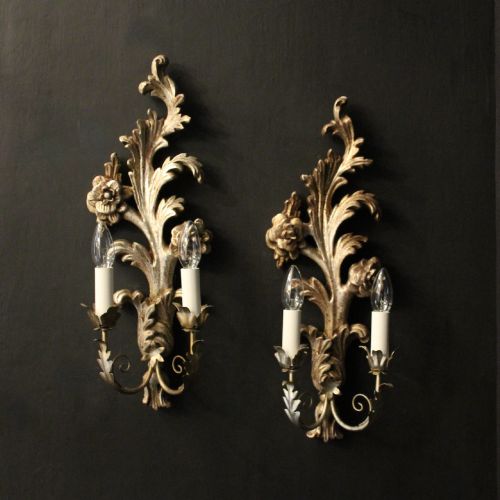
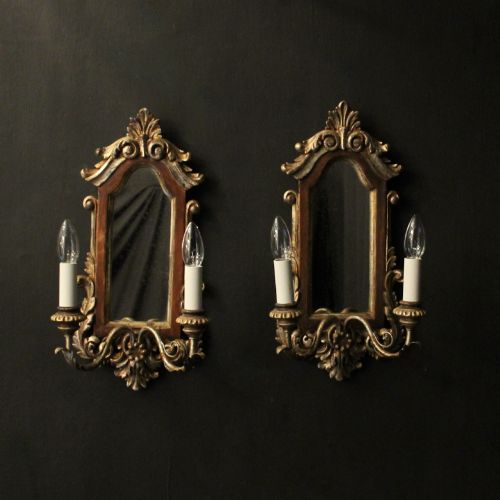
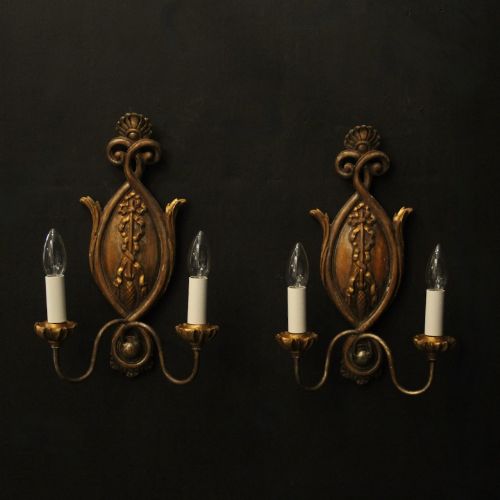
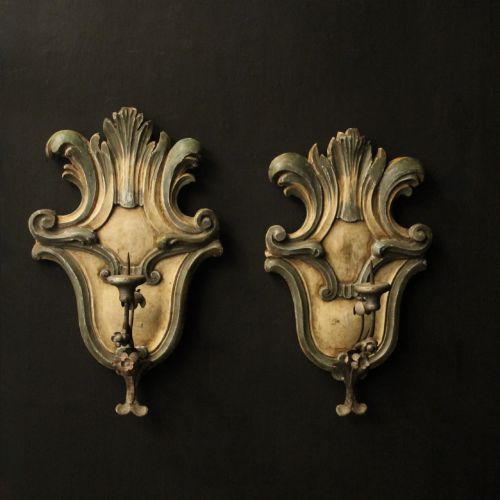
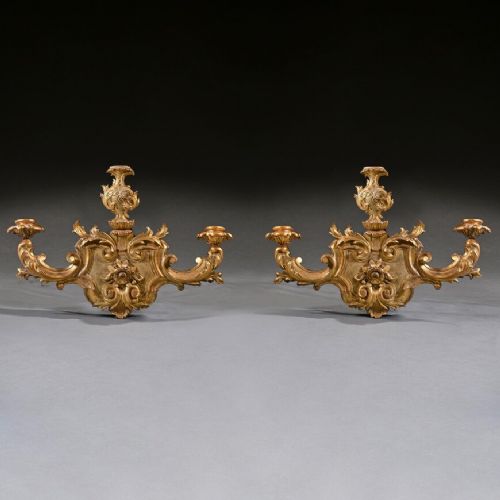
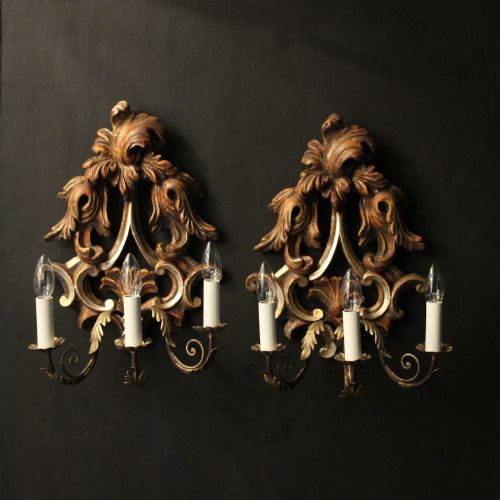
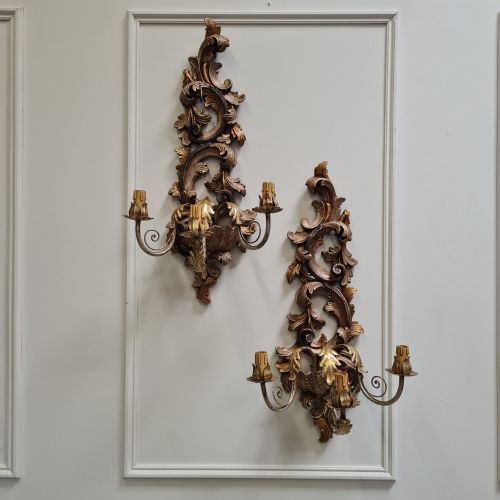
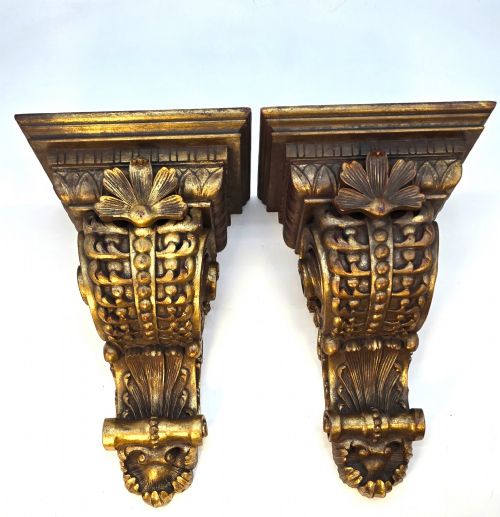
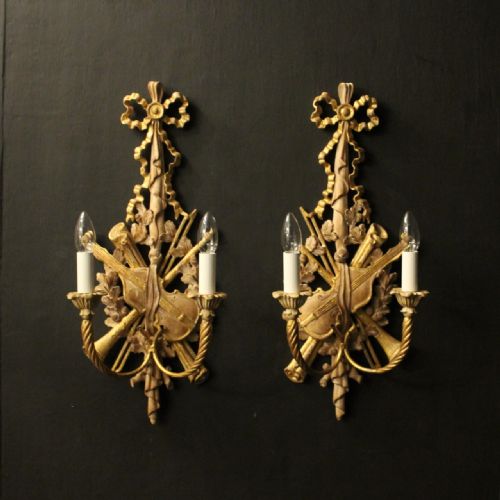

Italian Carved Wall Sconce
An italian carved wall sconce brings warmth and sculptural presence to a room, catching candle or electric light against rich gilded surfaces.
Italian Carved Wall Sconce
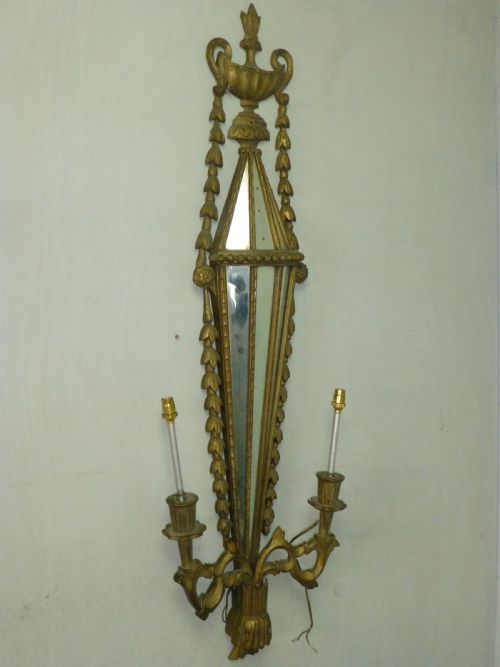
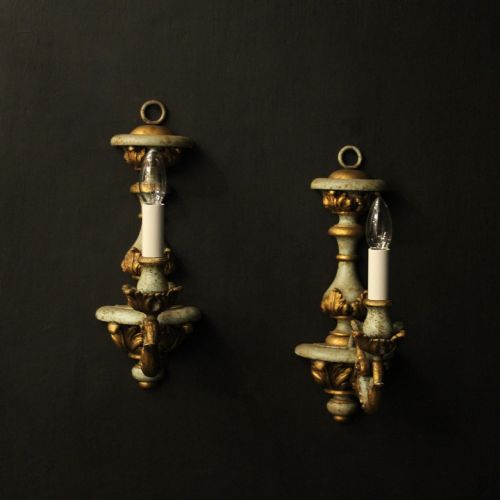
An italian carved wall sconce encompasses wooden wall brackets, girandoles, and candle lights originating from the seventeenth century through the early twentieth century. Buyers encounter Florentine and Venetian designs alongside Baroque and Rococo styles built to mount directly onto interior walls.
The selection ranges from single arm candle fittings to large multi-arm twin, triple, and four-arm light fixtures adorned with cherubs, leaf motifs, and cartouche mirrors. Many pieces emerge from twentieth-century revivals duplicating earlier seventeenth and eighteenth-century aesthetics.
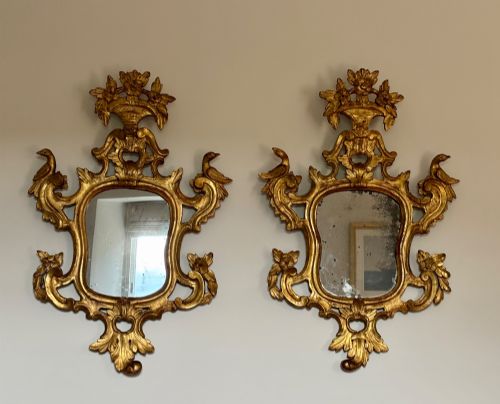
Pairs dominate the selection, offering symmetrical illumination for hallways, drawing rooms, and dining spaces. Forms vary from simple carved wooden brackets to elaborate gilded assemblies incorporating Murano glass and foxed mirror plates.
How they were made
Carved wood forms the structural core of these wall lights, shaped by hand from timber before receiving decorative treatments. Artisans applied gesso over the carved wooden surfaces to create a smooth preparatory layer for subsequent gilding or painting.
Gold leaf and silver leaf were meticulously laid across the gesso and wood foundations to catch ambient interior illumination. Polychrome finishes also appear, introducing painted pigments alongside metallic leaf to create contrasting colour and depth.
Complementary materials such as brass, toleware, and glass integrate into the assemblies, particularly within girandole mirrors and candle nozzles. The combination of carved wood, applied gesso, and precious leaf defines the standard construction across centuries.
Listings span periods from the 17th century through the 1930s, featuring materials such as giltwood, gesso, metal, and glass.
What varies in quality
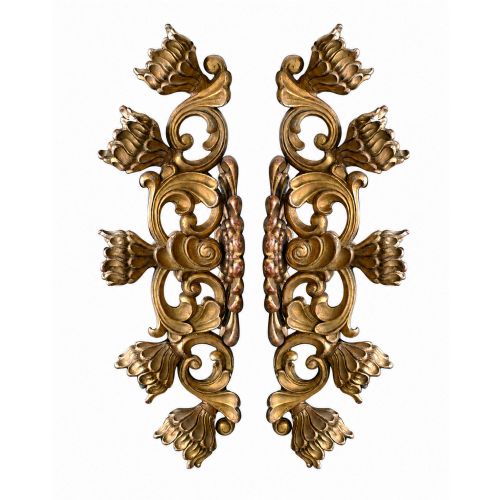
The crispness of the hand-carving distinguishes finer examples from simpler production, evident in the anatomical definition of cherubs and the depth of acanthus leaves. Sharp undercutting in the wooden ornament allows light to create deeper shadows and highlights.
The application and preservation of the gilding determine visual impact, with burnished gold leaf ageing into a softer, warmer patina over gesso. Original surfaces that retain their historic leaf and polychrome pigment hold greater integrity than later repainted or heavily restored layers.
Structural complexity influences the character of each fixture, from modest single-arm brackets to substantial multi-arm girandoles with integrated mirror plates. The harmonious balance between the carved wooden support and the metal arm configurations governs the overall presence.
The Italian Carved Wall Sconce Glossary
- Giltwood
- Wood that has been coated with thin sheets of gold leaf. This technique creates a luminous metallic surface popular in Baroque and Rococo interior furnishings.
- Girandole
- A decorative wall bracket holding candles, frequently incorporating a mirror plate to multiply the reflected light. These fixtures combine illumination with optical expansion of the room.
- Gesso
- A plaster mix applied to carved wood to provide a smooth base for gilding or painting. It allows intricate relief details to maintain sharp definition beneath the metallic leaf.
- Cartouche
- An ornamental tablet or panel resembling a rolled-up piece of parchment, often framed by scrollwork. They form the central decorative element in many eighteenth-century mirrors and sconces.
- Pricket
- A sharp spike on a candle holder designed to secure the base of a candle. This form appears on earlier ecclesiastical and domestic lighting before socket-style cups became common.
Italian Carved Wall Sconce: Frequently Asked Questions
How do I install an antique wall sconce?
Most antique wall sconces mount to the wall via built-in brackets or hanging loops fixed to the structural wooden backplate. Professional installation is recommended to ensure the weight is properly supported, particularly for multi-arm wooden or gilded fixtures.
Wiring modern electrical fittings requires careful concealment of cables behind the backplate where conversion has taken place. Original candle-only variants should be assessed for safe placement away from combustible furnishings.
Are these sconces wired for electricity?
The selection includes both original candle-burning variants and examples adapted for electrical illumination over their lifespan. Many twentieth-century and nineteenth-century pieces feature integrated arms designed to accommodate wiring.
Buyers should examine individual listings to confirm whether a piece retains its original candle fittings or has been electrified. Rewiring by a qualified electrician ensures safety compliance while preserving the historic structure.
How do I clean gilded wood safely?
Gilded surfaces require gentle maintenance using a dry, soft brush or a clean feather duster to remove surface dust. Moisture and chemical cleaning agents must be avoided to prevent damage to fragile gold leaf and gesso layers.
Professional conservation is advised for deep cleaning or repairing flaking leaf. Regular, careful dusting preserves the historic patina without abrading the delicate metallic finish.
What is a Florentine sconce?
A Florentine sconce originates from the artistic traditions of Florence, often featuring ornate carved scrollwork and bright gilding. These pieces frequently incorporate leaf motifs and elaborate framing typical of regional Italian craftsmanship.
Many examples date from the early twentieth-century revival period, replicating older Baroque forms. Their decorative intensity makes them a focal point in traditional and eclectic interiors.