



Italian Carved Pier Table
An italian carved pier table is a grand wall-mounted console designed to sit beneath a mirror, bringing Continental drama to a formal interior.
Italian Carved Pier Table
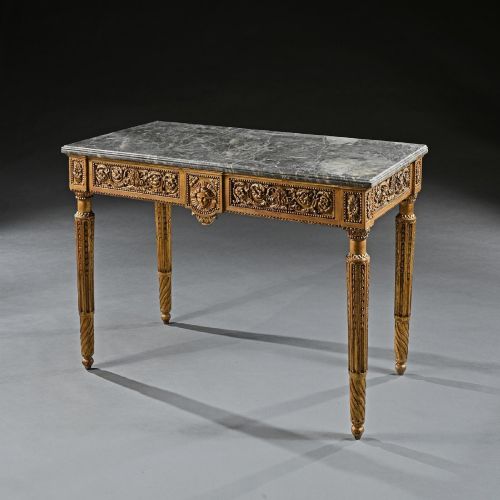
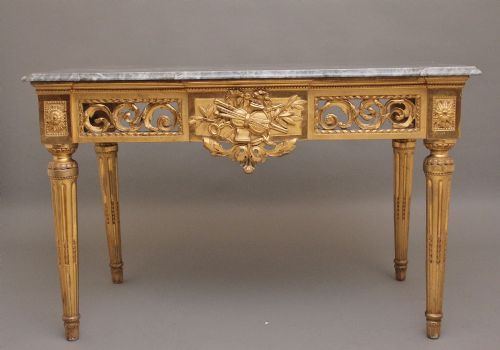
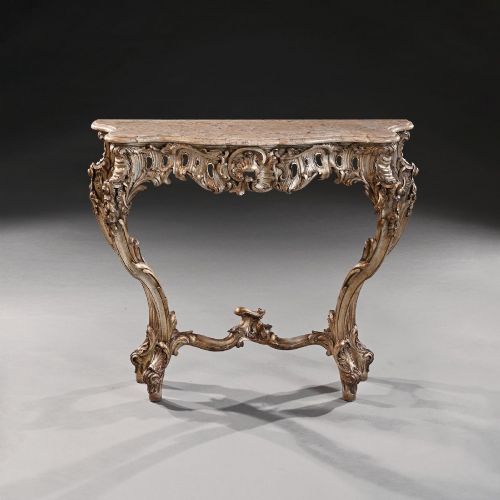
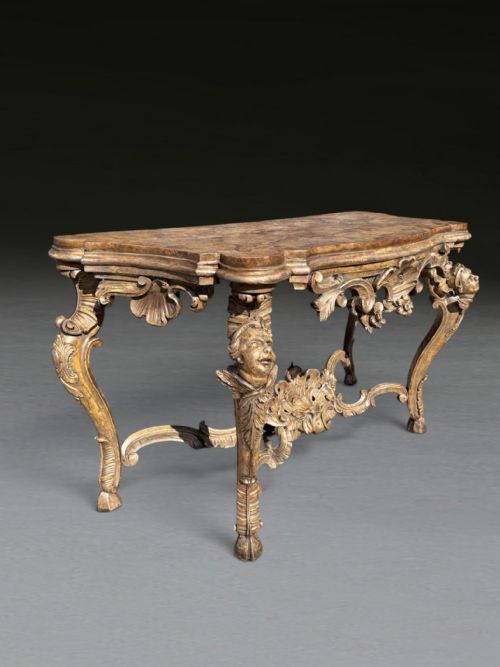
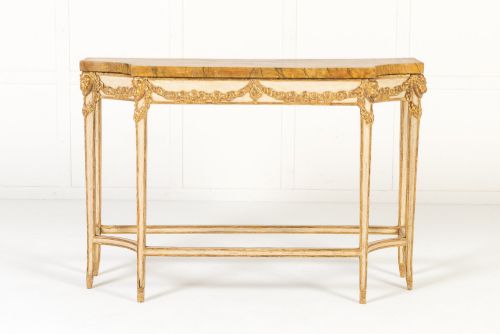
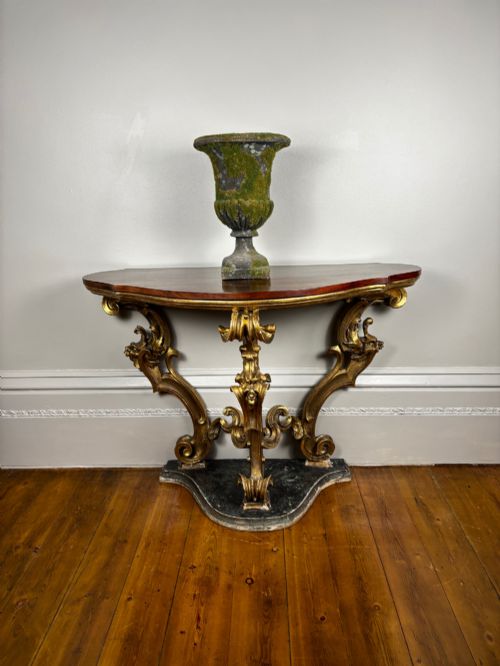
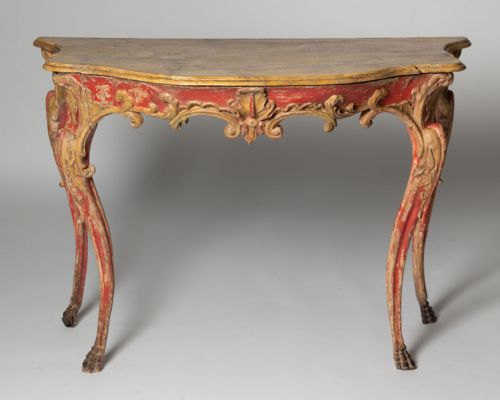
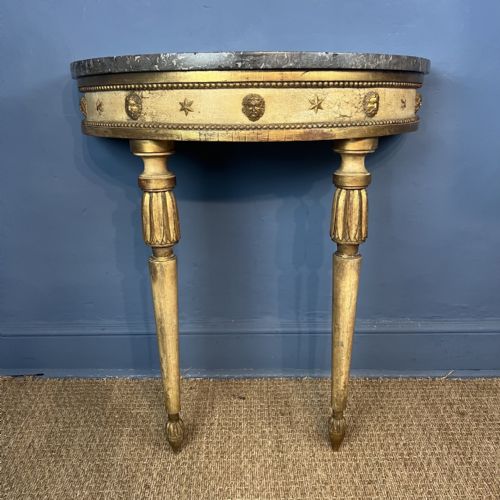
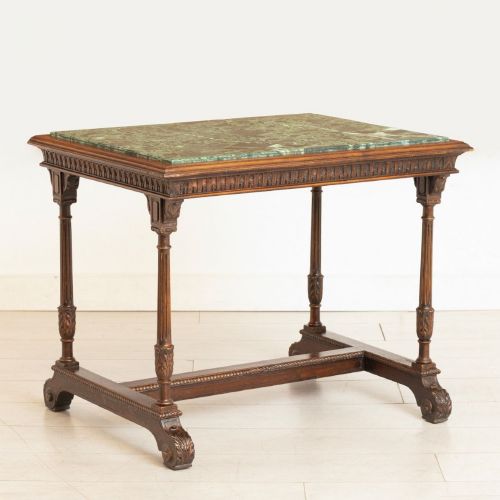
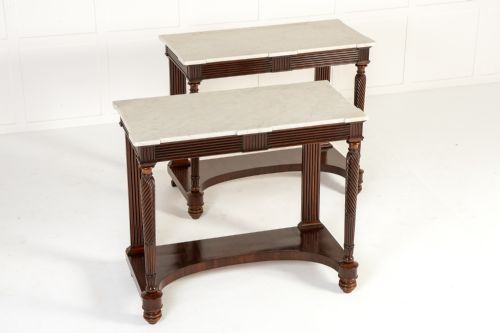
When you search for an italian carved pier table, you are looking at substantial wall-fixed console furniture designed to anchor the space between tall drawing-room windows. The pieces you meet on this page span from the late seventeenth century through to the early decades of the twentieth, reflecting centuries of changing interior fashion. Console tables and side tables dominate the selection, heavily weighted towards grand eighteenth-century examples and nineteenth-century revivals.
The aesthetic vocabulary stretches from exuberant Rococo and Baroque curves through to restrained Neoclassical lines and Venetian whimsy. Walnut and mahogany provide structural timber in several pieces, whilst painted, parcel gilt and heavily gilded surfaces dominate the overarching visual style. Many examples incorporate shaped marble tops, ranging from classic white stone to breccia and faux porphyry.
How they were made
Carvers shaped the foundational timber - often walnut or softer woods - before applying gesso layers to build up intricate relief decoration such as foliage, putti, and dolphins. Gold leaf and silver leaf were then painstakingly laid over the prepared surfaces, sometimes combined with cream or coloured paint finishes.
Heavily figured and shaped marble tops were cut and polished to fit precisely onto the wooden frames, providing a durable and cooling surface. Structural joins relied on traditional cabinet-making methods to support the weight of heavy stone slabs against interior walls.
What varies in quality
The depth and crispness of the carving separate ambitious workshop pieces from simpler provincial outputs. Pier tables featuring finely rendered figural elements like lions' paws, rams' heads, or putti demonstrate superior sculptural skill.
The quality of the gilding and the integrity of the original marble top define the visual authority of a piece. Surfaces that retain their original layered paint and gold leaf hold greater historical coherence than later overpainting.
The Italian Carved Pier Table Glossary
- Pier table
- A side table designed to stand against the wall between two windows, frequently positioned beneath a matching wall mirror.
- Giltwood
- Timber that has been coated with thin sheets of gold leaf over a prepared gesso ground. This technique creates a luminous surface that catches candlelight.
- Gesso
- A plaster-like mixture applied to wood surfaces to provide a smooth base for gilding and fine carving. It allows artisans to achieve sharp sculptural details.
- Breccia marble
- A decorative stone composed of angular rock fragments embedded in a fine-grained matrix. It offers varied, colourful patterns highly prized in classical furniture.
- Serpentine
- A furniture front or top curving outward at the centre and inward at the ends. This flowing shape is characteristic of Rococo design.
Italian Carved Pier Table: Frequently Asked Questions
Are these tables freestanding?
Traditional pier tables often require partial attachment to the wall for complete stability due to their heavy marble tops and narrow frames.
Some console formats stand independently, but checking the structural support is essential when living with heavy stone-topped furniture.
How do I care for the marble top?
Wipe the stone surface with a soft, damp cloth and avoid acidic cleaning agents that can etch polished marble. Using coasters protects the historic material from moisture rings.
Natural stone benefits from occasional gentle cleaning without harsh chemical intervention to preserve its finish.
How do I identify the period?
Look to the decorative vocabulary, such as exuberant asymmetrical curves for Rococo pieces or balanced classical geometry for Neoclassical examples. Timber choice and the application of gesso also provide clues to the era of manufacture.
Revival pieces from the nineteenth century often borrow earlier motifs with heavier proportions and distinct surface patination.