

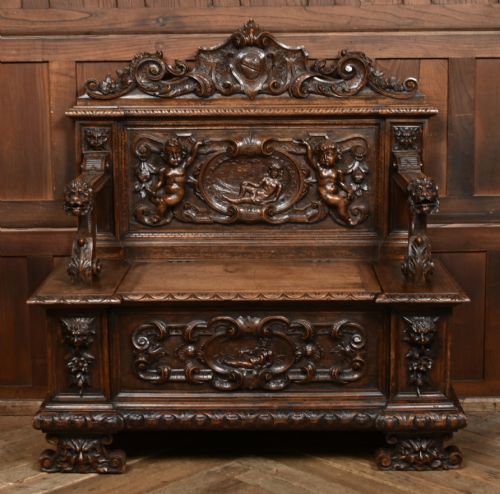


Italian Blanket Chest
An italian blanket chest brings centuries of domestic history into a room, offering robust storage disguised as masterwork carving.
Italian Blanket Chest
An italian blanket chest spans centuries of craftsmanship, taking forms such as the cassone, coffer, trunk, and cassapanca bench. These storage pieces served central functions in historic households, often doubling as seating or marriage chests commissioned for familial alliances.
The pieces appearing on this page stretch from the 17th century through the 19th century, drawing on Renaissance, Baroque, Gothic, and folk art traditions. Walnut dominates the selection, accompanied by cypress, cedarwood, pine, and giltwood.
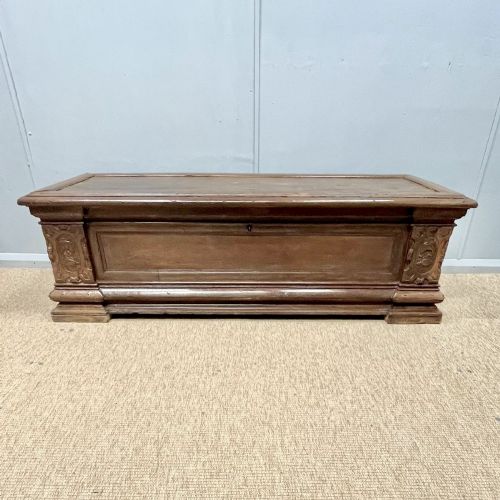
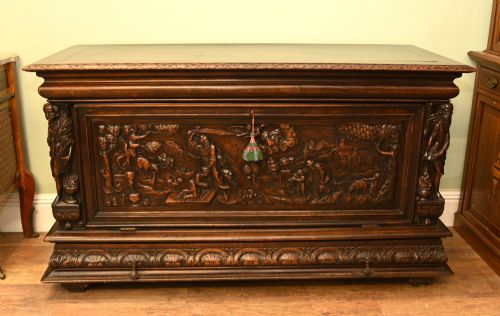
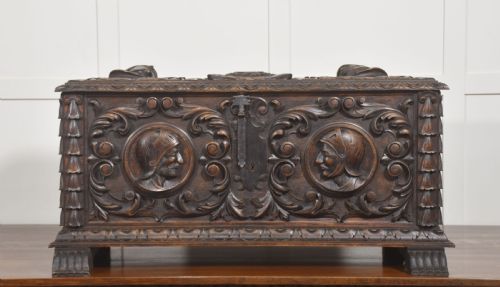
Buyers are most likely to encounter substantial walnut and cypress examples, frequently decorated with carved figural medallions, painted tempera surfaces, or gilded details. Forms range from massive marriage chests measuring well over a metre to benches with integrated storage boxes.
How they were made
Historic cabinetmakers constructed these chests using dense timbers like walnut and cypress, joined to withstand heavy daily use. Iron fittings often reinforced the corners, lids, and locking mechanisms.
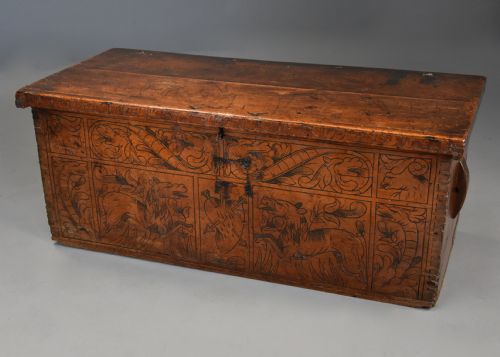
Surface decoration involved deep relief carving, figural medallions, and gilding applied directly to the wood. Some examples feature hand-painted tempera decoration and giltwood accents reflecting regional Italian aesthetics.
Italian Blanket Chest Retail Price Guide 2026
Typical asking prices for italian blanket chest among the pieces listed under this phrase on Sellingantiques today, from the lower quarter to the upper quarter. They describe what is for sale here now, not the wider market.
Some marriage chests were built so large that moving them required half the village and a very patient mule.
What varies in quality
Quality rests in the depth and execution of the wood carving, distinguishing standard box construction from masterwork relief panels and figural medallions. The crispness of Renaissance and Baroque ornamentation dictates the visual hierarchy.
The integrity of the original timber and surface patina determines the standing of a piece. Original paint, untouched giltwood, and historic ironwork elevate a chest above later revivals or heavily restored surfaces.
The Italian Blanket Chest Glossary
- Cassone
- A traditional large Italian chest, often ornately carved or painted, traditionally used to hold a bride's trousseau. These marriage chests sat at the centre of wealthy Renaissance households.
- Cassapanca
- An Italian bench featuring a high back, armrests, and a large chest base beneath the seat. It combines seating and storage in a single imposing furniture form.
- Coffer
- A sturdy rectangular box used for storing valuables, linens, or documents. Coffers typically feature flat lids and robust wooden construction.
- Tempera Paint
- A permanent, fast-drying painting medium consisting of coloured pigment mixed with a water-binder such as egg yolk. It provides the matte colourful surfaces seen on folk art chests.
- Giltwood
- Wood that has been coated with a thin layer of gold leaf or gold paint. This technique added opulent highlights to carved panels and mouldings.
Italian Blanket Chest: Frequently Asked Questions
What is an italian blanket chest?
An italian blanket chest is a historic storage container, often referred to as a cassone or coffer, designed to hold household textiles and valuables.
These pieces range from the 17th century to the 19th century, utilising regional woods such as walnut, cypress, and cedarwood.
How were these chests used historically?
Historically, these chests served as secure storage for expensive linens, clothing, and documents in wealthy households. Many functioned as marriage chests commissioned to hold a bride's trousseau.
Certain forms like the cassapanca also functioned as benches, combining seating with enclosed storage beneath the seat.
How do I live with a historic chest?
Placing a chest in a principal room allows it to serve as a coffee table, a window seat, or a striking focal point against a plain wall. Keeping the piece away from direct heat sources protects the historic wood and tempera surfaces.
The interior provides generous storage for blankets, cushions, or seasonal items while maintaining a prominent decorative presence.
How do I tell periods apart?
Earlier pieces from the 17th century display Renaissance, Baroque, or Gothic architectural motifs, robust walnut construction, and hand-carved figural medallions. 19th-century examples often reflect Renaissance Revival styles, showing deliberate historical emulation in their carving.
Examining the timber, the style of the hardware, and the treatment of the panels helps distinguish original 17th-century construction from later revival work.