



Italian Baroque Wall Lights
These Italian baroque wall lights bring dramatic carved form and gilded illumination to a room, drawing the eye upwards with period flair.
Italian Baroque Wall Lights
When you search for italian baroque wall lights, you find opulent lighting fixtures designed to mount directly onto vertical surfaces. The selection spans robust seventeenth-century originals through to revival pieces made across the nineteenth and early twentieth centuries.
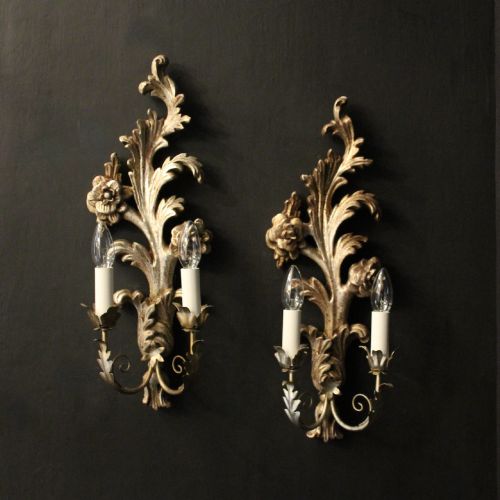
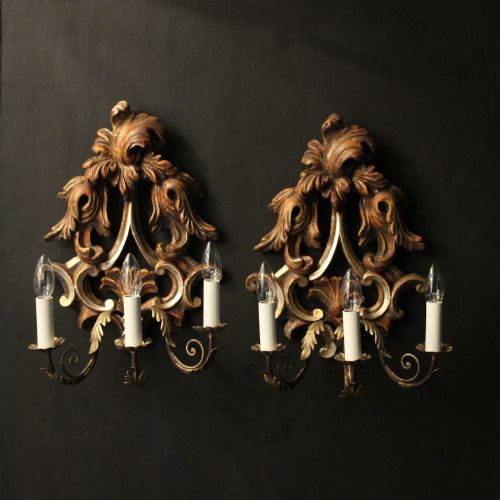
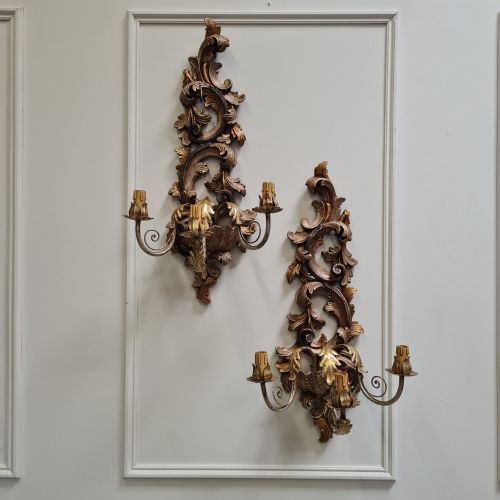
You will most commonly encounter pairs of twin and triple arm wall lights bearing Florentine and baroque styling. These fixtures manifest as carved wooden sconces, hanging lanterns, and giltwood girandole mirrors that project candlelight or electric light into a space.
The objects originate from workshops favouring ornate decorative programmes, often employing polychrome finishes alongside metal components and glass elements. Many items display the rich ornamentation characteristic of southern European interior decoration from multiple centuries.
Materials and construction
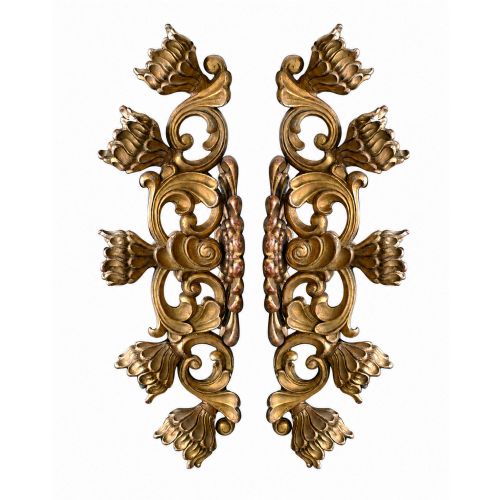
Carvers shaped wood into elaborate scrolls, cherubs, and architectural foliage before applying gesso to create smooth surfaces for decoration. Artisans then coated these wooden foundations in silver leaf and gold leaf to catch the flicker of candles.
Polychrome decoration appears frequently, adding painted colour and metallic leaf layers to carved wooden bodies. Metal components provide structural support for the twin and triple arms that extend from the central wall plates.
Italian Baroque Wall Lights Retail Price Guide 2026
Typical asking prices for italian baroque wall lights among the pieces listed under this phrase on Sellingantiques today, from the lower quarter to the upper quarter. They describe what is for sale here now, not the wider market.
Materials across these listings include carved wood, gesso, giltwood, silver leaf, gold leaf, metal, and glass.
Assessing quality
Quality rests upon the depth and vigour of the hand-carving, separating dynamic sculptural work from mechanical repetition. Crisp details in the gesso and application of leaf indicate superior craftsmanship.
The integrity of the wooden substrate and the harmony between the gilding and polychrome layers dictate the visual impact of the piece. Surviving pairs that retain their original surfaces command greater interest than those subjected to heavy restoration.
The Italian Baroque Wall Lights Glossary
- Giltwood
- Wood that has been coated with a thin layer of gold leaf. This technique provides a luminous surface that reflects light across a room.
- Gesso
- A plaster mixture applied to wood as a base for gilding and painting. It allows carvers to achieve fine details before applying leaf.
- Girandole
- A branched wall light incorporating a mirror. The glass plate multiplies the illumination cast by the candles.
- Polychrome
- Decorated in several colours. This finish adds painted detail to gilded wooden surfaces.
- Sconce
- A wall-mounted lighting fixture. These objects hold candles or electric bulbs on projecting arms.
Italian Baroque Wall Lights: Frequently Asked Questions
How do I live with them?
Mount these pieces securely into solid wall studs to support their substantial carved wooden weight. Position them at eye level to appreciate the sculptural detail.
Keep them away from direct heat sources to protect the historic gesso and leaf finishes from cracking.
Are these pieces electrified?
Many surviving examples have been adapted for electricity during the twentieth century to suit modern homes. Original wiring is rarely present on earlier items.
Conversion methods vary, so check the bulb fittings and internal channels to ensure they meet current safety standards.
How do I tell periods apart?
Seventeenth-century originals display heavy, unyielding proportions and deep hand-carving born of the period. Later revivals from the nineteenth and early twentieth centuries often adopt these historical motifs with different tool marks.
Material patination and the composition of the gesso underneath the gilding help reveal the true age of the wood.