

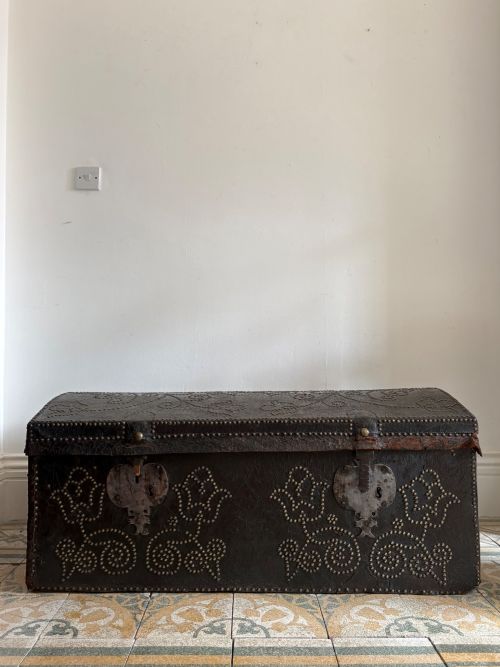


Iron Studded Trunk
An iron studded trunk brings heavy timber, hide, and metalwork together into a rugged piece of historic storage.
Iron Studded Trunk
An iron studded trunk combines timber construction with durable exterior coverings and metal fastenings designed for travel or secure storage. When you search for an iron studded trunk, you encounter robust receptacles spanning multiple centuries and global workshops.
The pieces listed on this page appear in forms such as dome top chests, blanket boxes, coffers, and travelling trunks. Origins stretch from Georgian England and 18th century Dutch workshops to Spanish, Swedish, Indian, and Chinese makers.
Domestic blanket boxes and heavy travelling trunks dominate the selection alongside dome top chests and strong boxes. These utilitarian objects served to transport belongings or secure valuables across households and long journeys.
How they were made
Carpenters constructed the carcases using regional timbers like pine, oak, teak, and various hardwoods. These wooden structures provided the necessary rigidity for everyday use and heavy transit.
Outer surfaces were frequently wrapped in leather, hide, or finished with hand-painted treatments. Metal reinforcement followed, utilising iron, brass, and wrought iron bands secured by individual studs to protect the vulnerable edges and joints.
Iron Studded Trunk Retail Price Guide 2026
Typical asking prices for iron studded trunk among the pieces listed under this phrase on Sellingantiques today, from the lower quarter to the upper quarter. They describe what is for sale here now, not the wider market.
Swedish strong boxes hide complex internal locking mechanisms behind innocent hand-painted exteriors.
What varies in quality
The caliber of an iron studded trunk rests in the integrity of its primary timber and the precision of its metalwork. Dense hardwoods and carefully fitted wrought iron brackets indicate superior craftsmanship compared to utilitarian pine boxes.
Original surface treatments, surviving leather or hide coverings, and intact carrying handles elevate a piece. Maker labels and retained hardware further distinguish exceptional examples from standard utilitarian storage.
Seabrook of St Pauls
The Iron Studded Trunk Glossary
- Dome top
- A rounded lid construction that sheds water and provides additional interior headroom for bulky garments. This silhouette frequently appears on travelling trunks and earlier chests.
- Coffer
- A heavy wooden box traditionally used for holding valuables, money, or important documents. These pieces often feature reinforced iron bands for added security.
- Hide
- Animal skin retaining its hair or prepared as heavy leather for exterior wrapping. It provides durable weather resistance on travelling trunks.
- Wrought iron
- Iron shaped by hammering while hot, producing visible tool marks and high tensile strength. It forms the structural brackets and protective straps on older chests.
- Blanket box
- A domestic storage chest designed for linens and bedding. These typically feature flat lids and simpler internal arrangements than travel trunks.
Iron Studded Trunk: Frequently Asked Questions
What were iron studded trunks used for?
These trunks served primarily for long-distance travel, safeguarding valuables, and storing household blankets or linens. Their robust construction protected contents from the elements during transit.
Merchants, travellers, and households utilised them as secure mobile wardrobes before modern luggage standardisation took hold.
How do I date an iron studded trunk?
Dating relies upon examining construction methods, timber types, lock mechanisms, and the style of the iron studs and brackets. Hand-forged wrought iron and pegged timber joints point to earlier centuries.
Later Victorian and mid-19th century examples often display machine-rolled metal straps and standardised internal linings.
Are these trunks suitable for daily use?
Most antique trunks retain their structural strength and function well as coffee tables, end-of-bed storage, or blanket boxes. Their heavy timber carcases easily support everyday domestic demands.
Care should be taken with fragile leather or historic painted surfaces to prevent excessive wear in high-traffic rooms.
Where were these trunks manufactured?
The inventory reflects production across diverse regions, including British workshops, Dutch studios, Spanish provinces, Scandinavian makers, and Indian or Chinese production centres. Each region utilised local timbers and distinct decorative traditions.
Foreign trade and colonial routes brought Anglo-Indian and Asian pieces back to European markets.