



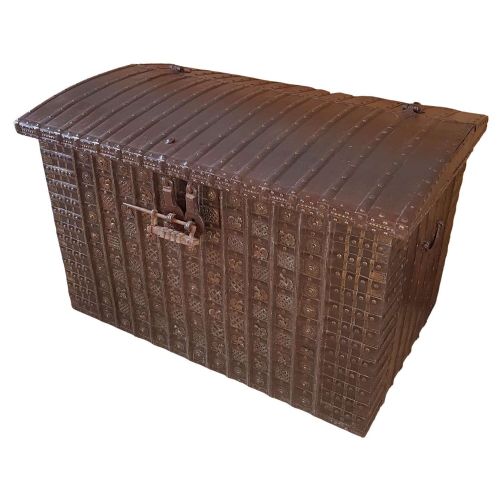


Iron Strapped Wooden Chest
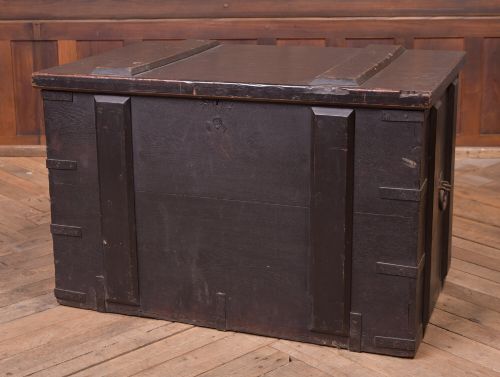
An iron strapped wooden chest delivers rugged utility and enduring character, built from sturdy timber and reinforced with metal bands.
Iron Strapped Wooden Chest
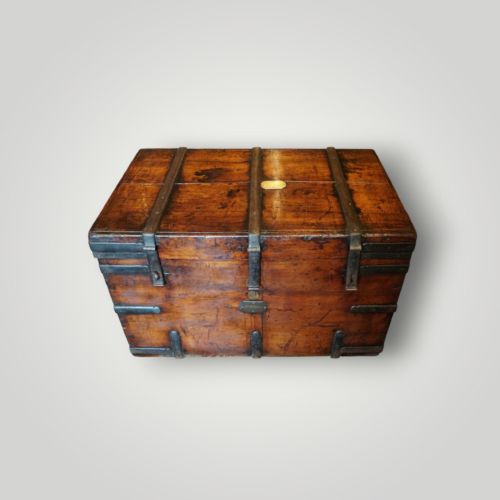
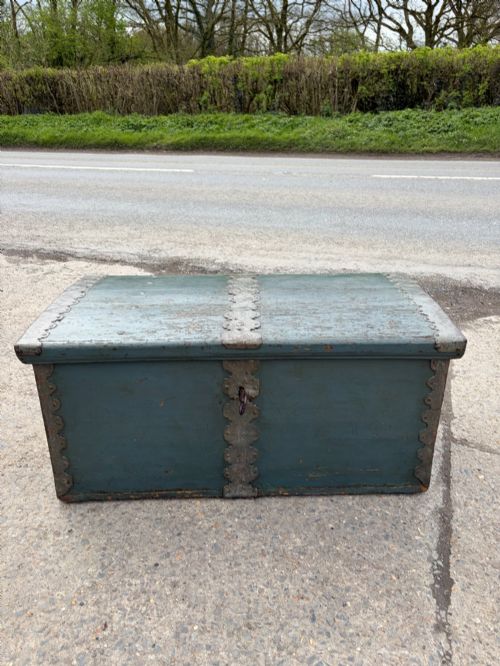
An iron strapped wooden chest serves as a robust container for travel, security, and domestic storage across diverse global traditions. These pieces range from domestic blanket boxes and silver chests to dowry coffers and travel trunks originating in British, Scandinavian, Indian, and continental workshops.
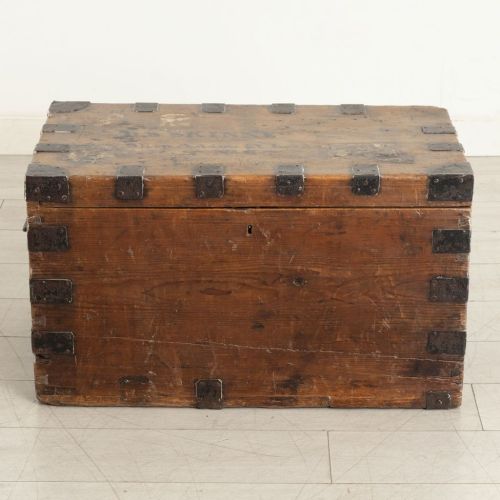
The version most commonly encountered on this page is the nineteenth-century pine or hardwood trunk reinforced with hand-forged or wrought iron straps. These utility boxes often display dome tops, carrying handles, and working locks suited to transit or secure storage.
Materials and construction
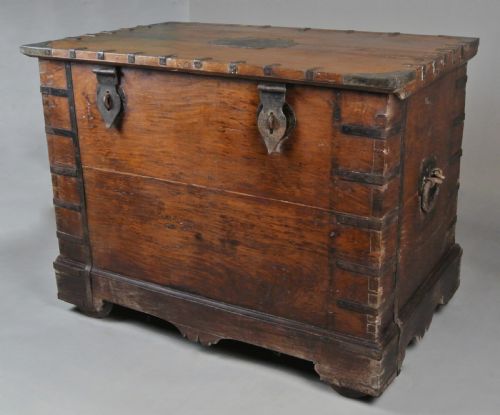
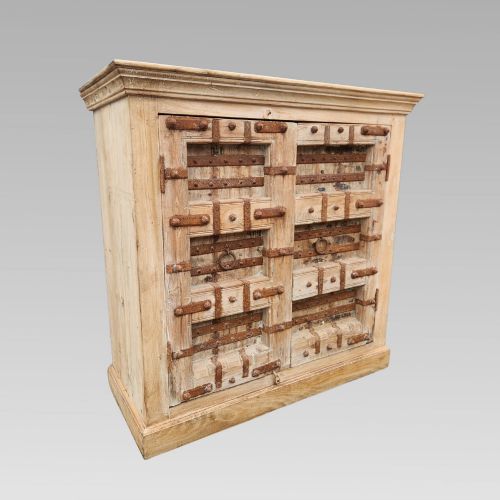
Constructed primarily from durable timbers such as pine, oak, teak, walnut, and elm, these chests rely on solid wood joinery designed to withstand heavy use. Iron, brass, and wrought metal bands are fastened across the exterior to reinforce the corners, lids, and seams against splitting.
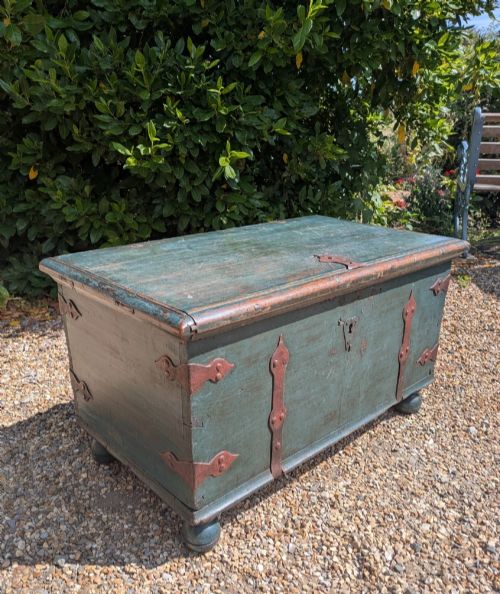
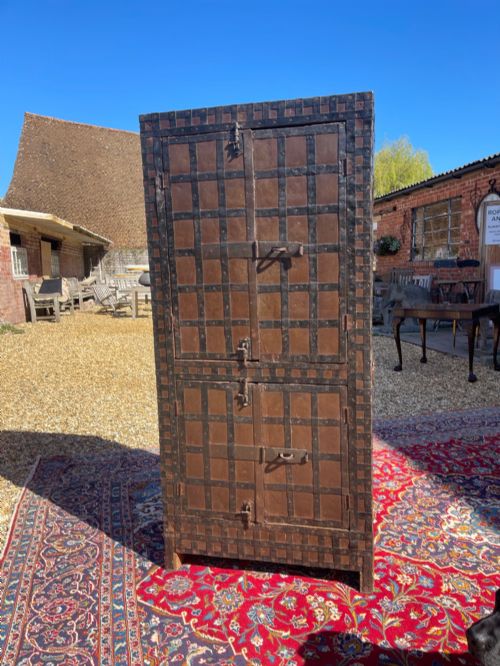
Many examples retain original paint finishes, iron hasps, side carrying hoops, and complex internal fittings designed for specific contents like silver or documents. Hand-forged strapwork secures the structural panels while adding a distinct decorative grid across the wooden surfaces.
Geographic origins range from Scandinavian and French workshops to Anglo-Indian studios and regional American travel trunks.
Assessing the build
Quality rests upon the integrity of the timber framing and the density of the metal reinforcement. Pieces featuring hand-forged iron strapwork integrated directly into the structural wooden carcass demonstrate superior craftsmanship compared to later decorative applications.
The presence of original surface treatments, working locks with operational keys, and untouched internal compartments elevate a piece. Durability in these utility objects depends entirely on how securely the iron bindings anchor the wooden panels together.
The Iron Strapped Wooden Chest Glossary
- Strapwork
- Metal bands fixed across the exterior of a box or trunk to reinforce joints and protect corners. These iron strips often crisscross the lid and sides in deliberate geometric patterns.
- Dome top
- A rounded lid construction designed to shed water during travel and increase internal storage capacity. This profile appears frequently on nineteenth-century Scandinavian and American travel trunks.
- Dowry chest
- A traditional marriage trunk used to transport household goods and valuables to a new marital home. These pieces often originate from regional workshops in India and rural Europe.
- Hasp
- A slotted metal plate that fastens over a staple and is secured with a pin or padlock. It forms the primary closure mechanism on heavy storage boxes.
- Silver chest
- A specialised storage trunk lined to protect domestic silver flatware and holloware. These oak or pine boxes frequently include fitted internal trays and brass carrying handles.
Iron Strapped Wooden Chest: Frequently Asked Questions
What were iron strapped wooden chests used for?
These chests served primarily for secure transport and storage of personal belongings, valuables, and household textiles during travel. Sturdy construction protected contents from moisture and rough handling on long journeys.
Domestic versions also functioned as permanent storage furniture inside the home, holding heavy items like silverware, blankets, and legal documents.
How do I care for an old wooden chest?
Keep wooden chests out of direct sunlight and away from rapid temperature shifts that cause timber to warp or split. Apply occasional appropriate wax to nourish dry pine, oak, or teak surfaces.
Inspect the iron straps periodically for surface rust and treat them gently with a dry cloth to preserve the original metal finish.
How can I tell the period of a trunk?
Examine the construction methods, nail types, and lock mechanisms to establish a general timeframe. Hand-forged ironwork and pegged wooden joints typically point toward earlier centuries, while machine-cut nails suggest later production.
Compare the timber species and regional decorative styles, such as Scandinavian painted motifs or Indian brass and iron banding, against known historical baselines.
Are these chests suitable for modern living?
Their substantial internal capacity makes them practical for hiding clutter, storing winter blankets, or serving as a coffee table in a sitting room. The robust combination of wood and iron withstands daily domestic use.
Placing one at the foot of a bed or in a hallway provides both functional storage and a distinct historical anchor for interior spaces.