

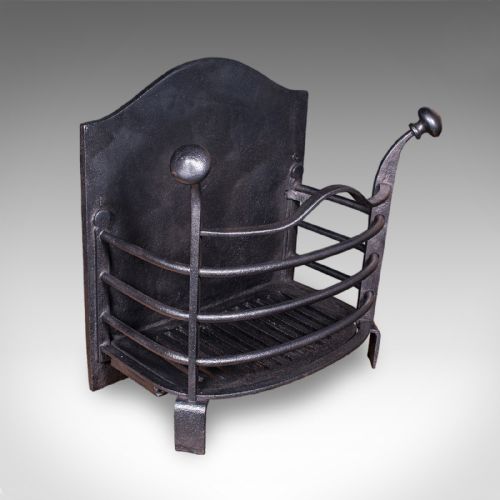
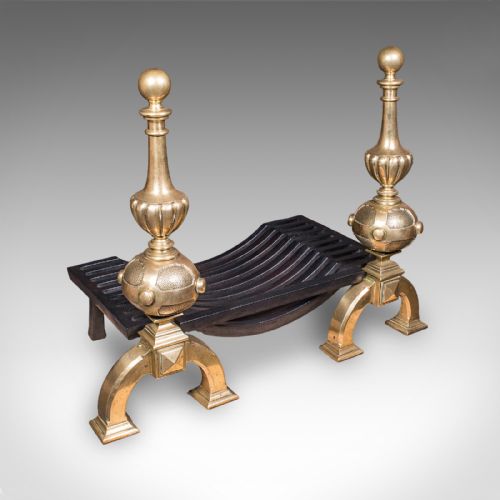
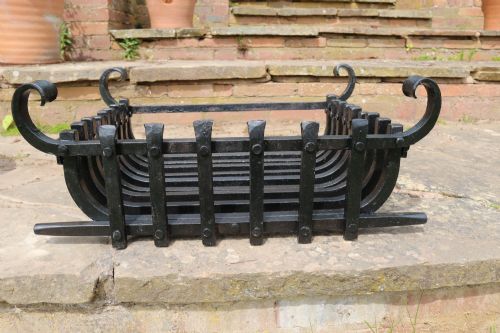


Iron Log Basket Grate
An iron log basket grate contains solid fuel within a hearth while bringing period weight and structure to a room.
Iron Log Basket Grate
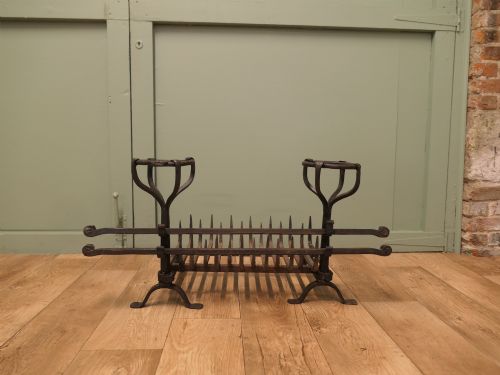
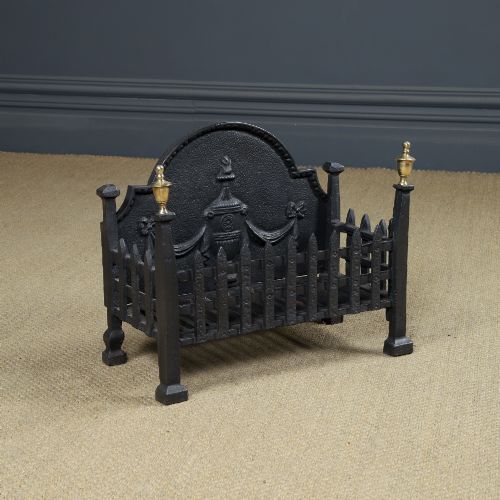
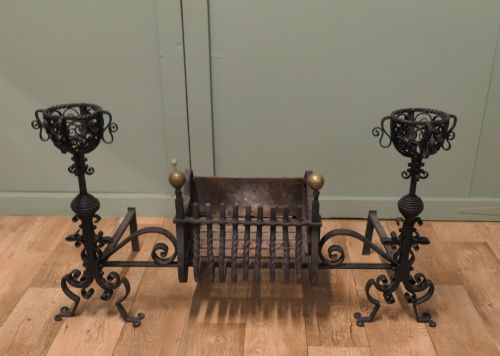
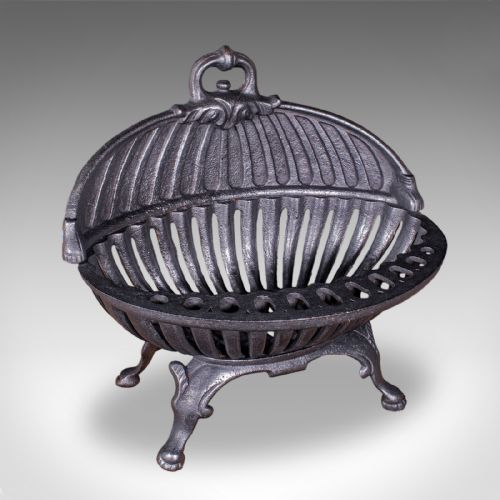
An iron log basket grate sits within an open hearth to hold firewood and coal for domestic heating. These hearth accessories appear in forms ranging from compact freestanding grates to large inglenook assemblies paired with andirons or fire backs.
The most common examples on this page date from the Victorian period through to the 1930s. Buyers encounter diverse stylistic influences, including Gothic Revival, Arts and Crafts, and Neo-Classical or Renaissance revival designs.
Many items incorporate matching fire dogs or fenders to complete the hearth arrangement. The physical structure balances utility with decorative metalwork suited to period interiors.
Differentiating quality across examples
The distinction between standard utility grates and superior items lies in the thickness of the metal and the complexity of the ironwork. Heavy gauge castings and hand-worked wrought iron demonstrate greater durability under high temperatures.
Design execution separates basic forms from pieces featuring crisp period motifs such as dragon ornamentation or classical urns. Complete sets incorporating matching andirons or fire backs command greater architectural presence than isolated baskets.
Iron Log Basket Grate Retail Price Guide 2026
Typical asking prices for iron log basket grate among the pieces listed under this phrase on Sellingantiques today, from the lower quarter to the upper quarter. They describe what is for sale here now, not the wider market.
Certain Victorian fire sets include fierce dragon motifs ready to guard the hearth against winter chills.
The Iron Log Basket Grate Glossary
- Fire basket
- A metal container designed to hold logs or coal above the hearth floor for better airflow. It forms the central basket unit of the assembly.
- Andiron
- A horizontal iron support raised on legs, placed in pairs inside a fireplace to hold logs above the hearth. They often accompany log baskets.
- Fire back
- A heavy iron plate placed against the back wall of a fireplace. It protects the masonry and radiates heat forward into the room.
- Grate
- The lattice of iron bars that supports burning fuel. It allows ash to drop through to the hearth base.
- Fender
- A low metal guard placed in front of the hearth to contain stray embers. It matches the metalwork of the fire basket and andirons.
Iron Log Basket Grate: Frequently Asked Questions
What is an iron log basket grate used for?
These pieces hold logs and coal safely inside an open fireplace. They elevate the fuel to allow proper airflow underneath for an efficient burn.
Beyond heating, they serve as permanent architectural fixtures that anchor period interior schemes.
How do I know the age of a fire grate?
Age is determined by manufacturing techniques, material weights, and stylistic details such as Gothic Revival or Neo-Classical motifs. Victorian and Edwardian examples often display registration marks or specific foundry characteristics.
Earlier Georgian pieces tend to exhibit lighter hand-forged wrought iron or refined Adams style proportions.
Can I use an antique fire basket for burning wood?
Many solid cast and wrought iron baskets remain functional for open fires. Checking the thickness of the iron bars ensures the metal can withstand active heat.
Some buyers choose to line them with firebrick or utilise them purely as decorative focal points with dried logs.
What is the difference between a grate and a fire basket?
A grate generally refers to the flat or curved iron matrix holding the fuel. A fire basket encompasses a deeper container structure designed specifically to hold logs.
In many historical listings, the terms overlap as manufacturers combined both functions into single hearth units.