




Iron Lock Coffer
An iron lock coffer is a robust security container built to safeguard valuables, combining heavy timber or metal with complex internal mechanisms.
Iron Lock Coffer
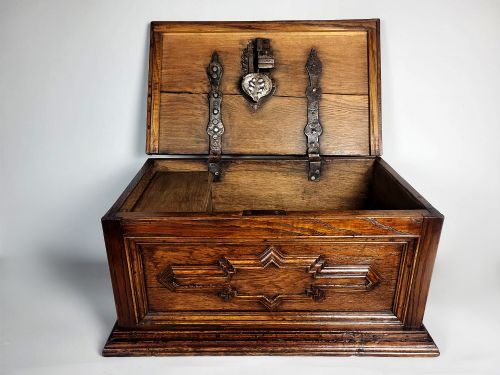
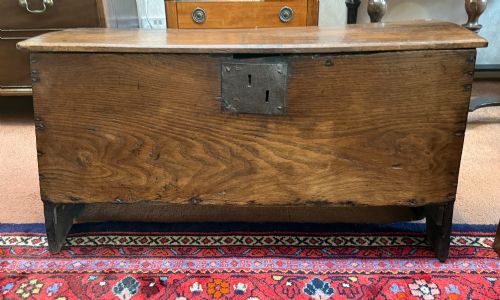
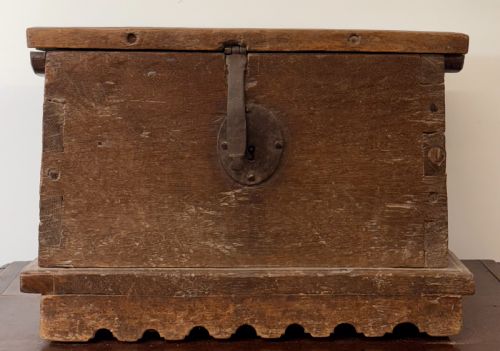
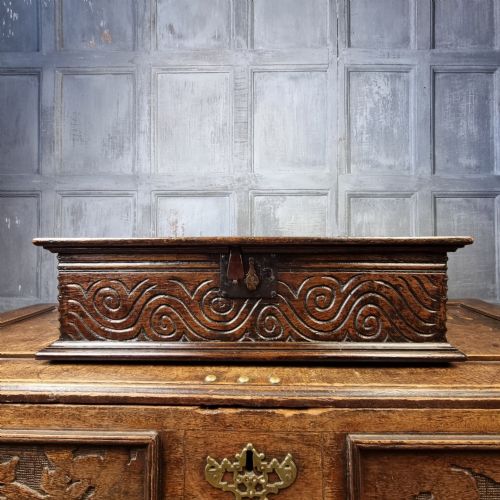
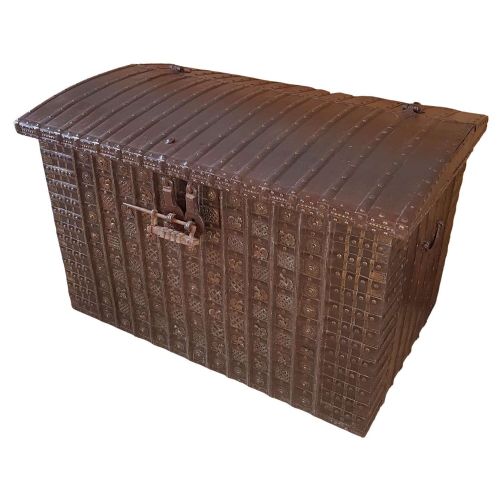
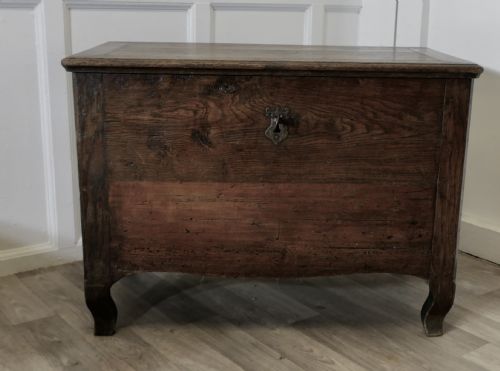
An iron lock coffer brings together heavy timber construction and intricate locking mechanisms designed for security and storage. You will encounter forms ranging from sixteenth-century Flemish and English coffers to seventeenth-century safe boxes and oak sword chests.
What varies in quality
The sophistication of the internal locking mechanism dictates much of the distinction, particularly when steel or iron works remain intact and operational with their original keys. Finer examples display superior timber selection, such as quartersawn oak or dense walnut, joined with precise hand-cut joints rather than utilitarian nailing.
Preservation of original surface treatments, whether early leather coverings, hand-forged iron banding, or regional painted decoration, separates standard storage pieces from significant examples. The integrity of the structure, including period hinges and uncompromised timber panels, governs the standing of each piece.
Certain strongboxes hide complex locking mechanisms beneath elaborate false floor plates to fool intruders.
The Iron Lock Coffer Glossary
- Cofer
- A strongbox or chest used for storing valuables, typically reinforced with iron bands and equipped with a complex lock.
- Armada chest
- A heavy iron storage box of sixteenth or seventeenth-century origin, featuring a complex spring lock housed beneath the lid.
- Six-plank coffer
- A simple chest constructed from six individual boards joined edge to edge, representing an early and durable form of vernacular furniture.
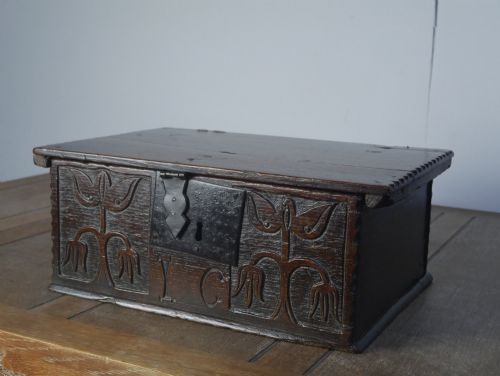
- Bible box
- A small tabletop chest with a sloped or flat lid, originally built to house family scriptures and writing materials.
- Strongbox
- A secure container cast or forged predominantly from iron or heavy timber, intended for transporting currency and documents.
Iron Lock Coffer: Frequently Asked Questions
What were iron lock coffers used for?
These containers served to secure currency, important documents, plate, and valuable commodities against theft in domestic and institutional settings.
Their heavy construction and complex internal locking mechanisms made them suitable for merchants, travellers, and households requiring portable security.
How do I identify a period iron lock coffer?
Examination of the joinery, timber species, and forging techniques on the ironwork helps establish the period of manufacture.
Early examples display hand-cut joints, forged iron straps, and internal mechanisms characteristic of sixteenth and seventeenth-century craftsmanship.
Are the original locks usually operational?
Many survive with their complex steel or iron mechanisms intact, often accompanied by period keys that still throw the bolts.
Some pieces have undergone mechanical maintenance over the centuries to ensure the internal levers continue to function properly.
How do I care for a wood and iron chest?
Maintenance involves keeping the timber nourished with appropriate waxes and protecting the iron components from excessive moisture.
Placing the chest away from direct heat sources prevents the wood from splitting and preserves the original surface patina.