
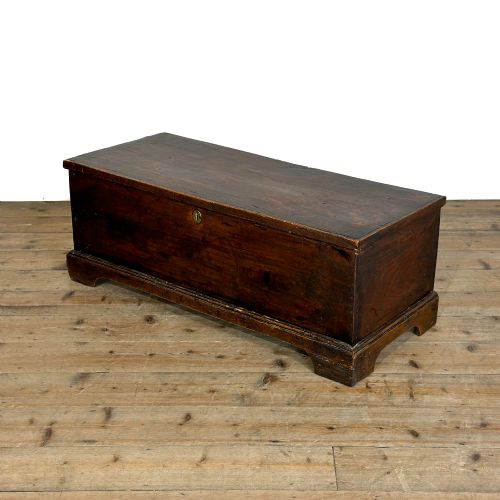

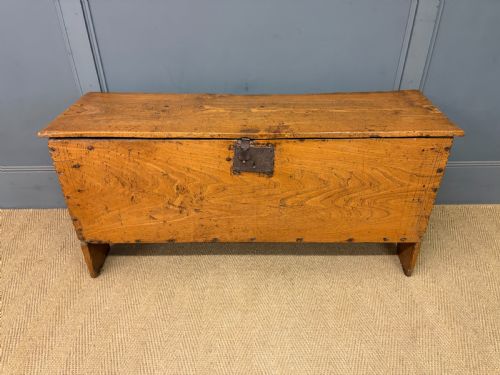
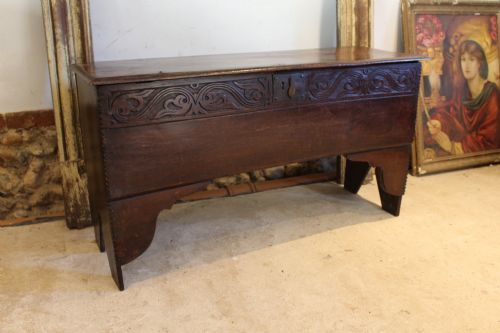


Country Elm Coffer
A country elm coffer is a utilitarian storage chest built by regional joiners, offering honest native timber and sturdy vernacular construction for modern interiors.
Country Elm Coffer
A country elm coffer is a robust storage piece built primarily to hold household linens, documents, or personal belongings in provincial homes. These items span various centuries, though eighteenth-century examples and nineteenth-century variants dominate the offerings.
Buyers encounter forms ranging from traditional six-plank chests to mule chests with lower drawers, dough bins, and small bible boxes. Regional origins stretch from Welsh vernacular pieces to West Country and French provincial examples.
The aesthetic relies on the distinctive grain and rich patina of native elm rather than ornate carving or costly veneer. They function well today as blanket boxes or coffee tables while retaining their original utilitarian character.
How they were made
Makers utilised native elm timber, known for its interlocking grain and resistance to splitting, joined simply with pegged joints or direct board construction in the six-plank method. The wood responds to damp conditions by remaining durable, which suited rural workshops.
Hardware consists of hand-forged iron or brass hinges, strap work, and hasps that secure the heavy lids. These metal elements were fastened with handmade nails or rivets by local blacksmiths working alongside the joiner.
The selection includes regional forms such as Welsh vernacular coffers and French cannonball boxes.
What varies in quality
Quality rests in the integrity of the timber selection and the retention of original surfaces rather than decorative excess. Finer examples display boards chosen for striking figure and rich colour, shaped feet, and untouched patination built up through generations of use.
Lesser pieces show extensive timber replacement, altered hardware, or aggressive stripping that removes the historic surface. The crispness of the original board joints and the survival of contemporary locks or carrying handles separate standard utilitarian boxes from superior vernacular items.
The Country Elm Coffer Glossary
- Six-plank coffer
- A simple chest constructed from six principal boards joined at the edges with pegged rebates or dovetails. This represents one of the earliest and most direct methods of box construction.
- Mule chest
- A storage chest featuring one or more drawers beneath the main lift-top compartment. This form developed during the seventeenth century to provide more accessible storage.
- Dough bin
- A trough-like wooden container used for kneading and rising bread dough, often raised on legs. In country settings, these frequently doubled as general storage furniture.
- Vernacular
- Architecture or furniture created from local traditions and materials by regional makers rather than mengikuti polite metropolitan fashions. It prioritises function and local availability.
- Patina
- The surface sheen and colour developed on timber over decades through handling, polishing, and light exposure. This layer confirms the age and authenticity of antique wood.
Country Elm Coffer: Frequently Asked Questions
How do I date an elm coffer?
Dating relies on observing construction methods, tool marks, and hardware styles. Six-plank joints and hand-forged iron straps generally point to earlier centuries, while machine-cut nails and later hinges suggest the nineteenth century.
Timber shrinkage, nail types, and the character of the surface patina provide further clues to the period of manufacture.
Can I use a coffer as a coffee table?
These chests make practical coffee tables because their flat lids provide a stable surface for books and cups. Their sturdy construction easily withstands daily living.
Measure the height of your seating to ensure the chest sits at a comfortable level before placing it in the centre of a room.
How do I care for antique elm?
Maintain elm furniture by keeping it away from direct heat sources and sudden humidity changes that cause the timber to split. Dust the surface regularly with a dry cloth.
Apply a microcrystalline wax sparingly once or twice a year to nourish the wood and preserve the historic finish.
What is the difference between a coffer and a chest?
The terms are often used interchangeably, but a coffer traditionally refers to a heavy chest fitted with a secure lid for valuables. Many early coffers include internal till boxes for small items.
Chests generally describe more straightforward lidded boxes used for general storage like blankets or clothing.