




Iron Hall Lanterns
Iron hall lanterns bring immediate architectural weight to an entranceway, cast in durable metals and designed to hold the eye.
Iron Hall Lanterns
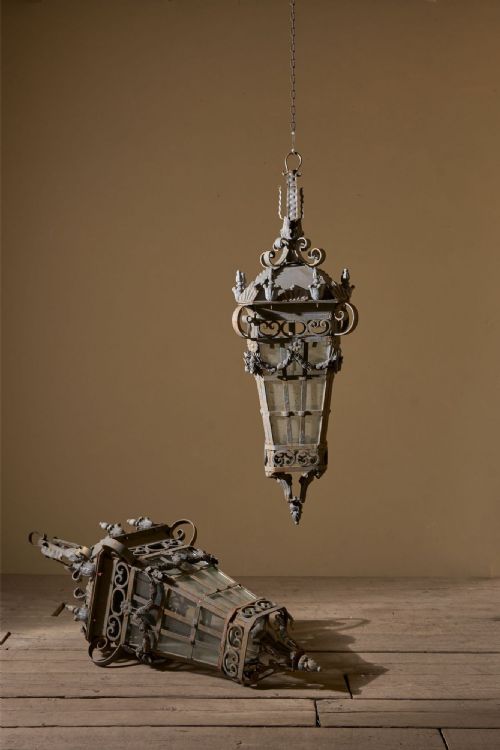
When you search for iron hall lanterns, you encounter overhead lighting designed for corridors, vestibules, and grand entryways. The examples gathered here span the nineteenth century through the early decades of the twentieth century, with French and English origins predominating.
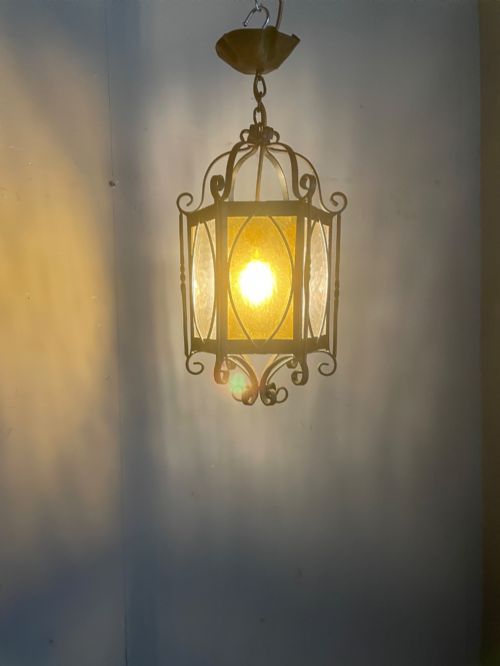
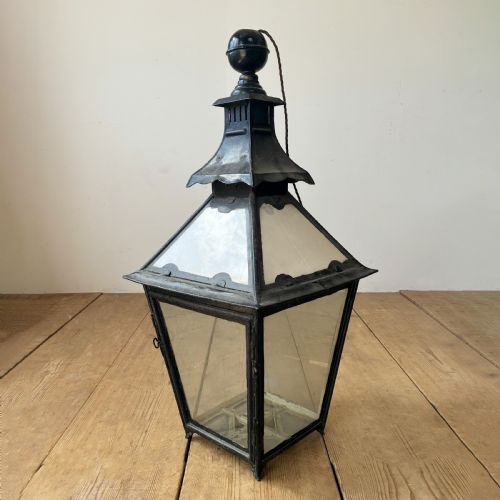
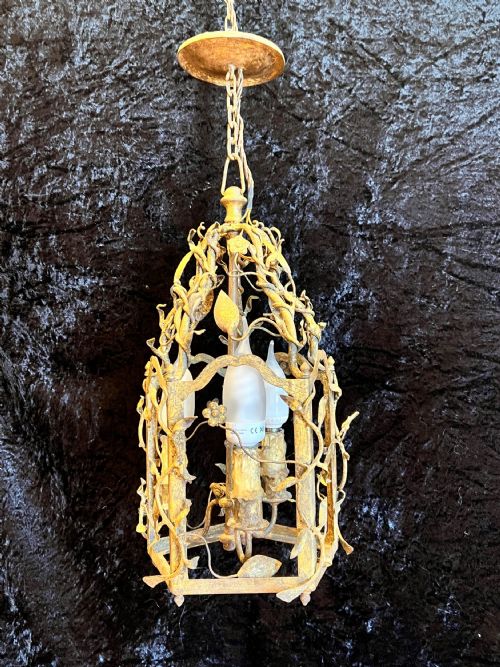
You meet a variety of structural forms, from hexagonal glazed boxes to large hanging pendants and porch lights. The aesthetics range from restrained Arts and Crafts designs to ornate Gothic Revival and French Chateau interpretations.
Most pieces rely on forged or cast metal frames paired with glass panes, including leaded and stained variants. These fixtures once transitioned from candle power to electricity, adapting to domestic needs while retaining their historic metalwork.
How they were made
Makers shaped these fixtures using wrought iron, cast metal, and steel, often combining them with brass, gilt metal, or zinc accents. Blacksmiths hammered and bent the iron into structural frames and decorative scrolls by hand.
Panels of clear, leaded, or stained glass were cut and fitted into the metal armatures to protect the internal light source from drafts. Soldered lead came and metal glazing bars held the individual glass segments securely within the lantern body.
One late nineteenth-century porch light incorporates shamrocks into its ironwork, offering a subtle botanical nod to the welcoming entryway.
What varies in quality
The distinction between standard utility lighting and superior examples lies in the ambition of the metalwork and the nuance of the surface finish. Heavier forged scrolling, hand-beaten textures, and intricate blacksmith detailing elevate certain pieces above routine production.
The integration of materials also defines the tier of a piece, such as the use of coloured stained glass or intricate leaded patterns rather than plain clear panes. Proportion and scale play a vital role, with larger, balanced lanterns commanding greater visual presence in a high ceiling space.
The Iron Hall Lanterns Glossary
- Wrought iron
- Iron that has been heated and worked with tools by a blacksmith. This material bends into scrolls and structural frames while retaining a fibrous texture.
- Leaded glass
- Individual pieces of glass joined together by narrow strips of lead called came. This technique forms geometric or decorative patterns across the lantern panels.
- Gothic Revival
- An architectural and decorative style drawing on medieval forms. Pieces in this idiom feature pointed arches, quatrefoils, and ecclesiastical ironwork.
- Arts and Crafts
- A design movement valuing handcraftsmanship and simple materials. Lanterns in this style emphasise honest construction and unpretentious metal surfaces.
- Stained glass
- Glass coloured by the addition of metallic oxides during its manufacture. It appears in segments within lantern panels to filter and colour the light.
Iron Hall Lanterns: Frequently Asked Questions
How do I hang a heavy iron hall lantern?
These fixtures require secure fixing to a ceiling joist or a reinforced mounting bracket capable of supporting the combined weight of iron and glass. Professional installation ensures the electrical load and physical suspension remain entirely safe.
Because many vintage lanterns arrive with original chains or mounting loops, an electrician can adapt the suspension height to suit your ceiling clearance without compromising the historic hardware.
Can these lanterns be used outdoors?
Certain pieces in this selection originated as outside porch lights, while others were built specifically for sheltered interior hallways. Checking the listing details reveals whether a fixture is suited to exterior exposure.
When placing an antique lantern outside, ensure the electrical wiring meets modern weatherproofing standards while preserving the external iron and glass structure.
How do I clean the glass panes?
Maintenance requires gentle cleaning with a soft cloth and mild glass cleaner, taking care not to disturb aged solder or lead came. Avoid harsh chemical sprays that might dull the surrounding metal.
If the lantern disassembles easily, removing the glass panels allows for thorough washing on a flat surface before reassembly within the iron frame.
How do I date an iron lantern?
Dating relies on observing construction techniques, such as hand-hammered wrought iron versus later machine-cast components, alongside stylistic cues like Arts and Crafts simplicity or Gothic Revival motifs. The transition from candle sockets to early electrical fittings also provides a chronological anchor.
Comparing the specific glass types, patination on the metal, and overall design vocabulary against documented periods helps narrow down the decade of manufacture.