



Irish Silver Bowl
An irish silver bowl carries the weight of centuries of Dublin craftsmanship, offering a striking centrepiece for any serious collection.
Irish Silver Bowl
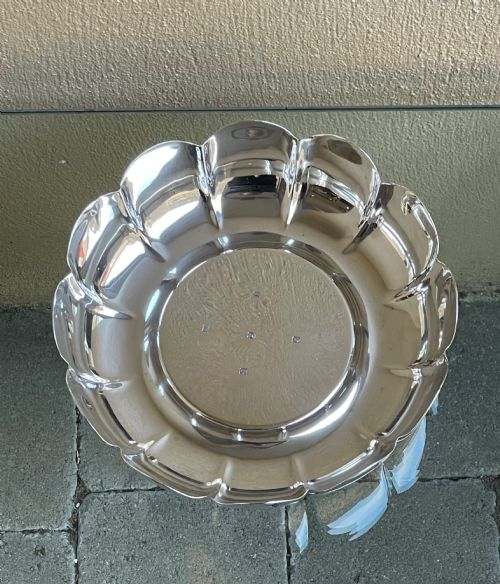
An irish silver bowl encompasses various forms ranging from sugar bowls and strawberry dishes to large decorative vessels and dish rings. These pieces emerge across periods such as the Georgian era, the nineteenth century, and mid-century twentieth-century production.
The pieces on this page include traditional items associated with dining and display, marked by distinct regional aesthetics. Buyers frequently encounter forms decorated with chasing, twin handles, or accompanying blue glass liners.
Examples span from mid-eighteenth-century creations to twentieth-century commemorative editions, reflecting a continuous tradition of silversmithing in Ireland. Each object reveals specific functional origins, whether intended for sugar, fruit, or general table service.
Materials and construction
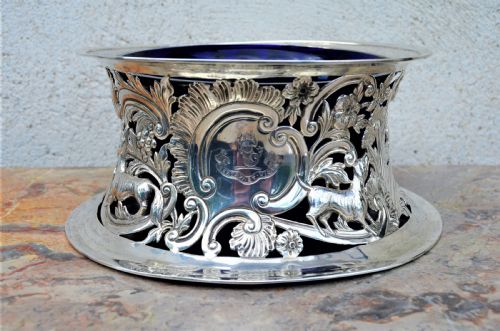
Silversmiths utilised sterling silver and solid silver, frequently combining the metal with cobalt blue glass inserts to create contrast within openwork dish rings and baskets. Heavy gauge silver plates and bowls often exhibit substantial weight, demonstrating the density of the metal used in production.
Traditional techniques involve detailed chasing and hand-formed construction, resulting in textured surfaces depicting scenes or floral motifs. Workshops shaped the silver into basins, porringers, and baskets, applying hallmarks that verify the Dublin origin of the work.
A jubilee bowl from nineteen-sixty celebrates a sword of light, proving silversmiths could forge epic mythology into solid silver.
Assessing quality
Quality rests upon the crispness of the chasing and the weight of the metal utilised in the construction. Finer examples display deep, deliberate hand-worked relief rather than shallow pressing.
The prominence of the maker and the clarity of the Dublin hallmarks contribute significantly to the standing of a piece. Substantial gauge silver and intact structural integrity separate standard utility items from exceptional historic survivals.
Michael Smith·William Bond·Robert W Smith·Weir and Sons·Egan of Cork·John Smyth
The Irish Silver Bowl Glossary
- Dish ring
- A spool-shaped stand, often called a potato ring, designed to support a bowl on the dining table. These openwork silver items emerged strongly during the Georgian period.
- Chasing
- A metalworking technique where the silversmith hammers the front of the silver to create raised designs and surface patterns. This method defines much of the traditional Irish decoration.
- Porringer
- A small, two-handled bowl used for porridge or liquids in earlier domestic settings. Surviving silver examples often feature heavy gauge construction.
- Sterling silver
- An alloy consisting of pure silver and other metals to increase durability while maintaining appearance. British and Irish items carry specific standard marks for this purity.
Irish Silver Bowl: Frequently Asked Questions
What is a dish ring?
A dish ring is an openwork stand typically placed on the dining table to elevate a bowl or dish. They protect the surface from hot dishes and provide a decorative focal point.
Irish examples often feature elaborate pierced designs and chased decoration depicting pastoral scenes or animals.
How do I date an irish silver bowl?
Dating relies heavily upon the official hallmarks stamped into the silver, which indicate the assay office in Dublin and the specific year of production. Stylistic markers such as Georgian Rococo curves or Edwardian Neoclassical symmetry also help determine the period.
Makers' marks further narrow down the active years of the silversmith workshop responsible for the piece.
Were these bowls used for food?
Many of these vessels served practical dining functions, holding sugar, fruit, or specialty foods like strawberries during formal meals. Sugar bowls and basins formed part of traditional tea and dining services.
Over time, many transitioned into decorative display objects rather than active serving pieces.
Why do some bowls have blue glass?
Cobalt blue glass liners were inserted into pierced dish rings and baskets to provide a contrasting coloured background behind the open silverwork. This technique ensured that the intricate cut-out patterns remained visually distinct on the table.
The glass also allowed the vessels to hold smaller items securely without them falling through the pierced silver lattice.