





Inlaid Wooden Pembroke Table
An inlaid wooden pembroke table offers a clever folding surface with drop leaves, bringing eighteenth-century elegance to any room.
Inlaid Wooden Pembroke Table
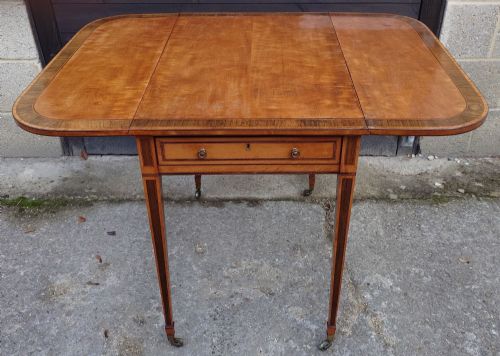
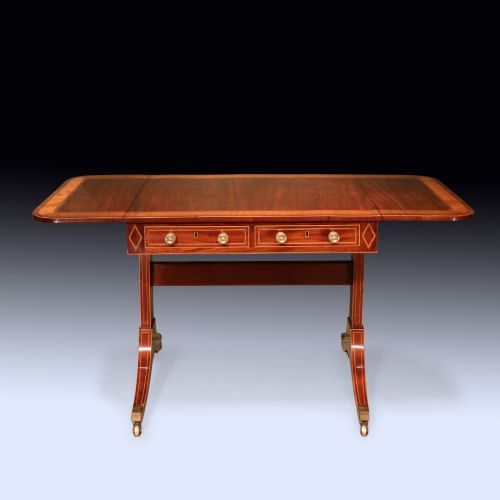
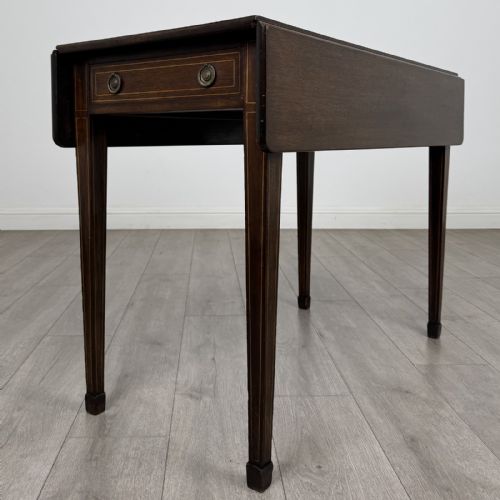
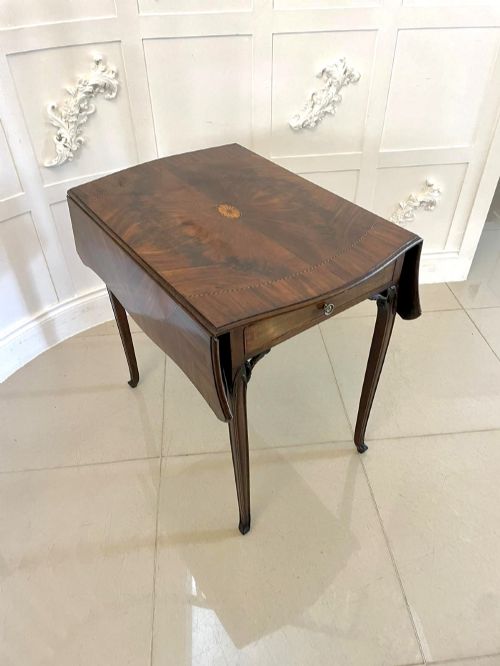
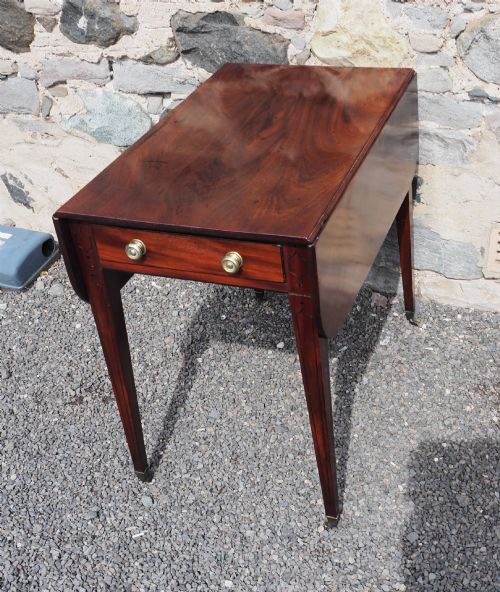
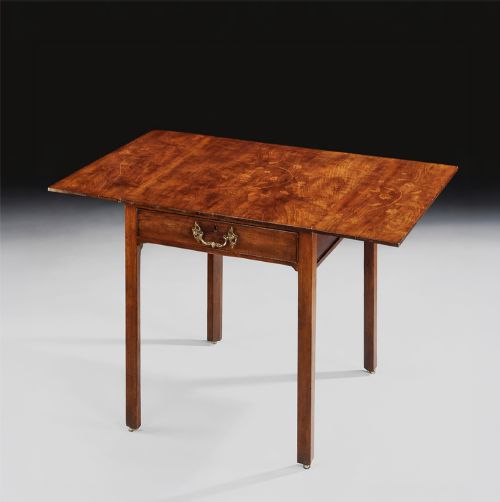
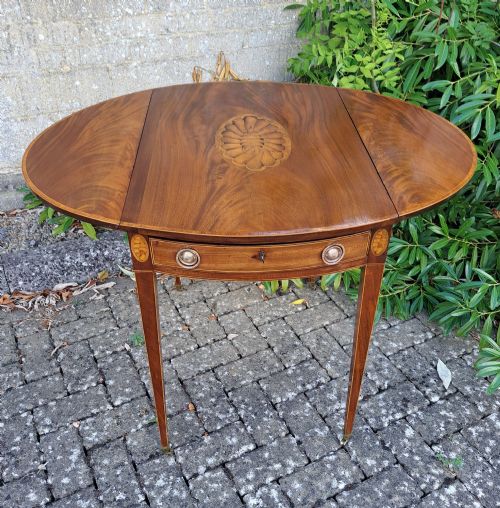
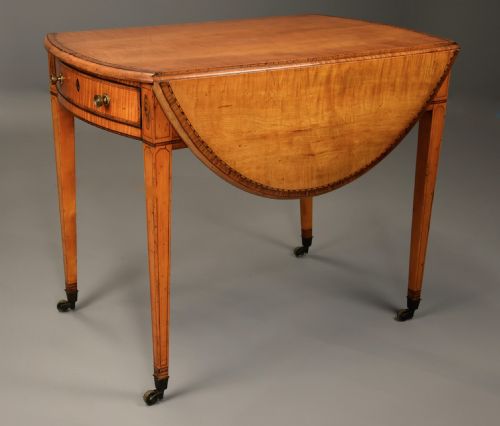
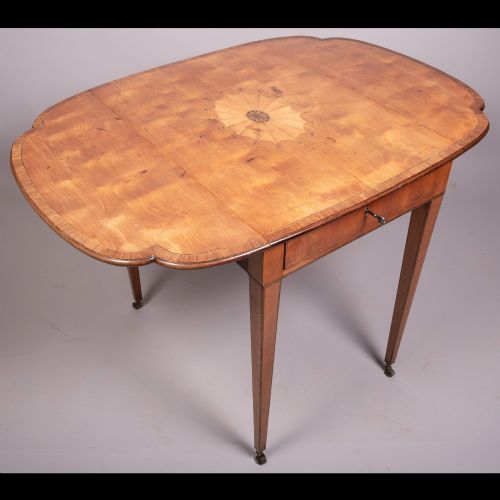
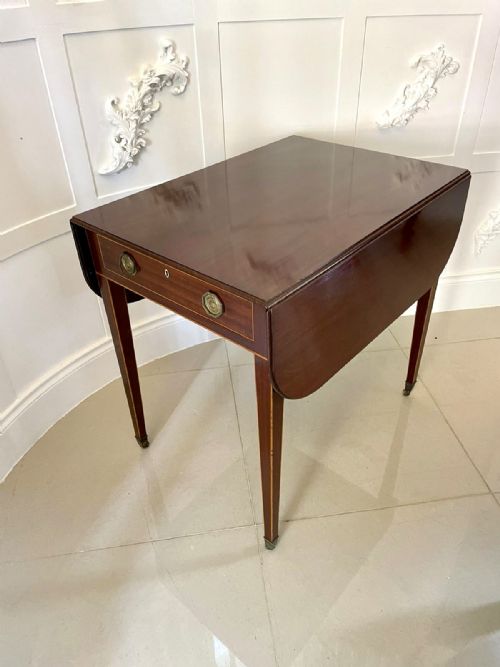
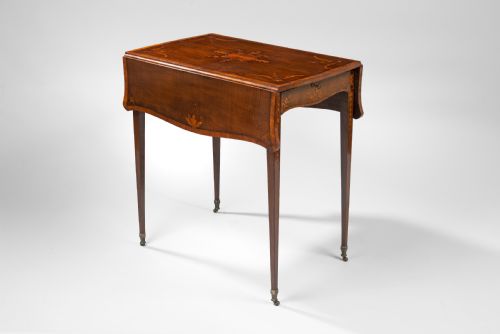
An inlaid wooden pembroke table is a versatile drop-leaf piece designed for occasional use, appearing primarily in Georgian, Regency and Edwardian iterations across this selection. These tables typically feature rectangular or oval tops with hinged flaps on either side, supported by pivoting brackets.
The examples gathered here span from the eighteenth century into the twentieth, encompassing George III and Sheraton styles alongside later revivals. Buyers encounter formats functioning as side tables, work tables or sewing tables, reflecting the multi-purpose utility demanded by earlier households.
Materials and Technique
Cabinetmakers constructed these tables using primary timbers such as mahogany, satinwood, kingwood, harewood and fiddleback sycamore, often enhanced with contrasting boxwood inlay or delicate marquetry. The grain orientation was carefully chosen for visual impact, particularly on tabletops and drop leaves.
Fine linear banding and geometric stringing define the decorative vocabulary, frequently executed in rosewood or satinwood against a darker mahogany ground. Brass castors and hinges completed the hardware, ensuring the drop leaves operated smoothly during daily use.
Inlaid Wooden Pembroke Table Retail Price Guide 2026
Typical asking prices for inlaid wooden pembroke table among the pieces listed under this phrase on Sellingantiques today, from the lower quarter to the upper quarter. They describe what is for sale here now, not the wider market.
Listings feature satinwood, mahogany, and rosewood timbers paired with boxwood inlay across Georgian and Edwardian periods.
Distinctions in Execution
Quality rests in the precision of the timber selection and the crispness of the wood inlay, where tighter marquetry and harmonious timber contrast elevate a piece. Superior examples display refined proportions in the taper of their legs and a richer surface patina developed over centuries.
Finer construction is further evidenced by thoughtful secondary woods and smoothly integrated drawer framing on work tables, distinguishing workshop masterworks from standard commercial production.
The Inlaid Wooden Pembroke Table Glossary
- Pembroke table
- A small table with two hinged drop leaves, popular from the eighteenth century onwards for occasional or breakfast use.
- Drop-leaf table
- Any table featuring hinged flaps that fold down to save space or lift up to extend the surface area.
- Marquetry
- Decorative veneer work forming intricate pictures or geometric patterns using various coloured woods.
- Satinwood
- A lustrous, hard timber with a golden yellow sheen, frequently utilised in fine eighteenth-century and Sheraton Revival furniture.
- Stringing
- Thin inlay lines of contrasting wood used to outline drawers, borders and table edges.
Inlaid Wooden Pembroke Table: Frequently Asked Questions
What is a pembroke table used for?
These tables served flexible domestic purposes, functioning as writing desks, small dining surfaces or side stands in drawing rooms.
Their folding leaves allowed them to be placed against a wall when not in use, opening up floor space in period interiors.
How do I date an inlaid pembroke table?
Dating relies on stylistic clues, combining timber choices, leg shapes and the complexity of the wood inlay.
Georgian and Sheraton pieces display lighter proportions and delicate satinwood banding, whereas Edwardian revivals often incorporate heavier internal construction methods.
Are these tables suitable for modern rooms?
Their compact footprint makes them ideal as lamp tables, small desks or bedside stands in contemporary spaces.
The drop leaves provide practical surface adjustment depending on the daily requirement of the room.
What woods were used for inlay?
Cabinetmakers utilised boxwood, rosewood, satinwood and kingwood to create contrasting borders and decorative panels.
These pale and dark timbers were cut into fine strips or geometric shapes and set flush into the primary mahogany or satinwood ground.